
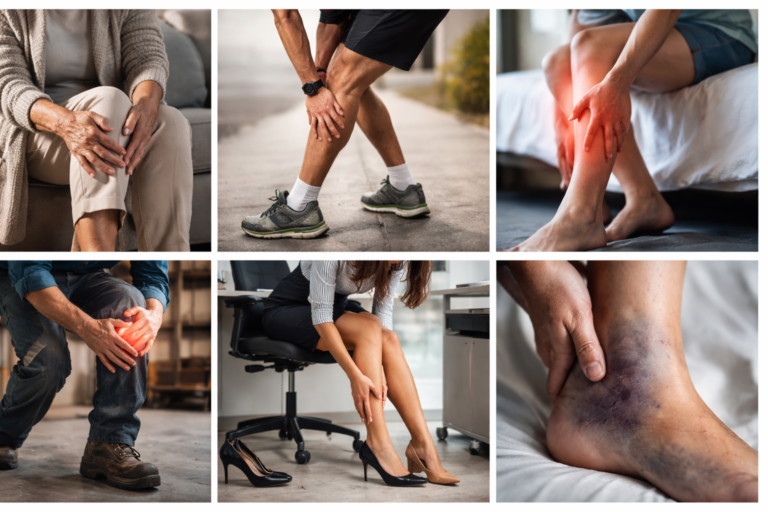
Leg pain is one of those complaints that can come from a simple long day of standing or signal a more serious problem. Here are six common causes of sore legs, what they feel like, who’s at risk, and simple steps to ease or prevent the pain.
1. Muscle strain and overuse injuries
Muscle strains occur when fibers are stretched or torn, typically during sports, heavy lifting, or sudden movements.
- Symptoms: localized pain, swelling, bruising, weakness with movement.
- Who’s at risk: athletes, people who suddenly increase activity, manual laborers.
- Quick relief: rest, ice for the first 48 hours, compression, elevation, and gradual return to activity. Physical therapy can help with persistent weakness.
2. Delayed onset muscle soreness (DOMS)
DOMS is the stiff, achy feeling that appears 24–72 hours after unfamiliar or intense exercise.
- Symptoms: diffuse soreness, stiffness, reduced range of motion, especially after eccentric exercise (downhill running, lowering weights).
- Who’s at risk: anyone starting a new workout or increasing intensity.
- Quick relief: light activity, gentle stretching, massage, adequate hydration, and time—DOMS typically improves in a few days.
3. Cramps and dehydration/electrolyte imbalance
Muscle cramps are sudden, painful contractions often in the calf or foot and frequently linked to dehydration or low electrolytes (potassium, magnesium, calcium).
- Symptoms: sharp, sudden pain and tightness; may last seconds to minutes and sometimes recur.
- Who’s at risk: dehydrated individuals, athletes, older adults, people on diuretics.
- Quick relief: gently stretch and massage the cramped muscle, hydrate, and consider electrolyte-containing drinks if cramps are exercise-related. If cramps are chronic, check medications and blood tests.
4. Circulation problems (venous insufficiency and peripheral artery disease)
Poor blood flow can cause aching, heaviness, or cramping in the legs. Venous insufficiency (blood pooling) and peripheral artery disease (PAD, narrowed arteries) present differently but both cause leg discomfort.
- Symptoms:
- Venous insufficiency: aching, swelling, varicose veins, worse after standing, improves with elevation.
- PAD: cramping or pain with walking that improves with rest (claudication), cool skin, hair loss on the leg.
- Who’s at risk: older adults, smokers, people with diabetes, high blood pressure, or high cholesterol.
- What helps: compression stockings and leg elevation for venous issues; smoking cessation, supervised walking programs, and medical evaluation for PAD. PAD requires medical assessment and sometimes medication or procedures.
5. Nerve-related pain (neuropathy and sciatica)
Nerve problems can produce burning, tingling, numbness, or sharp, shooting pain that follows a nerve path.
- Symptoms: burning, electric shocks, numbness, pins-and-needles, often worse at night.
- Who’s at risk: people with diabetes (diabetic neuropathy), those with herniated discs causing sciatica, or people with nerve compression injuries.
- Management: treat the underlying cause (blood sugar control for diabetes), medications for nerve pain, physical therapy, and in some cases surgical evaluation for compressive causes.
6. Arthritis and joint conditions
Arthritis in the hip, knee, or ankle can refer pain into the leg, causing aching that may worsen with activity or in the morning.
- Symptoms: deep, aching pain near a joint, stiffness after rest, swelling, reduced mobility.
- Who’s at risk: older adults (osteoarthritis), people with autoimmune disease (rheumatoid arthritis), and those with prior joint injuries.
- Management: weight management, low-impact exercise, anti-inflammatory medications, and physical or occupational therapy. Some people benefit from injections or joint replacement when conservative care fails.
When to see a doctor
Seek medical attention if leg pain is severe, sudden, associated with swelling and warmth (possible blood clot), accompanied by chest pain or breathlessness, causes significant weakness or numbness, or doesn’t improve with basic measures. A healthcare provider can diagnose the cause and recommend appropriate treatment.
Prevention tips
- Warm up and cool down before and after exercise.
- Stay hydrated and maintain balanced electrolytes.
- Build activity gradually to avoid overuse.
- Wear supportive footwear and use compression stockings if recommended.
- Manage chronic conditions like diabetes, high blood pressure, and high cholesterol.
Leg soreness is common and usually temporary, but persistent or severe symptoms deserve evaluation. Knowing the typical causes helps you respond quickly and get the right care when needed.