
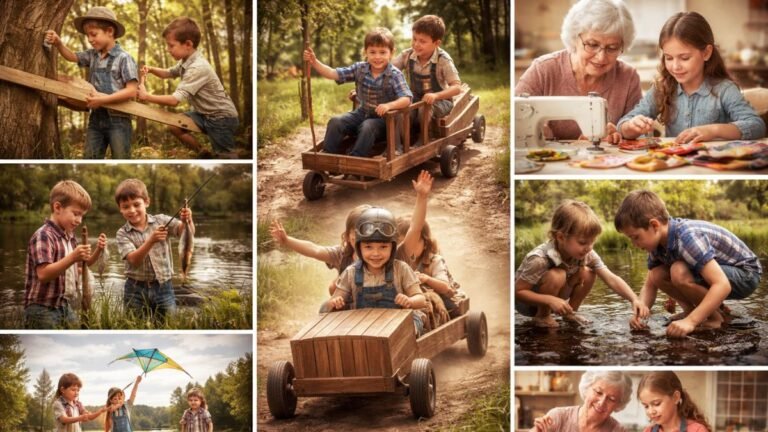
Children today grow up in a very different world than their grandparents did. Many skills and small rites of passage that once felt universal have quietly vanished from modern childhood. Here are nine things every senior likely did as a child that we rarely teach our grandchildren anymore — and why they mattered.
1. Fixing things with a simple toolbox
Grandparents often learned to fix a leaky faucet, mend a chair, or tighten a loose hinge with a basic set of tools. There was pride in making something last and a practical understanding of how things worked.
Why it faded: disposable culture, complex electronics, and fear of injury. How to bring it back: start with basic hand tools and supervised projects to build confidence and problem-solving skills.
2. Navigating without GPS
Walking or biking to a friend’s house using landmarks, maps, and intuition was normal. Those routes taught spatial awareness and independence.
Why it faded: smartphones and ride services make navigation effortless. How to bring it back: give kids paper maps on outings, plan routes together, and encourage them to notice surroundings.
3. Handwriting letters and sending mail
Letter-writing was a way to practice penmanship, patience, and thoughtful communication. A handwritten note carried personal weight.
Why it faded: instant messaging and email replaced slow correspondence. How to bring it back: set up pen-pal exchanges with family or friends and teach stamp use and addressing an envelope.
4. Playing unsupervised outdoors
Seniors often spent hours inventing games, building forts, and organizing neighborhood groups with little adult oversight. This fostered creativity, resilience, and social negotiation.
Why it faded: safety concerns and structured activities keep kids supervised. How to bring it back: create safe outdoor play zones and allow age-appropriate independence with agreed check-in times.
5. Learning to cook basic meals early
Many children learned to peel vegetables, make a simple soup, or fry an egg as part of daily life. Food skills meant self-reliance and healthy habits.
Why it faded: busy schedules and reliance on processed or takeout food. How to bring it back: involve children in meal prep, teach kitchen safety, and celebrate small culinary successes.
6. Mend and sew basics
From sewing on buttons to patching holes, these small skills kept clothes wearable and taught thrift and patience.
Why it faded: cheaper clothing and off-the-shelf alterations make mending less common. How to bring it back: teach basic stitches, keep a small sewing kit handy, and make mending a fun family activity.
7. Managing small amounts of money
Pocket money, saving for a desired toy, or swapping cards taught budgeting, delayed gratification, and value. Money lessons were earned through experience.
Why it faded: digital transactions and less physical cash change the way kids perceive money. How to bring it back: use envelopes for savings goals, give small cash allowances, and involve children in simple budgeting choices.
8. Using manual tools and appliances
Operating a manual lawn mower, a bicycle pump, or a hand-cranked tool built mechanical intuition. Kids learned cause and effect through physical interactions.
Why it faded: automation and electric conveniences have reduced hands-on experience. How to bring it back: introduce manual versions of tools, schedule chores that require physical skills, and explain how devices work.
9. Following long-term projects
From tending a garden to building a model airplane over weeks or months, seniors often committed to slow, rewarding work. These projects taught patience, planning, and pride in completion.
Why it faded: fast entertainment and shorter attention spans emphasize instant results. How to bring it back: choose multi-step crafts or hobbies, set manageable milestones, and celebrate progress rather than only the outcome.
Bringing lost skills into modern childhood
We don’t need to recreate the past exactly, but reintroducing these simple skills offers real benefits: resilience, competence, creativity, and stronger family bonds. Start small, model patience, and make learning these things part of everyday life rather than a chore.
Practical steps:
- Schedule one hands-on activity a week (cooking, mending, map reading).
- Rotate responsibilities so children practice different skills.
- Frame tasks as games or shared projects to keep them engaging.
Grandparents’ childhoods were full of small, practical lessons that shaped character more than curriculum. By consciously teaching a few of those forgotten habits, we give children tools that serve long after childhood — and a richer connection to the generations before them.