
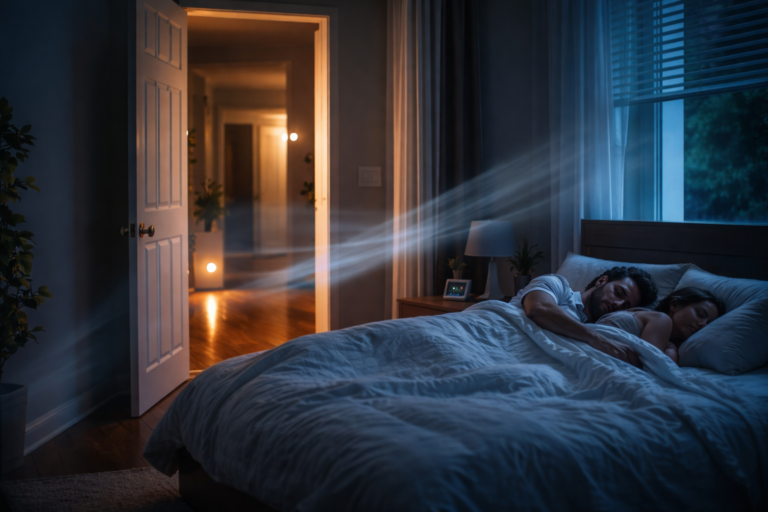
The idea that keeping your bedroom door open at night can improve sleep has gained attention, especially as awareness around indoor air quality grows. Research suggests that better airflow may help reduce carbon dioxide (CO₂) levels, which are closely linked to sleep quality. However, experts also warn that an open door can introduce noise, light, and security concerns that may disrupt rest.
This article explores the science-backed benefits and risks of sleeping with your bedroom door open, helping you decide what works best for your sleep environment.
How Airflow Affects Sleep Quality
Airflow plays a crucial role in maintaining a healthy sleep environment. When a room is sealed, CO₂ accumulates quickly due to human breathing.
- CO₂ levels can exceed 2,500–3,000 ppm in poorly ventilated rooms, far above recommended levels
- Experts recommend keeping CO₂ levels below 800–1,000 ppm for optimal sleep
Higher CO₂ levels have been linked to:
- Reduced deep sleep (slow-wave sleep)
- Increased night awakenings
- Lower overall sleep efficiency
Studies show that improving ventilation—either through windows or airflow—can enhance sleep quality and next-day performance .
Does Keeping The Door Open Actually Help?
What Research Says
Opening a bedroom door allows air to circulate between rooms, diluting indoor pollutants.
- Opening a door can reduce CO₂ concentration significantly
- However, studies found no consistent improvement in sleep quality from door-opening alone
- Fresh outdoor air (via windows) has a stronger positive impact on sleep than indoor airflow
Experts explain that when the door is open:
- Air mixes with other rooms
- But the incoming air may not be cleaner than bedroom air
Key Insight
Opening the door improves air quality slightly—but not always enough to improve sleep.
Benefits Of Sleeping With The Door Open
1. Lower Carbon Dioxide Levels
Keeping the door open can reduce CO₂ buildup, preventing the “stuffy room” effect.
- Even partial airflow can slow CO₂ accumulation overnight
- Lower CO₂ is linked to better cognitive function and alertness
2. Improved Air Circulation
Air moves freely between rooms, reducing:
- Stale air
- Moisture buildup
- Odors and pollutants
3. Potential Temperature Regulation
Airflow can help maintain a comfortable sleeping temperature, which is essential for falling asleep faster.
Risks And Downsides Experts Warn About
Despite some benefits, experts highlight several important risks:
1. Increased Noise Disturbance
Open doors allow:
- Household noise
- Traffic sounds
- Conversations from other rooms
Noise is a major factor in sleep fragmentation and reduced sleep quality.
2. Light Exposure
Light entering from hallways or other rooms can:
- Suppress melatonin production
- Delay sleep onset
- Reduce deep sleep cycles
Even small amounts of artificial light can disrupt circadian rhythms.
3. Security Concerns
Keeping the door open may raise safety issues:
- Reduced privacy
- Easier access in case of intrusions
- Fire safety considerations (closed doors can slow fire spread)
4. Air Quality Trade-Off
While airflow improves, the air entering may:
- Contain dust or allergens
- Carry pollutants from other parts of the house
This means air quality improvement is not guaranteed.
Table: Door Open Vs Closed — Key Differences
| Factor | Door Open | Door Closed |
|---|---|---|
| CO₂ Levels | Lower | Higher |
| Airflow | Better circulation | Limited airflow |
| Sleep Quality Impact | Minimal improvement | May worsen due to CO₂ buildup |
| Noise | Higher exposure | Reduced |
| Light Exposure | Higher | Minimal |
| Security | Lower | Higher |
| Fire Safety | Lower protection | Better protection |
What Experts Recommend For Better Sleep
Instead of relying solely on keeping your door open, experts suggest a balanced approach:
1. Prioritize Fresh Outdoor Air
Opening a window is more effective than a door:
- Reduces CO₂, VOCs, and pollutants
- Improves sleep quality directly
2. Improve Ventilation Systems
Use:
- Air purifiers
- HVAC systems
- Mechanical ventilation
3. Maintain Optimal CO₂ Levels
- Aim for below 1,000 ppm
- Avoid fully sealed rooms overnight
4. Control Noise And Light
- Use blackout curtains
- Consider white noise machines
- Keep doors partially open if needed
5. Pre-Ventilate Your Room
A simple trick:
- Open windows or doors for 5–10 minutes before bed
- Flush out stale air
Future Outlook: Smart Bedrooms And Air Monitoring
Looking ahead, sleep science is moving toward smart indoor environments:
- CO₂ sensors and smart thermostats
- Automated ventilation systems
- AI-based sleep optimization
These technologies aim to maintain ideal air quality without compromising comfort or safety.
Conclusion
Keeping your bedroom door open at night can slightly improve airflow and reduce carbon dioxide levels, but it is not a guaranteed solution for better sleep. Scientific research shows that while ventilation matters, fresh outdoor air—such as from an open window—is far more effective.
At the same time, an open door introduces noise, light, and security risks that may outweigh its benefits. The best approach is a balanced sleep environment that prioritizes ventilation, darkness, quietness, and safety.