
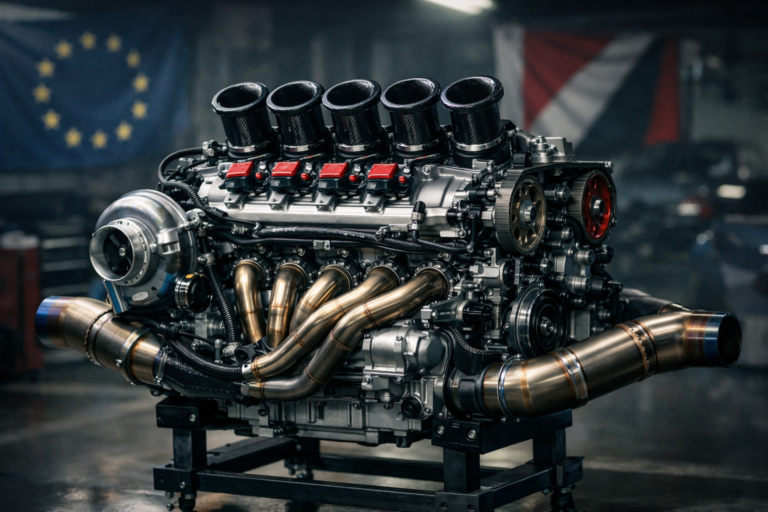
Petrol engines are under pressure across Europe. Stricter emissions rules, electrification targets and shifting buyer tastes have pushed many manufacturers to phase out traditional internal combustion designs. Yet in the middle of this transition, one idea keeps resurfacing among engineers and enthusiasts alike: a compact, rev-happy petrol unit that combines emotional appeal with modern efficiency. Enter the concept summed up by the phrase “5 cylinders, 240 hp and 16,000 rpm” — a provocative shorthand for an engine that could remind drivers why petrol still matters.
Why five cylinders?
The five-cylinder layout occupies a unique niche between four- and six-cylinder engines. It offers distinct advantages:
- Characterful exhaust note: The uneven firing order produces a rasp and growl many enthusiasts love.
- Compact packaging: Shorter than a straight-six but smoother than a four-cylinder.
- Torque delivery: A well-tuned five can provide a strong midrange without bulky displacement.
Historically, five-cylinder engines have been used in performance and touring cars where personality matters. In a world of electric silence, that personality becomes a key selling point.
The 240 hp sweet spot
240 horsepower is an interesting target. It’s enough to deliver genuine performance for compact and mid-size cars while remaining achievable with modest displacement and advanced breathing. Benefits of aiming for this output include:
- Efficiency balance: High specific output without extreme boost pressures or huge engines.
- Weight control: Smaller blocks and lighter ancillaries compared with high-displacement alternatives.
- Cost containment: Avoids exotic materials and complex hybrid systems while still offering engaging performance.
In short, 240 hp can excite drivers without sacrificing the economic and environmental constraints that now shape European vehicle design.
The 16,000 rpm twist
A 16,000 rpm redline is the headline-grabber. That figure is more commonly seen in motorcycles or racing engines than in road cars, and for good reasons:
- Mechanical stress: High revs dramatically increase bearing loads, valve train wear and piston speeds.
- Friction and heat: Faster moving parts mean more heat and parasitic losses unless materials and lubrication are superb.
- Compliance challenges: Emissions control becomes harder at extreme operating points.
However, a 16,000 rpm capability could be used selectively. Modern engine management could keep the engine revving modestly most of the time, unleashing the top end during spirited driving. The result: a thrilling, high-revving experience when you want it, without permanently penalizing emissions or fuel economy.
How this engine could keep petrol relevant
If configured cleverly, a five-cylinder, 240 hp, 16,000 rpm engine could act as a bridge between tradition and regulation:
- Hybrid pairing: A small electric motor covers low-speed efficiency and emissions compliance, letting the petrol engine stay compact and rev-happy.
- Synthetic and e-fuels: Running on low-carbon fuels could align emotional petrol engines with Europe’s decarbonization goals.
- Drive-mode intelligence: Software could limit high-rev use in emissions-sensitive zones, while enabling full performance on open roads or racetracks.
- Limited-run halo models: Exclusive vehicles showcasing the technology could sustain brand heritage and enthusiast interest without mass-market CO2 penalties.
These strategies let manufacturers extract the emotional value of petrol without flagrantly ignoring environmental imperatives.
Challenges and trade-offs
This concept is compelling but far from simple. Key hurdles include:
- Cost: Exotic materials and precision engineering elevate prices.
- Durability: Long-term reliability at extreme revs demands advanced metallurgy and testing.
- Regulations: Real-world emissions testing and life-cycle analyses may still penalize high-performance petrol units.
- Market fit: Buyers increasingly prioritize convenience, range and running costs over engine drama.
Any attempt to position such an engine as Europe’s “last hope” must reckon with these realities.
Final thought
“5 cylinders, 240 hp and 16,000 rpm” is more than a spec sheet — it’s a statement about what many drivers miss: sound, revs and mechanical engagement. While electrification will continue to reshape the market, carefully engineered petrol engines—paired with hybrids, cleaner fuels and smart controls—can preserve that emotional core in a more sustainable way. Whether that will be enough to keep petrol alive across Europe depends not just on technology, but on regulation, economics and the appetite of buyers for a dramatic last hurrah.