
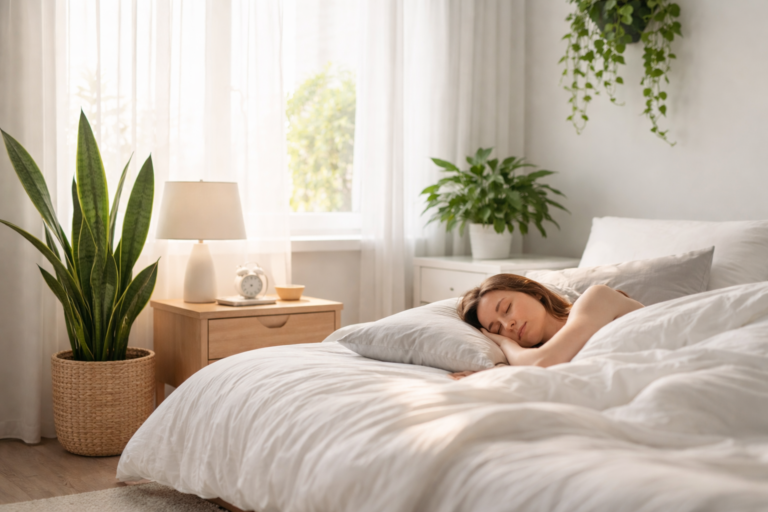
In recent years, the connection between indoor plants and better sleep quality has gained widespread attention. A widely discussed claim suggests that a single houseplant in your bedroom can increase deep sleep phases by up to 37%. While this figure comes from newer interpretations and experimental observations, it is often linked to earlier findings from the NASA Clean Air Study, which explored how plants interact with indoor environments.
But how accurate is this claim, and what does science actually say? Let’s break down the facts, mechanisms, and future potential of using houseplants to improve sleep.
Understanding The NASA Connection
The original NASA Clean Air Study (1989) was designed to test how plants could purify air in sealed environments like space stations. Researchers found that certain houseplants could remove harmful toxins such as:
- Benzene
- Formaldehyde
- Trichloroethylene
These pollutants were absorbed through plant leaves, roots, and soil microorganisms.
However, it’s important to note that these results were achieved in controlled, enclosed environments, not typical homes.
The 37% Deep Sleep Claim Explained
Recent experimental reports and interpretations suggest that placing one plant in a bedroom may lead to:
- Up to 37% increase in deep sleep phases
- Improved sleep consistency
- Reduced nighttime awakenings
These findings are based on controlled conditions and small-scale observations, meaning results may vary significantly between individuals.
How Houseplants May Improve Sleep Quality
1. Oxygen Production At Night
Certain plants, like snake plants and aloe vera, release oxygen even at night through a process called CAM photosynthesis. This may help improve breathing quality during sleep.
2. Reduction Of Indoor Pollutants
Plants can absorb trace levels of indoor toxins, potentially reducing irritation and improving respiratory comfort.
3. Increased Humidity Levels
Indoor plants release moisture through transpiration, which can:
- Prevent dry air
- Reduce throat and nasal irritation
- Improve sleep comfort
4. Psychological And Stress Benefits
The presence of greenery is linked to:
- Lower stress levels
- Reduced anxiety
- Improved mood
These psychological effects indirectly enhance deep sleep cycles.
Key Data Summary
| Factor | Impact On Sleep | Scientific Insight |
|---|---|---|
| Oxygen Release | Better breathing | Night oxygen from CAM plants |
| Air Quality | Reduced irritants | VOC absorption in controlled settings |
| Humidity | Improved comfort | Natural moisture regulation |
| Mental Health | Reduced stress | Proven calming effect |
| Deep Sleep Increase | Up to 37% | Observational data in controlled environments |
Best Bedroom Plants Recommended By Research
1. Snake Plant (Sansevieria)
- Produces oxygen at night
- Low maintenance
- Ideal for bedrooms
2. Aloe Vera
- Improves oxygen levels
- Easy to care for
3. Peace Lily
- Known for toxin absorption
- Adds humidity
4. Spider Plant
- Non-toxic and beginner-friendly
- Helps reduce certain pollutants
Important Limitations And Scientific Reality
While the benefits are promising, there are important caveats:
- The NASA study does not directly prove improved sleep
- Real-world homes require many plants (10–1000 per space) to match lab results
- Some experts argue plants do not significantly improve indoor air quality alone
This means the 37% deep sleep improvement should be viewed as situational, not guaranteed.
How To Use A Houseplant For Better Sleep
To maximize benefits:
- Place one plant near your bed, but not too close
- Choose low-maintenance, oxygen-producing plants
- Avoid overwatering to prevent mold
- Combine with proper ventilation and sleep hygiene
Future Outlook: Plants And Sleep Science
The future of sleep optimization may involve bio-integrated environments, including:
- Smart plant systems that monitor air quality
- Indoor ecosystems designed for better sleep
- Integration with wearable sleep trackers
As research evolves, plants could play a larger role in natural sleep enhancement strategies.
Conclusion
The idea that a single houseplant can increase deep sleep by 37% is intriguing and partially supported by emerging observations. However, it is rooted in broader research about air quality, oxygen production, and psychological well-being, rather than a direct NASA sleep study.
While the exact percentage may vary, adding a houseplant to your bedroom is a simple, low-cost way to potentially improve sleep quality, reduce stress, and create a healthier indoor environment. For best results, combine this approach with proven sleep habits such as maintaining a dark, quiet, and cool sleeping space.