
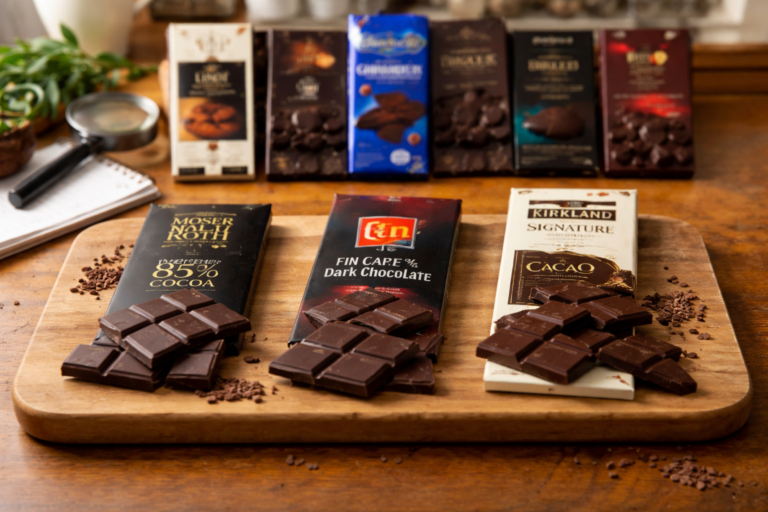
A recent round of blind tastings left chocolate lovers reconsidering assumptions. Experts tested dozens of dark chocolates across price points and regions — and were surprised to find that three low-cost supermarket brands quietly outperformed the premium ones. The results challenged the idea that higher price automatically equals better flavor and quality.
How the tasting was done
The panel included professional tasters and serious enthusiasts. They evaluated bars blind, scoring each on aroma, texture, balance, finish, and overall pleasure. Bars ranged from single-origin, artisanal offerings to supermarket own-labels that cost a fraction of the premium versions. Scores were averaged and ranked to produce the final list.
Key parts of the methodology:
- Blind sampling to remove brand bias
- Multiple tasters to smooth out individual preferences
- Standardized tasting conditions (room temperature, small squares, water palate cleansers)
- Consideration of both technical and subjective factors
Why the supermarket bars surprised experts
Several reasons help explain why three low-cost supermarket brands came out near the top:
- Consistent formulation: Many supermarket brands use established recipes and strict quality control, which yields a reliably balanced bar.
- Smart sourcing and blending: Rather than marketing a single-origin story, some low-cost producers blend beans to achieve a desirable flavor profile at scale.
- Less “overselling”: Premium bars sometimes emphasize exotic provenance or complex processing techniques that don’t always translate into better flavor for everyday palates.
- Freshness and production scale: Larger producers can optimize production and distribution to keep bars fresher on shelves.
These factors combine to produce bars that hit the right notes—pleasant aroma, smooth mouthfeel, and a clean finish—without the premium price tag.
What tasters noticed in the winning supermarket bars
Tasters described the top supermarket bars with words like “clean,” “balanced,” and “surprisingly complex.” Common positive attributes included:
- A smooth, silky texture that melts evenly
- A bright cocoa aroma with subtle fruity or nutty notes
- Minimal bitterness or off-flavors often present in cheaper mass-market chocolates
- A lingering, pleasant finish rather than an astringent aftertaste
The supermarket bars generally landed in the 60–85% cacao range, hitting a sweet spot for richness without overwhelming bitterness.
What this means for chocolate shoppers
If you assume that the most expensive bar on the shelf will always taste best, these tastings suggest a rethink. Price can reflect packaging, marketing, and small-batch stories—not necessarily superior flavor. Shoppers should consider:
- Trying blind tastings at home with friends to discover personal favorites
- Checking the ingredient list (fewer additives usually signals better quality)
- Paying attention to aroma and snap: a clean snap and cocoa-forward smell are good signs
How to taste chocolate like an expert
If you want to test chocolate at home, follow these simple steps:
- Break a small piece and listen for the snap—a crisp snap signals good tempering.
- Smell the bar to pick up top notes (fruit, floral, nutty, or toasty).
- Let a piece melt slowly on your tongue and note texture, acidity, bitterness, and finish.
- Cleanse your palate with water or plain crackers between samples.
Final takeaways
Experts tested dozens of dark chocolates and were surprised to find that three low-cost supermarket brands quietly outperformed the premium ones. The biggest lesson: quality chocolate can come at any price. For everyday enjoyment and even serious tasting, don’t overlook supermarket own-brands. They can offer excellent flavor, consistent texture, and real value—sometimes outperforming bars that cost two or three times as much. Try a blind tasting at home and let your palate, not the price tag, be the judge.