
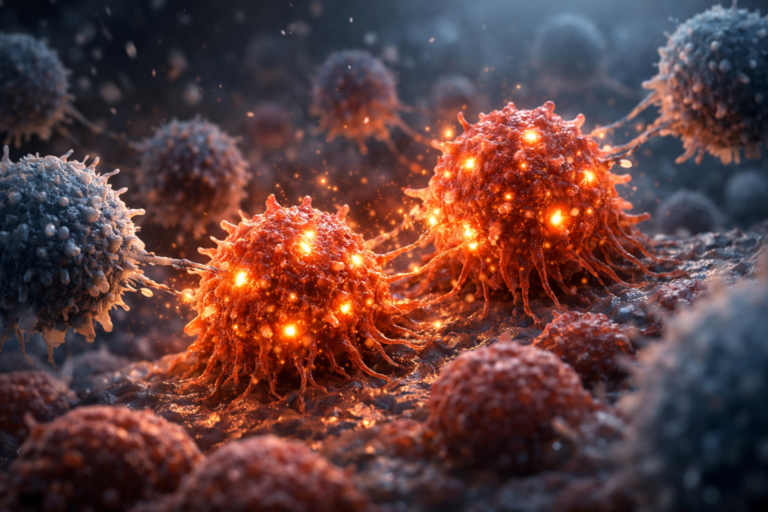
Cancer cells evade immune detection in many clever ways: hiding antigens, cloaking themselves in normal-cell molecules, and creating an immunosuppressive microenvironment. A promising new approach aims to flip the script — it literally turns cancer cells into visible targets so the immune system can recognize and eliminate them. This strategy could reshape how we treat tumors that currently resist immunotherapy.
How does the strategy work?
At its core, the idea is to make tumor cells stand out to immune cells. Researchers are exploring several complementary tactics that accomplish this by altering what the cancer cell looks like to the immune system:
- Chemical or enzymatic unmasking: Some tumors hide antigens behind sugar molecules or protective proteins. Enzymes or drugs can remove these coverings, exposing antigens that immune cells can recognize.
- Synthetic tagging: Small molecules or engineered proteins attach a visible “flag” to tumor cells. These flags can recruit antibodies or immune cells directly to the cancer.
- Oncolytic and vector-based approaches: Viruses or delivery vectors that preferentially infect tumor cells can force expression of viral or synthetic antigens, turning infected cancer cells into beacons.
- Bispecific and multispecific agents: BiTEs and other bispecific molecules physically link T cells to tumor cells by binding both simultaneously, effectively making the cancer cell a visible and irresistible target.
- Immune activation in situ: Agents like STING agonists or localized cytokines boost antigen presentation and inflammation inside the tumor, helping previously invisible antigens get noticed.
Together, these methods reframe the immune battle: rather than coaxing a passive immune system to act, they create clear, targetable signals that prompt a robust immune response.
Why this matters
Turning cancer cells into visible targets addresses several key obstacles in current cancer immunotherapy:
- Overcoming immune evasion: Many tumors suppress antigen presentation or disguise themselves as healthy tissue. Unmasking or tagging bypasses those defenses.
- Converting “cold” tumors into “hot” ones: Tumors with little immune infiltration are less responsive to checkpoint inhibitors. Making cells visible fosters inflammation and immune cell recruitment.
- Broadening applicability: Instead of relying on pre-existing strong neoantigens, synthetic tagging can make a wider range of tumors amenable to immune attack.
- Synergy with existing therapies: Visible targeting can enhance checkpoint blockade, CAR-T therapies, and monoclonal antibodies by increasing the number and quality of recognizable tumor antigens.
Potential clinical approaches
Several practical approaches are under investigation or early clinical testing:
- Antibody-recruiting small molecules that bind tumor-associated markers and the Fc region of circulating antibodies.
- Enzyme inhibitors or glycosidases that reveal hidden epitopes on the tumor cell surface.
- Bispecific T-cell engagers (BiTEs) that tether cytotoxic T cells to tumor cells.
- Oncolytic viruses engineered to express immunogenic proteins or cytokines selectively within tumors.
- Nanoparticle or conjugate systems that deliver adjuvants and antigenic tags directly to the tumor microenvironment.
Each approach has unique advantages: synthetic tags offer flexibility, oncolytic vectors can create a localized inflammatory response, and bispecifics provide immediate physical linkage between immune effectors and cancer cells.
Challenges and safety considerations
While the concept is powerful, several hurdles must be addressed before broad clinical adoption:
- Specificity: Tags and unmasking agents must avoid labeling healthy cells, which could provoke autoimmunity or off-target toxicity.
- Tumor heterogeneity: Different cells within the same tumor may present different markers; a single tagging strategy may not reach every malignant cell.
- Immune suppression: Tumors often have mechanisms that blunt immune responses (regulatory cells, suppressive cytokines). Visibility alone may not be sufficient without overcoming suppression.
- Delivery: Effective, localized delivery to solid tumors remains a technical challenge for many agents.
- Resistance: Tumors may adapt by shedding tagged molecules or altering pathways to avoid recognition.
Rigorous preclinical testing and carefully designed clinical trials will be essential to balance efficacy and safety.
Looking ahead
The strategy that turns cancer cells into visible targets represents an elegant pivot in cancer immunotherapy: make the enemy obvious, then let the immune system do what it does best. Early research and early-phase trials are encouraging, particularly when these approaches are combined with checkpoint inhibitors, CAR-T cells, or other modalities that amplify immune attack.
If researchers can solve delivery and specificity challenges, this approach could expand effective immunotherapy to tumors that today remain stubbornly resistant. For patients and clinicians, the promise is clear: transforming invisible cancer into a marked, immune-accessible target could convert more cancers from chronic threats into treatable conditions.