
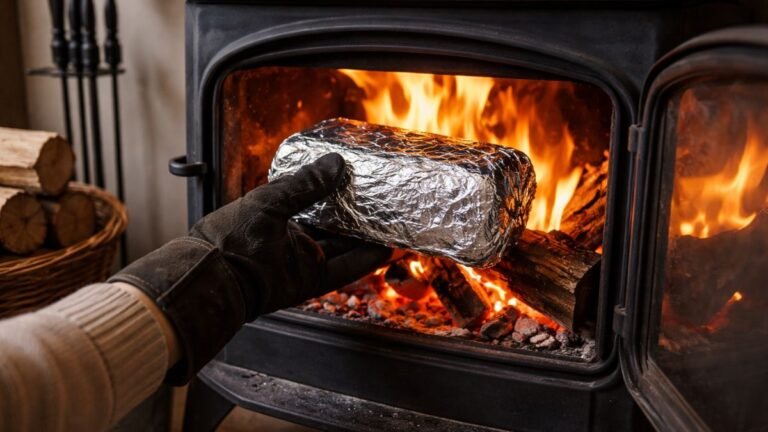
If you heat with wood, a single change can make your stove warmer, cleaner and more efficient almost overnight. I’ve been doing it since this week and I’ve seen a real difference: how to boost your wood heating with one move. That “move” isn’t a new gadget or an expensive upgrade — it’s a different way of building your fire: the top-down fire lay.
Below I’ll explain why the top-down method works, how to do it step by step, and a few quick tips to get the most heat from every log.
The one move: build your fire top-down
Most people light a fire by placing kindling and paper at the bottom, then piling larger logs on top. The top-down method reverses this: large logs go on the bottom, smaller pieces and kindling on top, with the tinder and flame on the very top. You light the fire at the top and let the flames work downward.
It’s a tiny behavioral change, but it drastically alters how the wood gas and embers form and burn, giving you a hotter, cleaner, and longer-lasting heat.
Why the top-down method improves heating
- More complete combustion: Lighting from the top heats the wood below gradually. The wood releases gases that are immediately consumed by the flames above, which reduces smoky, incomplete combustion.
- Stronger draft: Initial flames at the top create a steady upward flow of hot gases that improves draft through the chimney, stabilizing the fire sooner.
- Longer burn time: Because the larger logs burn more evenly from top to bottom, you get a steadier bed of coals and fewer flare-ups or wasted fuel.
- Less creosote and smoke: Cleaner combustion means fewer unburned particles going up the chimney — good for chimney maintenance and indoor air.
How to build a top-down fire — step-by-step
- Place two or three large, dry logs lengthwise on the stove floor or grate. Leave a small gap between them for airflow.
- Stack medium-sized logs across the big logs, creating a loose crisscross or log cabin pattern to allow air movement.
- Add smaller sticks and split kindling across the medium logs.
- Place tinder (natural firelighters, dry bark, or paper) on top of the kindling.
- Open the stove air controls fully (or follow your stove’s starting guidance).
- Light the tinder on top and close the door. Adjust air to maintain a strong, visible flame for the first 10–20 minutes, then reduce to a steady setting.
Quick tips to maximize the benefit
- Use well-seasoned wood (below 20% moisture). Wet wood undoes the gains by producing steam and smoke.
- Split larger logs so the core dries faster and burns more evenly.
- Use a stove thermometer to monitor burn temperature. Efficient burns usually occur in a mid-to-high range specific to your stove model.
- Keep the glass clean. A hot, visible flame helps maintain draft and makes it easier to judge burn quality.
- Don’t overload the firebox. Give some space for air to circulate between logs.
Safety and maintenance reminders
- Always follow the manufacturer’s start-up and air-control instructions for your specific stove or fireplace insert.
- Have your chimney inspected and swept annually. Cleaner burns reduce creosote, but regular maintenance is still essential.
- Use only recommended fuels; never burn trash, treated wood, or wet lumber.
- Install carbon monoxide and smoke detectors and test them regularly.
What to expect and how quickly you’ll notice a change
Many people notice warmer rooms and less smoke within the first few fires after switching to the top-down method. You’ll likely see longer burn cycles and fewer trips to reload the stove. Over weeks and months, expect reduced chimney deposits and a small but meaningful improvement in overall wood consumption.
Switching to a top-down fire lay is free, fast, and low risk — and it’s a genuine one-move upgrade for anyone who uses wood heat. Try it for a week and you’ll probably find, as I did, that it makes a real difference to how your home feels and how efficiently your wood burns.