
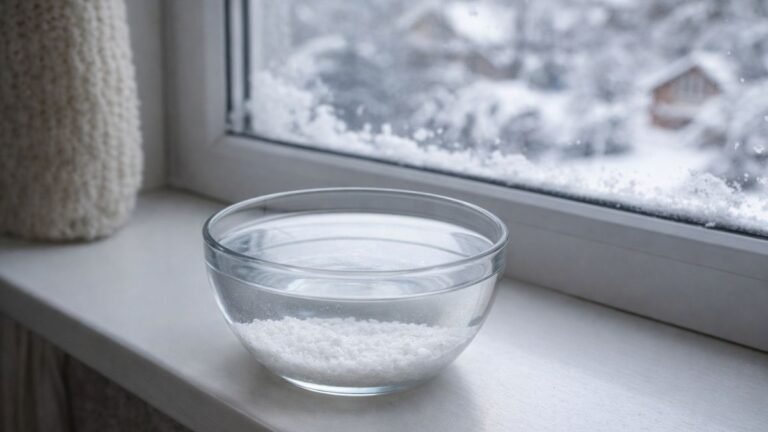
Winter brings drafts, frosted panes, and the constant battle to keep rooms cozy. People often use aluminum foil in summer to reflect sunlight and keep interiors cool. The opposite seasonal hack is surprisingly simple: place a bowl of salt water on the windowsill. A bowl of salt water by the window in winter: this simple trick works just as well as aluminum foil in summer — not by blocking heat, but by moderating temperature swings and reducing frost and condensation.
Why this works (the basic science)
Windows are weak points for heat loss. Glass has poor insulating properties and radiates warmth to the colder outside air. A bowl of salt water helps in three practical ways:
- Thermal mass: Water stores heat. During the day it absorbs solar energy or warm room air and releases it slowly when temperatures drop, smoothing out temperature fluctuations near the window.
- Lower freezing point: Adding salt means the water won’t freeze as easily. Liquid water retains thermal mass benefits at lower outdoor temperatures compared with fresh water that might freeze and stop moderating temperatures.
- Humidity control: The bowl adds a small, steady amount of humidity to the immediate area, which can reduce the tendency for moisture to condense and freeze on cold glass.
These effects are modest but can make a noticeable difference on a chilly windowsill, especially in rooms with single-pane windows or drafty frames.
How to set it up
Follow these simple steps to get the best results safely:
- Choose the right container
- Use a shallow, wide bowl or tray to maximize surface area.
- Ceramic, glass, or stainless steel bowls work fine. Avoid materials that can corrode with salt.
- Mix the solution
- Dissolve common table salt (sodium chloride) in tap water. A sensible starting point is about one tablespoon of salt per cup (250 ml) of water. You don’t need a saturated solution.
- Stir until mostly dissolved. A bit of residual grit is okay.
- Placement
- Set the bowl on the inside windowsill where it receives some daytime warmth but won’t be easily knocked over.
- Spread several small bowls along a long sill rather than one large one for better coverage.
- Safety and maintenance
- Keep bowls away from pets and small children.
- Put a coaster or tray under the bowl to catch spills; salt can damage wood finishes.
- Replace or refresh the water every 1–2 weeks to avoid stagnation and mineral buildup.
Practical benefits and realistic expectations
This trick is not a substitute for proper insulation or double-glazed windows, but it does provide a few useful benefits:
- Slightly warmer air next to the window at night due to thermal buffering.
- Reduced frost and ice formation on panes in marginal cold conditions.
- A less icy-feeling draft, because humidity and a tiny heat source change how cold air feels on skin.
Expect modest improvements rather than dramatic energy savings. If your goal is major heating cost reductions, pair this trick with draught-proofing, thicker curtains, or window insulation film.
Things to avoid
- Don’t overfill bowls or leave them where they can spill onto wooden sills or electronics.
- Avoid metal bowls that can corrode quickly with salt.
- If mold or unpleasant smells develop, clean and replace the water more often.
- If you have plants on a sill, be mindful that increased humidity and salt proximity may affect them.
When to use other methods
If you have significant condensation, structural leaks, or persistent frost, consider professional window sealing or upgrading glazing. Use the salt-water bowl as a low-cost, low-effort supplement rather than a complete fix.
Final thoughts
A bowl of salt water by the window in winter: this simple trick works just as well as aluminum foil in summer — not by reflecting anything, but by using basic thermal and physical properties to moderate the cold. It’s cheap, easy to try, and—used carefully—can make a chilly windowsill feel a little less wintry. If you like low-effort DIY solutions, it’s worth a test on a few problem windows this season.