
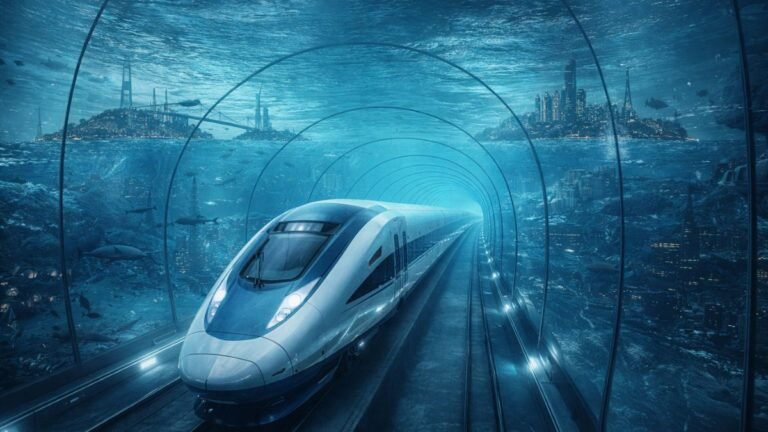
An underwater high speed train that tunnels beneath a sea and connects two continents captures the imagination. When the line claims the title of the world’s longest underwater high speed train, headlines swell with superlatives: engineering triumph, economic catalyst, and a gesture of unity between nations. But at a reported price tag of $200 billion, the project also raises uncomfortable questions: is this a lasting symbol of human progress, or a vanity project that saddles future generations with debt, environmental damage, and maintenance burdens?
The utopian case: why it could be a lasting symbol of progress
An underwater high speed train can represent several hopeful outcomes:
- Faster travel that reshapes mobility: Cutting hours from intercontinental travel can encourage business, tourism, and cultural exchange in ways air travel and ferries cannot match.
- Engineering and technological spillovers: Large-scale infrastructure projects often drive innovation in materials, construction methods, and safety systems that later benefit other sectors.
- Economic stimulus and regional integration: Construction creates jobs; once operational, a reliable rail link can catalyze trade corridors, logistics hubs, and new supply chains.
- Strategic and symbolic value: Physically linking continents can be a powerful symbol of cooperation and shared destiny, fostering diplomatic ties.
Proponents argue that, if planned and executed well, the project could pay dividends for decades. An efficient, electrified rail corridor also contributes to decarbonization by shifting traffic from planes and cars to lower-emission rail.
The dystopian case: why it might become a $200 billion regret
The flip side is stark. Large megaprojects frequently underdeliver on cost estimates, timelines, and promised benefits. Key risks include:
- Massive cost overruns and debt: $200 billion is a headline number; final costs often exceed projections, leaving taxpayers or future generations to cover the gap.
- Environmental harm: Tunnel construction and related infrastructure can damage marine ecosystems, disturb seabed geology, and create long-term impacts on biodiversity.
- Maintenance and operational complexity: Subsea structures face unique maintenance challenges. Corrosion, water intrusion, and seismic vulnerability can make upkeep extraordinarily expensive.
- Questionable demand forecasts: Ridership predictions can be optimistic. If user numbers fall short, the financial model collapses and subsidies mount.
- Geopolitical and security vulnerabilities: A fixed intercontinental link could become a strategic target in times of conflict or political tension.
History is littered with grand projects that became fiscal albatrosses. Without rigorous cost-benefit analysis, transparent procurement, and contingency planning, the project risks tipping from visionary to voracious.
How to judge: metrics beyond headlines
To decide whether this underwater high speed train is a monument of progress or an expensive mistake, evaluate it by concrete measures:
- Transparency and governance: Are contracts, cost estimates, and risk assessments public and independently verified?
- Environmental safeguards: Has a full environmental impact assessment been completed, and are mitigation strategies funded and enforceable?
- Financial realism: Do ridership and revenue forecasts use conservative assumptions? Is there a feasible plan for debt service and operating subsidies?
- Long-term maintenance plan: Is sufficient capital reserved for lifecycle costs, not just construction?
- Social equity: Who benefits from the link—local communities, commuters, multinational logistics firms? Are displacement and social costs addressed?
A pragmatic middle path
It’s possible for the project to be both ambitious and responsible. That requires stronger governance than many megaprojects receive:
- Independent audits at every stage and public reporting.
- Binding environmental commitments with penalties for noncompliance.
- Phased construction and modular procurement to limit sunk costs.
- Insurance and contingency funds for catastrophic risks.
- Regional cooperation agreements to ensure shared responsibility for security, maintenance, and operations.
Conclusion: icon or indictment?
The world’s longest underwater high speed train can be a symbol of human progress — but only if it is planned, financed, and governed with humility and eye toward the long term. Without transparency, realistic assumptions, and ecological stewardship, it risks becoming a $200 billion vanity project that future generations will regret. The difference lies not in the tunnel itself but in the choices we make: whether to build for spectacle and prestige, or to build for durable, equitable value.