
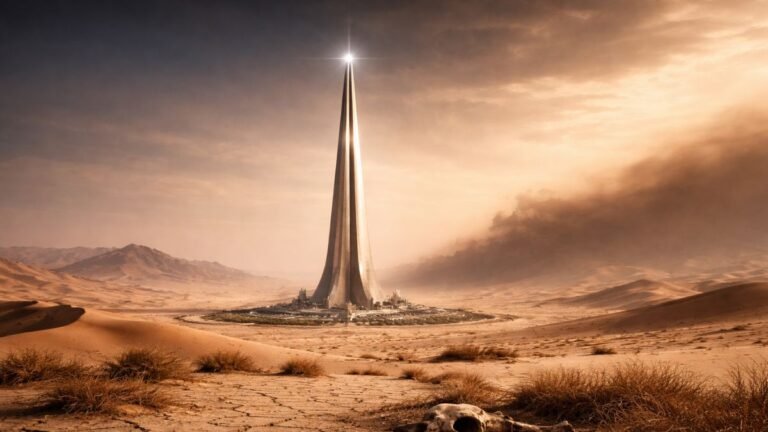
Skyscrapers have long been symbols of ambition. But ambition without context becomes spectacle. A 1km tower in the desert is not progress it is a farewell letter to common sense — a monument to priorities inverted, a statement that optics outweigh outcomes.
Glamour versus substance
Building something monumental can be inspiring. Yet grandeur divorced from practical need often produces stranded investments, wasted resources, and social disconnection. When the measure of success is headline-grabbing height rather than livability, sustainability, or economic resilience, the project becomes more about image than impact.
Short-term glamour:
- Captures media attention.
- Lures investors seeking prestige.
- Feeds national or corporate narratives of greatness.
Long-term consequences:
- High maintenance costs in harsh climates.
- Underused space if demand doesn’t match supply.
- Opportunity cost of neglecting basic services.
The environmental and logistical reality
Deserts are harsh environments. Extreme heat, sandstorms, scarce water, and fragile ecosystems complicate construction and operation. A tower that reaches a kilometer into the sky multiplies these challenges: innovative engineering is required for wind loads, cooling, and foundation stability. Those technical feats are impressive, but impressive does not equal wise.
Environmental costs include:
- Massive water consumption during construction and ongoing operation.
- Energy demands for cooling and vertical transportation.
- Disruption to local flora and fauna, whose recovery may take decades.
Logistical issues matter too. Transporting materials, skilled labor, and maintenance crews to remote desert sites adds bills that rarely appear in promotional numbers. The result is a structure that consumes more than it contributes.
Social and economic trade-offs
When public money or public land is used for vanity projects, essential services can suffer. Affordable housing, healthcare, education, and climate adaptation programs are often starved for funds while iconic towers rise.
Consider the human ledger:
- Would the same investment build hospitals, schools, or reliable public transit for thousands?
- Could decentralized energy systems and water infrastructure deliver broader resilience than a single colossal structure?
- Who benefits from the tower: elite investors, tourists, or local communities?
A 1km tower in the desert can easily become a monument to inequality — dazzling from a distance but irrelevant to everyday people who need practical solutions.
Technology and maintenance myths
Proponents may point to cutting-edge materials, smart systems, and the prestige of being “the tallest.” Yet technology solves problems only when matched to context.
Common misconceptions:
- Cutting-edge construction magically makes maintenance negligible. It often increases complexity and costs.
- A landmark will continuously attract tenants and visitors. Demand is unpredictable and can be short-lived.
- Private financing means no public risk. Governments still carry reputational and regulatory exposure; subsidies and infrastructure support often follow.
Building taller is not always the same as building better.
Alternatives that feel like progress
If the goal is genuine advancement, there are smarter ways to invest in the future of arid regions:
- Water-efficient urban design: xeriscaping, wastewater reuse, and localized desalination.
- Distributed renewable energy: solar farms and microgrids that benefit communities, not just skylines.
- Affordable, climate-adapted housing that reduces heat stress and energy use.
- Mixed-use developments scaled to human needs, promoting walkability and local economies.
These alternatives prioritize resilience and shared value over spectacle.
A final thought
A 1km tower in the desert is not progress it is a farewell letter to common sense — unless the project is conceived and executed with humility, local engagement, and clear public benefit. Monumental architecture can inspire, but inspiration should never replace responsibility.
Progress is measured by lives improved, ecosystems preserved, and futures secured. If a proposal for grandeur cannot make that claim, it may be time to ask whether the tallest thing in the landscape is the best investment for people who actually live there.