
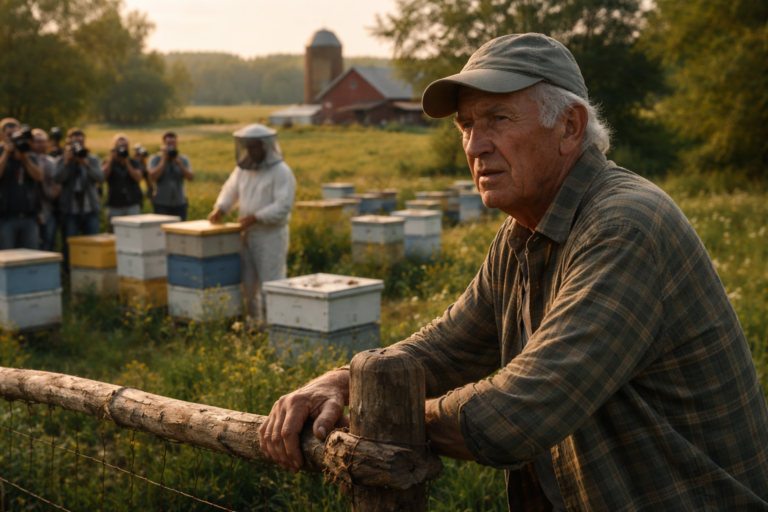
When a retired homeowner lent a corner of his property to a local beekeeper, he expected to be doing a small favor to a neighbor and helping local pollinators. Instead, he was hit with a notice demanding farm taxes. The decision has ignited a national debate about what counts as agricultural use, who benefits, and how tax law should treat non-commercial stewardship.
The simple favor that became a legal headache
The retiree allowed a beekeeper to place hives on his land for seasonal use. There was no lease, no cash exchanged, and the retiree did not sell honey or otherwise profit from the arrangement. Neighbors recall seeing the beekeeper tending hives and harvesting honey on his own property, while the retiree remained a passive host.
Despite the informal nature of the arrangement, a tax authority reclassified the plot as farmland eligible for agricultural taxation. The retiree was sent a bill and told his property now falls under farm tax rules, which carry different rates and reporting requirements. “I earn nothing from this,” he told reporters, emphasizing that the arrangement was a favor rather than a business enterprise.
How the ruling was justified
Officials point to statutory definitions that classify land used for certain agricultural activities — including beekeeping — as farmland. Their reasoning often hinges on:
- Physical use of the land for a recognized agricultural purpose.
- The presence of ongoing agricultural activity, such as hive placement and maintenance.
- Precedent where similar uses led to reclassification.
The ruling did not require proof of profit or a formal lease; use alone was sufficient in the eyes of the authority. Critics argue this interpretation stretches the intent of farm tax provisions, which were historically designed to support working farms and food production, not private favors.
Why the retiree’s claim resonates
The retiree’s protest — “I earn nothing from this” — taps into several powerful themes:
- Fairness: Many see it as unjust to tax someone as a farmer when they receive no income from the activity.
- Intent: The retiree’s intention was neighborly assistance and land stewardship, not commercial agriculture.
- Burden: Retirees and small landowners often operate on fixed incomes, and unexpected tax bills can be financially serious.
Public reaction has been swift. Social media and local news outlets have amplified the story, drawing sympathy for the retiree and raising questions about administrative overreach.
Broader implications for beekeepers and landowners
This ruling has larger implications beyond one property owner:
- Small-scale beekeepers who rely on informal arrangements may face new scrutiny.
- Landowners who host conservation projects, hobby farms, or community gardens could be reclassified in ways they didn’t anticipate.
- Local governments may see a rise in appeals and requests for clarification, increasing administrative load.
Those concerns make the case more than a single billing dispute; it’s a flashpoint in the ongoing tension between regulation and community-based land use.
Where policy and common sense might meet
The controversy highlights gaps in policy definitions. Possible responses include:
- Clarifying statutory language to distinguish commercial agricultural enterprises from non-commercial or charitable uses.
- Creating exemptions for passive hosts who receive no payment and do not sell agricultural products.
- Introducing a tiered approach that considers scale, intent, and economic benefit rather than a binary classification.
- Providing a simple administrative appeal or mediation process so disputes can be resolved quickly and fairly.
Policymakers could also use this moment to revisit the purpose of farm tax benefits and ensure they reach the intended beneficiaries — active producers who need financial support to sustain livelihoods and food systems.
What comes next
The retiree is appealing the tax decision, and the case may set a precedent. Whether the ruling is upheld or overturned, the debate is unlikely to fade. It raises important questions about how a society values small-scale stewardship, community cooperation, and the role of law in defining agricultural life.
For now, the story is a reminder that policies drafted for broad categories can have surprising and personal consequences. As the nation watches, lawmakers and tax authorities will need to balance technical definitions with fairness, ensuring that retirees who lend a hand — and a patch of land — aren’t punished for their goodwill.