
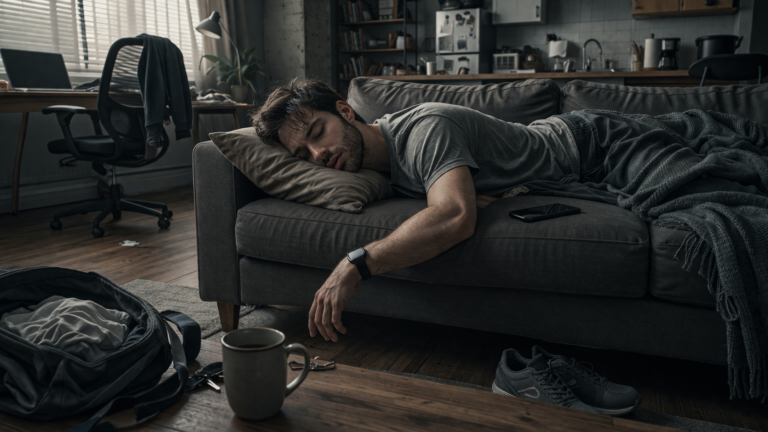
If your days feel physically tiring without effort, this habit explains it: prolonged sitting and a generally sedentary lifestyle. You might assume tiredness means you need more sleep, but long stretches of inactivity quietly wreck your energy, mood, circulation, and even your sleep quality. Understanding the “sitting sickness” problem helps you fix it quickly.
Why sitting drains energy
Sitting is not just a posture — it changes how your body works:
- Reduced blood flow: Staying seated for hours slows circulation, so muscles and brain get less oxygen and nutrients. That creates a constant low-level fatigue.
- Muscle deconditioning: When muscles aren’t used, they weaken. Weak muscles burn less energy at rest, which lowers metabolic drive and leaves you feeling sluggish.
- Insulin and metabolism shifts: Prolonged inactivity blunts how your body handles glucose and lipids. That leads to spikes and crashes in blood sugar that feel like tiredness.
- Posture and breathing: Slumped sitting compresses the chest, making breaths shallower. Less oxygen intake = more fatigue.
- Neurochemical effects: Movement stimulates neurotransmitters (dopamine, endorphins) that boost alertness. Lack of movement reduces these stimulants.
- Sleep disruption: Ironically, too little daytime activity can fragment nighttime sleep, creating a cycle of daytime tiredness and poor rest.
Signs your tiredness is from sitting, not from illness
Consider this pattern: you wake up reasonably rested, feel fine after a morning walk, then energy collapses in the afternoon while you’ve been at a desk. You don’t feel mentally exhausted — more like a physical heaviness in your limbs. You notice stiff hips, back pain, or numbness after long periods of sitting. Those are classic clues.
Simple, science-backed fixes
You don’t need a gym membership or hours of exercise. Small, consistent changes reset your body’s energy systems quickly.
- Stand up every 30–60 minutes. Use a timer or an app. Even 2–3 minutes of standing or walking lifts circulation.
- Move in short bursts. Do a 3–5 minute walk, stair climb, or bodyweight routine (squats, lunges, calf raises) every couple of hours.
- Build strength 2–3 times a week. Short resistance sessions (20–30 minutes) improve muscle tone and long-term energy.
- Prioritize midday sunlight. Natural light helps regulate circadian rhythms and boosts alertness.
- Improve posture and breathing. Sit with a supported spine, open chest, and take a few deep diaphragmatic breaths each hour.
- Hydrate and snack smart. Mild dehydration and high-sugar snacks create fatigue. Choose water and protein-rich snacks to keep energy steady.
- Use a standing desk or an adjustable setup. Alternate between sitting and standing to break long sedentary stretches.
- Schedule movement like a meeting. Put walks and micro-workouts on your calendar so they actually happen.
A one-week starter plan
Day 1: Set a 45-minute timer and stand for 3 minutes when it rings. Repeat during work hours.
Day 2: Add a 10-minute brisk walk after lunch.
Day 3: Try a 5-minute bodyweight circuit (squats, push-ups, hip hinges) mid-morning.
Day 4: Swap one 60-minute sitting block for standing while reading or taking calls.
Day 5: Do a 20-minute strength session (resistance bands or bodyweight).
Day 6: Increase walk to 15 minutes and add gentle stretching for hips and chest.
Day 7: Review how you feel — energy, sleep, focus — and keep the habits that helped.
What to expect and when
You may notice small changes (more alert afternoons, less stiffness) in just a few days. Bigger benefits — improved endurance, better sleep, and steadier moods — appear over weeks. If fatigue persists despite reducing sedentary time, consult your healthcare provider to rule out medical causes such as anemia, thyroid issues, or chronic conditions.
Final thought
If your days feel physically tiring without effort, the simplest, most overlooked habit to examine is how much you sit. Breaking the cycle with brief, regular movement and modest strength work can flip the switch on your energy. Start small, be consistent, and your body will repay you with more natural, sustainable vitality.