
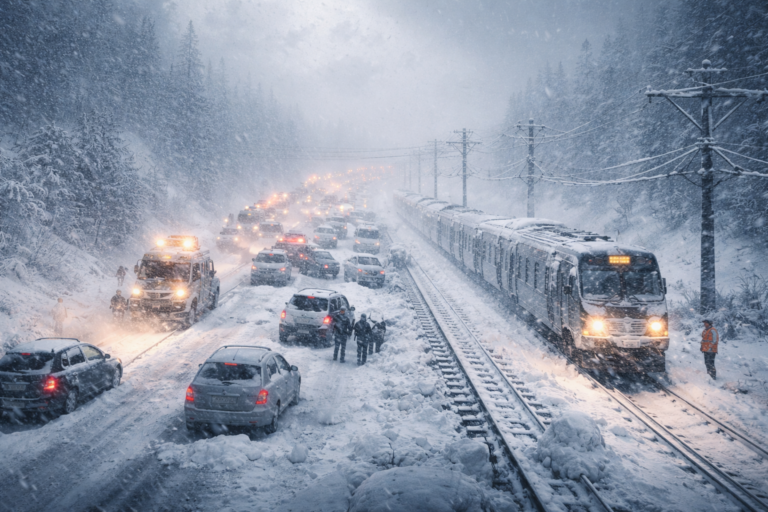
A major winter storm warning is in effect, with forecasts calling for up to 55 inches of snow in some areas. Such an extreme event can overwhelm roads and rail networks, leaving transport systems paralyzed and communities facing power outages, supply delays, and emergency-response challenges.
This post explains what to expect, how authorities respond, and practical steps you can take to stay safe before, during, and after the storm.
What the warning means
A winter storm warning signals dangerous winter weather is imminent or occurring. When snowfall totals reach the levels forecast—measured in feet rather than inches—normal travel becomes hazardous or impossible. Heavy, persistent snow:
- Reduces visibility to near zero during heavy bands.
- Quickly accumulates on roads, making surface traction impossible without plowing or chains.
- Can overload electric and telecommunication lines when combined with wind.
- Disrupts rail operations through snowdrifts, frozen switches, and reduced sight lines.
Transport systems are particularly vulnerable. Trains can be delayed or canceled when tracks are blocked; highways and local roads can become impassable; and airports may suspend operations for safety.
Immediate impacts to expect
- Road closures and travel advisories statewide or regionally.
- Suspension or severe reduction of passenger rail and transit services.
- Delays to freight and supply chains—grocery, fuel, and medical supplies may be slower to arrive.
- Extended power outages from fallen trees and ice-laden wires.
- Increased risk for vehicle accidents and stranded motorists.
How authorities prepare and respond
Emergency management agencies, utility companies, and transportation departments typically:
- Pre-treat major roadways with salt and brine and deploy plow fleets during and after snowfall.
- Stage tow trucks, ambulances, and rescue teams in areas forecast to be hardest hit.
- Issue travel advisories, mandatory closures, or evacuation orders as needed.
- Coordinate with rail companies to clear tracks and inspect critical infrastructure.
- Provide public updates via official websites, social media, and local media outlets.
Even with these measures, extreme snowfall can overwhelm resources. That’s why personal preparation is essential.
What you should do now
Prepare before the worst arrives. Use the following checklist to reduce risk and ensure basic needs are covered.
Essential preparations at home
- Stock a 72-hour emergency kit: water (one gallon per person per day), nonperishable food, flashlight, batteries, first-aid kit, and necessary medications.
- Ensure you have blankets, warm clothing, and a battery-powered or hand-crank radio.
- Charge phones and portable power banks; keep chargers handy.
- Prepare for power loss: have alternative heating options that are safe for indoor use or plan to relocate to a warming center if needed.
- Protect pipes: insulate exposed pipes and know how to shut off your water valve.
If you must travel
- Avoid travel unless absolutely necessary. If authorities advise staying home, comply.
- If driving is unavoidable: keep your fuel tank near full, travel with an emergency kit (blanket, shovel, food, water, traction mats), and tell someone your route and expected arrival time.
- For rail or transit commuters: check service advisories before leaving and expect cancellations or limited service.
For community and vulnerable populations
- Check on elderly neighbors, people with disabilities, and those with limited resources.
- Make a plan for pets and livestock; ensure shelter and enough feed.
- Know the locations of local warming centers and shelters.
After the storm
- Stay off roads until officials declare them safe. Snow removal can take days in heavily impacted zones.
- Report downed power lines and gas leaks to the appropriate utility immediately—do not attempt to move downed lines.
- Use generators outdoors only; carbon monoxide poisoning is a major post-storm risk.
- Clear snow from vents and ensure chimneys remain open if using indoor fireplaces or stoves.
Final note
A storm that could drop up to 55 inches of snow is rare but potentially catastrophic. Follow official guidance, prepare now, and prioritize safety over convenience. If transport systems become paralyzed in your area, patience and preparedness will keep you and your loved ones safer until services can be restored.