
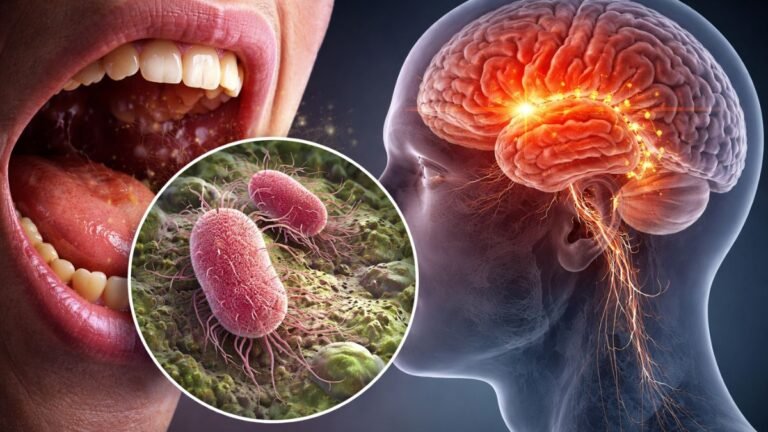
New research is sharpening a spotlight on an unexpected suspect in neurodegenerative disease: a common mouth bacterium long linked to gum disease. While Parkinson’s disease (PD) is complex and likely caused by a mix of genetics and environmental factors, scientists are increasingly investigating whether oral microbes could play a role in triggering or accelerating the condition.
The bacterium under suspicion
Porphyromonas gingivalis (P. gingivalis) is a keystone pathogen in chronic periodontitis. It’s well known to dentists and researchers for damaging gums and contributing to tooth loss. In recent years P. gingivalis has also been connected to systemic inflammation and illnesses outside the mouth — most famously Alzheimer’s disease — and now attention has turned to Parkinson’s.
Several studies have detected evidence that P. gingivalis, its toxic enzymes, or its inflammatory byproducts may reach sites beyond the oral cavity. That has led scientists to ask: could this common mouth microbe be one of the triggers that starts or worsens the neuroinflammatory processes tied to Parkinson’s?
How a mouth bacterium could influence the brain
Researchers propose several plausible pathways by which P. gingivalis might influence Parkinson’s-related pathology:
- Direct invasion and spread: Periodontal bacteria can enter the bloodstream through inflamed or bleeding gums. From there, microbial components might reach the brain or peripheral nerves.
- Inflammation and immune activation: Chronic oral infection keeps the immune system activated. Long-term systemic inflammation is a known driver of neurodegeneration and can make the brain more vulnerable to damage.
- Bacterial toxins and enzymes: P. gingivalis produces gingipain proteases and lipopolysaccharides (LPS), molecules that disrupt host tissues and trigger strong inflammatory responses. These toxins could promote misfolding or aggregation of alpha-synuclein, the hallmark protein that clumps in Parkinson’s.
- Gut‑brain interactions: Swallowed oral bacteria can alter the gut microbiome, and emerging evidence links gut dysbiosis to Parkinson’s. The vagus nerve provides a physical route for pathological signals to travel from gut to brain.
- Molecular mimicry and immune cross‑reactivity: Immune responses to bacterial antigens might mistakenly target similar proteins in nervous tissue, accelerating neurodegeneration.
Each mechanism remains under investigation; none yet proves causation. But together, they form a biologically plausible story that connects poor oral health to processes known to harm dopaminergic neurons in the brain.
What the evidence shows so far
Epidemiological studies have found associations between periodontitis and increased risk of Parkinson’s or worse PD outcomes. Laboratory experiments show P. gingivalis products can provoke inflammation and alpha-synuclein changes in cell and animal models. Proteins from P. gingivalis have even been detected in brain tissue in some studies of other neurodegenerative diseases.
Importantly, association is not the same as causation. Parkinson’s takes years to develop, and multiple environmental exposures—pesticides, head injury, gut microbes, and others—have been implicated. The current body of research suggests P. gingivalis might be one contributing factor rather than the sole cause.
What this could mean for prevention and care
If oral bacteria like P. gingivalis contribute to Parkinson’s risk or progression, the implications for prevention and management could be significant — and practical:
- Oral hygiene matters: Regular brushing, flossing, and dental checkups reduce the burden of periodontal disease and lower the chance of bacteria entering the bloodstream.
- Early treatment of gum disease: Addressing periodontitis promptly may reduce systemic inflammation and potential downstream effects.
- Microbiome‑targeted therapies: Future interventions might include vaccines, targeted antimicrobials, or probiotics designed to shift oral and gut microbial communities.
- Integrated care: Closer collaboration between neurologists, dentists, and primary care providers could help identify modifiable risk factors and support comprehensive patient care.
Takeaway
The headline “The Parkinson’s disease trigger may be this well‑known mouth bacterium” captures an intriguing and evolving line of research. Porphyromonas gingivalis is a plausible contributor to processes linked with Parkinson’s, but it is not established as a definitive trigger. The science is advancing quickly, and simple steps such as maintaining good oral hygiene and treating gum disease remain sensible, low‑risk measures that could have broader health benefits. As researchers continue to untangle the complex web of factors behind Parkinson’s, the mouth — once considered far from the brain — has earned a place in the conversation.