
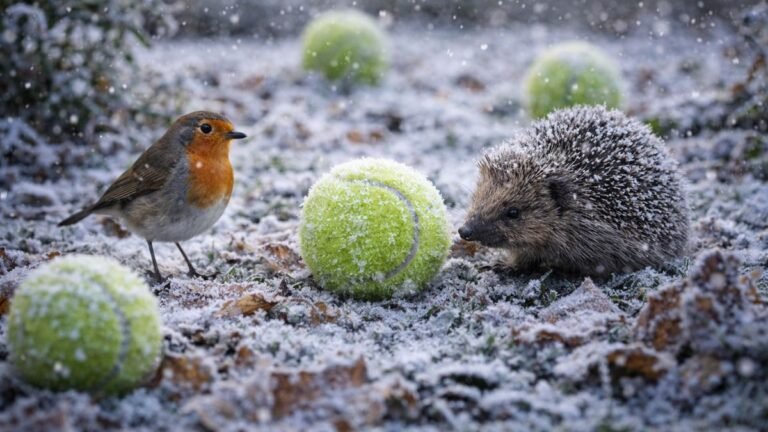
Winter is a dangerous time for small wildlife. Cold, scarce food and hidden hazards like loose netting, sharp garden stakes and reflective glass put birds and hedgehogs at risk. The good news: a simple, inexpensive action — using tennis balls in your garden — can reduce those risks and make your outdoor space much safer.
Why tennis balls help
Tennis balls are bright, soft and easy to work with. Their colour makes hazards more visible to animals that move at night or fly in low light. Their soft surface cushions sharp points and prevents injuries. And because they’re cheap (or often already lying around), you can use them widely without spending much or buying special equipment.
Using tennis balls in your garden is an example of a tiny change with outsized impact: visible markers reduce entanglement, cushioned caps cut the risk of impalement, and simple hanging markers can stop bird collisions.
Practical ways to use tennis balls in your garden
Here are easy, proven ways to deploy tennis balls this winter:
Mark and protect garden netting
Tie or thread tennis balls along the edges of fruit or vegetable netting so birds and hedgehogs can see it. Space them every 30–50 cm where netting sits low. You can make a small slit and thread the net through the ball, or loop string through and tie. This reduces accidental entanglement and gives animals a clear visual cue to avoid the hazard.Cap sharp stakes, rebar and fence posts
Cut a small X or slice into a tennis ball and push it onto the exposed end of a stake or post. The soft ball pads the point, reducing the chance of a hedgehog getting hurt while foraging at night — and protecting curious children and pets too.Prevent bird strikes on glass
Birds often collide with reflective windows, especially in winter when trees are bare and light is low. Hang tennis balls (or strings of them) at intervals in front of large panes to break up reflections and alert flying birds. Use lightweight cord and hang balls at varying heights for best coverage.Mark pond edges and steep drops
Floating or tethered balls can make pond edges and steep borders more obvious to hedgehogs and foxes, helping them avoid accidental falls into cold water. Make sure any floating balls are anchored so they don’t wash away.
How to do it safely
A few simple precautions keep this low-tech solution effective:
- Clean old tennis balls before using them — rinse to remove dirt, chemicals or potential contaminants.
- Cut carefully with a sharp knife and wear gloves if needed. Create neat slits rather than the jagged cuts that could snag.
- Attach balls loosely enough that wildlife can move around them; avoid trapping anything between balls and other garden fixtures.
- Check your installations regularly to ensure they haven’t become a hazard themselves (e (Incomplete: max_output_tokens)
Conclusion
Sometimes, the smallest actions can have the biggest impact. Placing tennis balls in your garden may seem like a simple or even unusual idea, but it can play a meaningful role in protecting vulnerable wildlife during harsh winter months. By offering safer spaces, reducing risks, and supporting the natural movement of birds and hedgehogs, this small gesture contributes to a healthier ecosystem right outside your home. As winter approaches, taking a moment to make your garden more wildlife-friendly isn’t just thoughtful—it’s a powerful way to help nature thrive.