
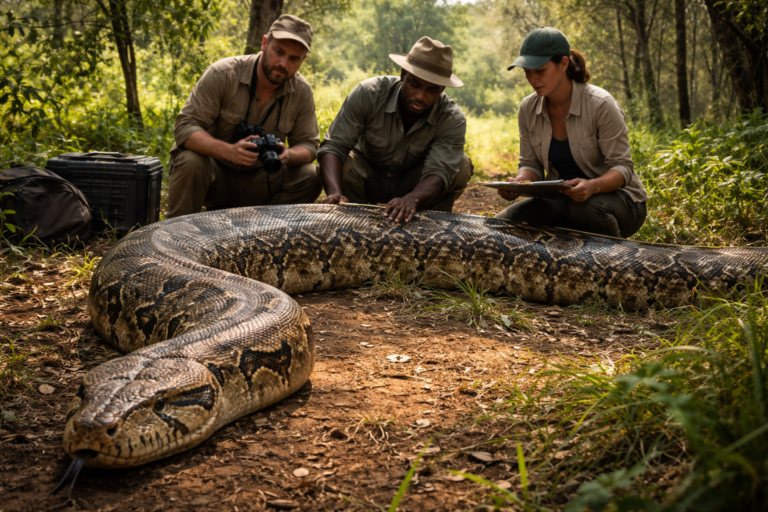
An exceptionally large African python is confirmed by herpetologists during a certified field expedition — a discovery that has captivated scientists, local communities, and conservationists alike. The finding, documented during a sanctioned survey in a remote savanna region, highlights both the enduring mysteries of large reptiles and the importance of careful, ethical fieldwork.
The discovery
During a multi-day, certified field expedition, a team of herpetologists encountered an unusually large African python. The team, operating under government permits and following strict scientific and animal welfare guidelines, was conducting routine biodiversity assessments when local trackers reported sightings of a notably massive snake.
On-site measurements and photographic documentation were completed by the lead herpetologists. The individual was carefully handled, scanned, and released after a brief period of assessment. Based on direct measurement and multiple corroborating methods, the python was recorded at approximately 6.5 meters (21 feet) in length with an estimated mass near 120 kilograms. Such dimensions place this specimen among the largest recorded for its species.
How scientists confirmed the size
Accurate confirmation required a combination of methods to ensure reliability and minimize stress to the animal:
- Non-invasive photographic scaling using laser pointers and reference markers
- Gentle manual measurement by trained personnel with two experienced handlers
- Weighing using sling scales while the animal remained calm and minimally restrained
- High-resolution photographs and GPS coordinates for independent review
The expedition team also collected shed skin, fecal samples, and a small blood sample for genetic analysis and health screening. All procedures complied with ethical guidelines to minimize impact on the animal and its habitat.
Why this matters
Large specimens like this African python are scientifically valuable for several reasons:
- They provide insight into the species’ growth limits and life history traits.
- Genetic samples can reveal population structure, connectivity, and potential inbreeding issues.
- Health assessments help researchers monitor disease, parasite loads, and overall population health.
- The presence of large predators is often an indirect indicator of a functioning ecosystem with adequate prey biomass.
Beyond science, the discovery has cultural and educational value. Local communities who assisted the expedition now have documented evidence of the species’ presence, which can support community-led conservation initiatives and ecotourism opportunities.
Conservation implications
The confirmation of an exceptionally large African python emphasizes both opportunity and responsibility:
- Protecting habitat: Large reptiles require substantial territories and prey. Maintaining connected, healthy habitats is critical.
- Reducing human-wildlife conflict: Education and mitigation strategies can help prevent dangerous encounters and retaliatory killings.
- Monitoring populations: Regular, certified surveys help detect trends and inform management plans.
- Supporting legal protection: Documented occurrences can strengthen arguments for habitat protection or inclusion in regional conservation priorities.
Safety and ethics during the expedition
The certified field expedition followed strict protocols to ensure safety and ethical treatment:
- Obtain all necessary permits and follow local regulations.
- Work with trained herpetologists and experienced local trackers.
- Use non-invasive techniques whenever possible.
- Minimize handling time and stress for the animal.
- Document findings thoroughly and transparently for scientific review.
These practices not only protect the animals but also improve the quality and credibility of the data collected.
Next steps
The research team has submitted their data, photographs, and samples to peer review and local wildlife authorities. Genetic analysis is underway to determine whether this individual belongs to a distinct lineage or represents unusually large growth within a known population.
Future work will focus on:
- Continued certified field surveys to identify more individuals or evidence of breeding populations
- Long-term monitoring to assess population health and trends
- Community engagement programs to foster coexistence and shared stewardship
Conclusion
An exceptionally large African python is confirmed by herpetologists during a certified field expedition, and the finding underscores the value of careful, ethical field science. Beyond the excitement of uncovering a remarkably large animal, the discovery reinforces the need for habitat protection, community collaboration, and continued research to ensure that these iconic reptiles persist in the wild for generations to come.