
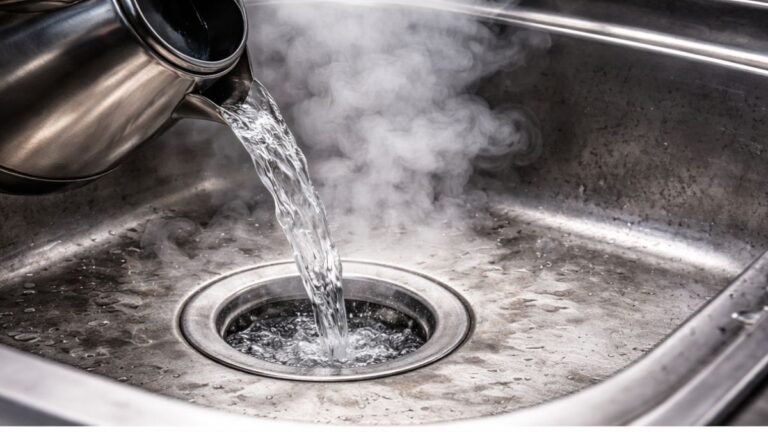
Pouring boiling water down the drain can feel like a quick fix for a greasy sink or a slow-moving drain. The idea seems logical: melt the clog and wash it away. But “Why pouring boiling water down the drain is actually a bad idea for your plumbing pipes” is a question worth asking — and the answer may surprise you.
What boiling water does to different pipe materials
Not all pipes are created equal. Modern plumbing commonly uses copper, PVC, CPVC, PEX, or cast iron. Each material reacts differently to very hot water.
- PVC and ABS: These plastics soften at relatively low temperatures. Boiling water (212°F / 100°C) can warp or weaken PVC or ABS joints and fittings, making leaks and long-term failure more likely.
- CPVC and PEX: Designed for hot water, these systems handle heat better than PVC but aren’t immune. Repeated exposure to boiling temperatures can stress fittings, seals, and the pipe material over time.
- Copper and cast iron: Metal pipes tolerate heat, but sudden temperature changes can stress old pipes and joints. Rapid expansion and contraction — especially in older or corroded systems — can lead to cracks or loosened connections.
How boiling water can make clogs worse
Boiling water might temporarily liquefy grease or soap scum, but that’s not always helpful. Melted grease will travel down the pipe, then cool and re-solidify farther along where the pipe may be narrower, creating a larger or deeper clog.
Similarly, boiling water can force debris to compact against bends or joints. In multi-trap systems, melted material can lodge where mechanical removal is harder. So the short-term improvement often becomes a longer-term headache.
Damage to seals, adhesives, and fixtures
Plumbing systems contain more than pipe lengths: rubber gaskets, wax rings, solvent-welds, and various adhesives hold the system together. High heat can:
- Degrade rubber seals and O-rings, causing leaks at traps and appliance connections.
- Loosen or weaken solvent-welded joints in plastic piping.
- Warp sink or tub fixtures, and damage finishes on drains or chrome-plated parts.
These problems can be subtle and progressive, surfacing weeks or months after a single exposure to boiling water.
Harm to septic systems and bacterial cleaners
Many households on septic systems rely on a balanced bacterial ecosystem to break down waste. Pouring boiling water, especially repeatedly, can kill beneficial bacteria and upset that balance. Similarly, using boiling water with enzyme-based drain cleaners will reduce their effectiveness.
Safety and chemical interactions
Never pour boiling water into a drain that contains chemical drain cleaners. The combination can trigger dangerous splattering or chemical reactions, risking burns or toxic fumes. Boiling water also raises the risk of scalding when working under sinks or around vulnerable plumbing.
Better, safer alternatives
If you’re trying to clear a slow or clogged drain, try these less risky options first:
- Mechanical removal: Use a plunger, hand-crank auger (drain snake), or remove and clean the P-trap.
- Hot tap water: Use several liters of hot tap water rather than boiling water. It’s effective for many grease buildups without extreme temperatures.
- Natural cleaners: Baking soda followed by vinegar can help loosen organic build-up when combined with hot (not boiling) water flushes.
- Enzyme cleaners: Safe for pipes and septic systems; they take longer but work by digesting organic material.
- Professional help: For persistent or recurring clogs, call a plumber. They can identify underlying problems like tree roots, collapsed pipe sections, or improperly installed vents.
Quick rules to remember
- Don’t pour boiling water into PVC or plastic pipes.
- Avoid boiling water if you use chemical drain cleaners or have a septic system.
- Use mechanical methods first for physical clogs.
- Use hot — but not boiling — water for grease buildups, and follow with soap and a hot-water flush.
Final thought
Understanding “Why pouring boiling water down the drain is actually a bad idea for your plumbing pipes” helps save you from costly repairs and inconvenient leaks. Boiling water can be tempting as a cheap fix, but it risks damaging pipe materials, seals, and septic ecosystems — and can even worsen clogs. Choose safer methods first, and call a professional when in doubt. Your pipes will thank you.