
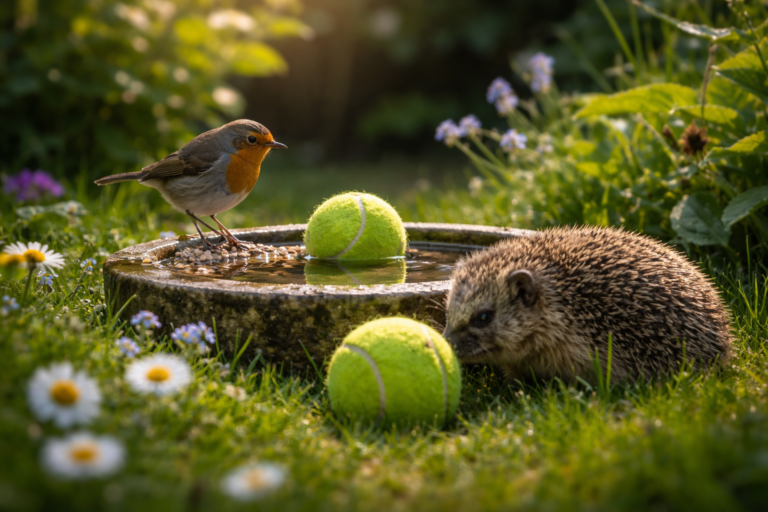
A little creativity and a few old tennis balls can make your garden a safer place for wildlife. Hedgehogs, birds and other small animals face hidden hazards in suburban gardens: sharp stakes, loose netting, inaccessible ponds and careless mowing can all cause injury or death. Repurposing tennis balls is an inexpensive, low-effort way to reduce those risks—and the change starts with one small gesture.
Why tennis balls work
Tennis balls are:
- Soft and resilient, so they cushion sharp edges.
- Durable outdoors for moderate use.
- Easy to cut, fasten or attach without special tools.
- Readily available second‑hand, making reuse environmentally friendly.
Used thoughtfully, they solve common garden threats: covering exposed metal posts, lifting netting so creatures don’t get tangled, marking hedgehog highways, and even helping small mammals escape ponds.
Practical uses: simple projects that protect wildlife
Here are safe, practical ways to use tennis balls around your garden.
1. Post and stake caps
Garden stakes, wire ends and broken fence posts can impale or trap animals. Turn a tennis ball into a soft cap:
- Cut a small slit across one side of the ball.
- Push the slit over the stake or post so the ball sits snugly on top.
This cushions the sharp tip and makes it less likely a hedgehog or bird will be injured if they brush past at night.
2. Keep netting off the ground
Garden netting and garden fabric can entangle hedgehogs, birds and mammals. Use tennis balls to prop netting up slightly:
- Thread string or thin rope through several balls (make a small hole if needed).
- Anchor the string so the balls sit on top of the net, creating a visible, raised barrier animals can avoid.
This prevents loose netting from forming loops that small animals can get caught in.
3. Pond escape aids
Ponds are beautiful but dangerous if animals can’t get out. You can combine tennis balls with a plank to create buoyant ramps:
- Attach a few balls beneath a wooden board (use cable ties or waterproof tape) so the board has lift.
- Position the board at a shallow angle into the pond, anchored at one end.
This creates a floating ramp a hedgehog or bird can use to climb out. Check stability regularly and use natural materials where possible.
4. Mark access holes and hazards
If you’ve cut a hedgehog highway (a 13 x 13 cm hole in a boundary) or left a temporary hole for wildlife, mark it so gardeners and neighbors don’t block it. Bright tennis-ball halves fixed above or beside the hole are visible and friendly reminders to keep the route open.
Do’s and don’ts
Do:
- Clean tennis balls before use—remove dirt, grit and any chemical residues.
- Replace heavily chewed or damaged balls promptly; bits can become choking hazards.
- Combine tennis-ball fixes with other measures: provide hedgehog highways, leave log piles, and make ponds safe with gradual edges or ramps.
- Check garden fixes regularly, especially after storms.
Don’t:
- Use balls as the sole solution for complex hazards (e.g., tangled netting needs removing or replacing).
- Leave small pieces within reach of (Incomplete: max_output_tokens)