
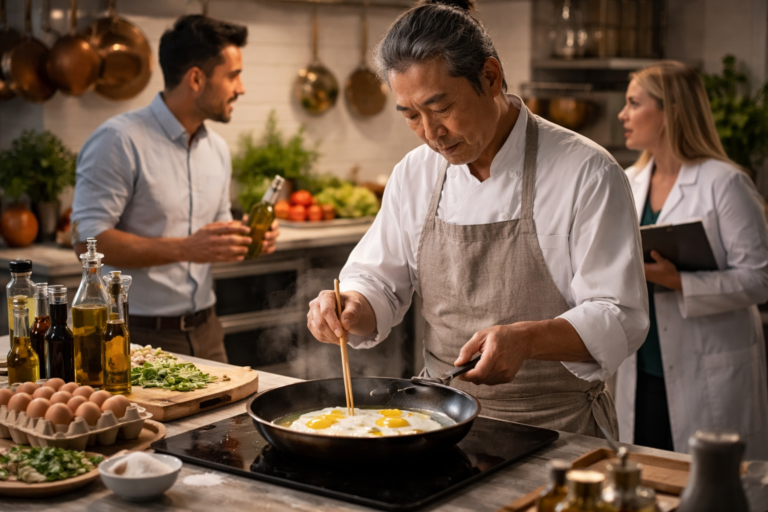
A short cooking clip from a Japanese chef has ignited a surprising debate: can you cook perfect eggs without any frying oil at all? The minimalist technique — steaming, using a nonstick pan with water, or relying on a well-seasoned surface — is being hailed by some home cooks as a healthier alternative, while nutritionists and culinary pros push back. Here’s a clear look at what’s happening, why experts are divided, and how you can decide what’s best for your kitchen.
What is the technique?
The viral method is simple: instead of pouring oil or butter into a pan, the chef heats a high-quality nonstick or well-seasoned skillet, cracks the egg, and adds a small splash of water (or simply covers the pan). The trapped steam cooks the egg gently, yielding tender whites and a runny yolk without browning or crisp edges.
Key steps:
- Heat a good nonstick or seasoned pan over medium-low heat.
- Crack the egg into the pan.
- Add a teaspoon or so of water (optional) and immediately cover to trap steam.
- Cook until the white is set and the yolk reaches your preferred doneness.
- Slide the egg out with a silicone spatula.
Fans praise the texture and the zero-grease finish; critics question whether ditching oil is actually healthier or just trendy.
Why nutritionists are clashing
Nutritionists’ opinions diverge for a few reasons:
- Some emphasize calorie and fat reduction. Replacing oil can lower the calorie content of a meal and reduce added saturated fats if you typically use butter. For people watching weight or cholesterol, that can matter.
- Others highlight nutrient absorption. Fat helps the body absorb fat-soluble vitamins (A, D, E, K) and antioxidants from other foods on the plate. A completely fat-free meal may reduce absorption of these nutrients.
- There’s also a culinary argument: oils add flavor, mouthfeel, and browning reactions (Maillard reactions) that many enjoy. Removing oil changes taste and texture — which can be a pro or con depending on preference.
- Practical concerns arise too: not every pan behaves the same, and lower-fat methods require different technique to avoid sticking.
This mix of nutritional, sensory, and practical priorities explains why professionals clash: they’re evaluating different outcomes and weighing trade-offs.
What science actually suggests
The debate boils down to context rather than absolutes. A few balanced points to consider:
- Replacing excessive saturated fat (e.g., lots of butter) with lower-fat cooking can be beneficial for cardiovascular risk in some people. But moderate use of unsaturated oils (olive, canola) provides essential fatty acids and is part of many healthy patterns.
- Cooking without added fat can reduce calories, which helps for weight management if not compensated by other foods.
- For optimal nutrient absorption from a meal containing fat-soluble vitamins, including a small amount of healthy oil or fat is useful.
- The quality of the pan and technique matters. A nonstick surface or a properly seasoned cast-iron pan makes oil-less cooking viable; otherwise, sticking and food loss become concerns.
In short: the technique is safe and useful for many, but it isn’t a universal “health upgrade” that automatically makes fried foods healthy.
How to try the method safely and deliciously
If you want to experiment without sacrificing flavor or nutrition, try these tips:
- Use a high-quality nonstick pan or well-seasoned cast iron.
- Add a tiny amount of healthy oil (olive, avocado) after cooking or on the plate to preserve nutrient absorption and mouthfeel.
- Season well — acids (a squeeze of lemon) and herbs can boost flavor without oil.
- For those with specific dietary needs (e.g., heart disease, lipid issues), consult a registered dietitian before drastically changing fat intake.
Bottom line
This Japanese chef’s egg technique is an elegant reminder that good cooking is often about technique, not just ingredients. It’s a legitimate method for reducing added fat and enjoying a different egg texture, but it’s not a one-size-fits-all health solution. Nutritionists clash because they’re weighing different goals — calorie reduction, nutrient absorption, flavor, and satisfaction — and the “right” choice depends on your priorities and health context.
Try the technique, adapt it to your palate, and remember: balance and context beat absolutes when it comes to food and health.