
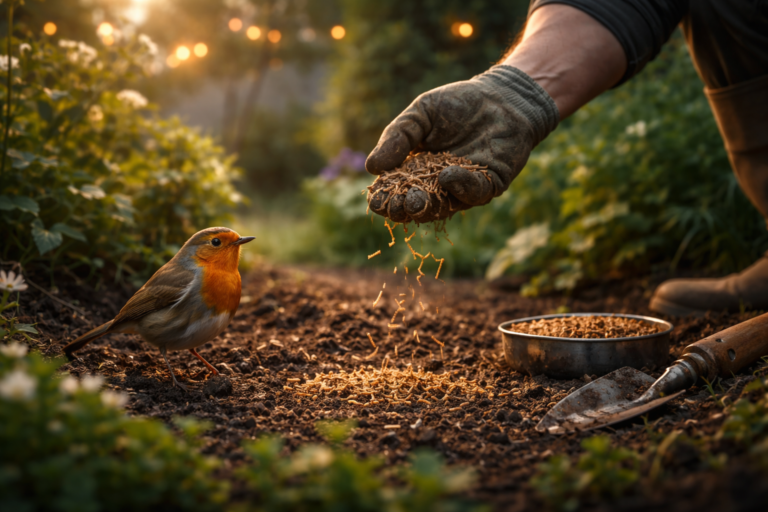
As temperatures drop and insects disappear, our garden robins can struggle to find enough energy to survive cold nights. Gardeners are urged to act tonight for robins: the simple 3p kitchen staple that can make a real difference — a small spoonful of plain porridge oats. It’s cheap, easy to serve and gives birds a slow-release source of carbohydrates they need to stay warm until morning.
Why a tiny helping matters
Robins are territorial and often feed alone on the ground, hunting for worms and insects. In frosty weather those food sources are scarce and robins need extra calories to maintain their body heat. A modest portion of oats provides filling energy that’s easier to find than buried grubs at dawn.
- Oats are energy-dense and digest slowly, helping birds keep warm overnight.
- A teaspoon or tablespoon per garden costs only a few pence — about 3p — but can help multiple birds depending on the dish and placement.
- Oats are widely available in kitchens, so you can act immediately — tonight.
How to feed robins safely (step-by-step)
- Use plain, uncooked porridge oats. Avoid flavored cereals with sugar, salt or artificial additives.
- Place a small shallow dish on the ground or a low platform. Robins are ground-feeders and prefer easy access.
- Put out a teaspoon to a tablespoon — you don’t need to overload the dish. A little goes a long way and reduces waste.
- Refill in the morning and/or evening if the food is eaten. Birds will quickly learn where the reliable food is.
- Keep the feeding spot sheltered from strong winds and away from busy footpaths to reduce stress for the birds.
Do’s and don’ts
Do:
- Offer fresh water nearby for drinking and bathing — frozen water is a real hazard in cold snaps.
- Keep feeding areas clean; remove old or mouldy food to prevent disease.
- Provide shelter such as dense shrubs, hedges or a brush pile where birds can roost and avoid predators.
Don’t:
- Feed salty, sugary, or highly processed foods. These harm birds’ health.
- Leave food near places where cats can lurk. Keep feeding stations visible and safe.
- Rely only on bread. Bread is filling but poor nutrition; small amounts of stale bread are tolerable, but oats or seed mixes are better long-term options.
Additional small steps that boost survival
- Put out a shallow dish of water each evening and check it for ice in the morning.
- Scatter a few mealworms or sunflower hearts if you have them — robins love live or dried mealworms.
- Turn off bright garden lights at night when possible. Excessive lighting can disturb birds’ natural behaviours and energy use.
- If your garden has a bird box, ensure it’s out of direct wind and checked for safety during nesting seasons.
Why immediate action helps
Birds’ metabolisms are high; a single cold night without food can impact their survival. By placing a small amount of oats out tonight, you’re not only providing immediate energy but also creating a reliable foraging spot that birds will revisit. For many urban and suburban robins, local gardens collectively form a lifeline in harsh weather.
A community effort
If you have neighbours who enjoy wildlife, encourage them to join in. Multiple gardens offering safe, modest food and water create a network of refuelling stops for robins and other small birds. Community birdwatching groups and social media can be used to coordinate efforts and share tips.
Final reminder
Gardeners are urged to act tonight for robins: the simple 3p kitchen staple that can make a real difference is literally in your pantry. A tablespoon of plain porridge oats, a shallow dish of water and a sheltered spot can all help birds through a cold night. Quick, inexpensive and compassionate — it’s something every gardener can do right away.