
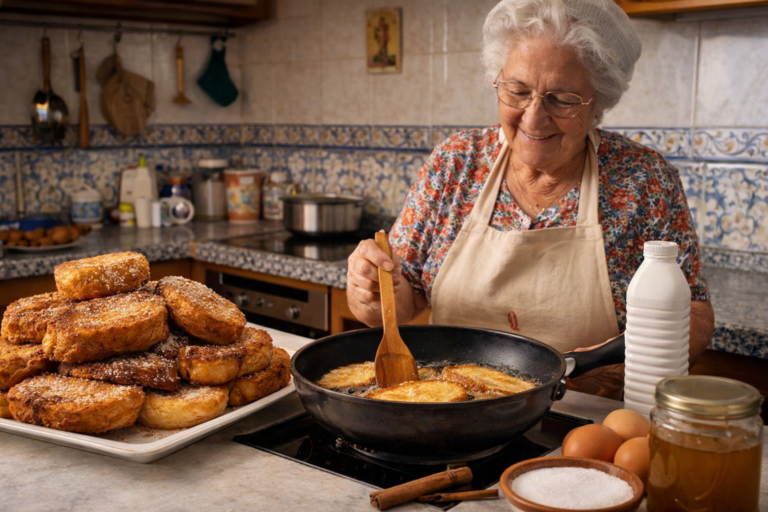
Every Holy Week (Semana Santa) in Spain, one dessert dominates kitchens, bakeries, and family tables — torrijas. Often compared to French toast, this traditional delicacy carries centuries of history, culture, and culinary wisdom. But according to Andalusian grandmothers, the secret to perfect torrijas is not just the bread — it’s a simple yet powerful technique that transforms the dish completely.
In this article, we uncover the authentic Andalusian trick, explore the history, ingredients, and preparation of torrijas, and reveal why this dessert remains a staple of Spanish cuisine even today.
What Are Torrijas? A Traditional Spanish Delight
Torrijas are a classic Spanish dessert made from stale bread soaked in milk or wine, dipped in egg, fried, and coated with sugar, cinnamon, or honey.
Key Characteristics
- Golden and crispy outside
- Soft, custard-like interior
- Infused with cinnamon, citrus, and sweetness
- Traditionally served during Lent and Holy Week
Historically, torrijas date back to the 15th century, when they were created as a cheap, filling dish using leftover bread.
Why Torrijas Are Linked To Holy Week
During Lent, when meat consumption was restricted, families relied on simple, affordable foods. Torrijas became popular because they:
- Used basic pantry ingredients
- Provided energy and nourishment
- Symbolized resourcefulness and tradition
Even today, bakeries across Spain produce thousands of torrijas during Semana Santa, making it one of the most iconic seasonal desserts.
The Andalusian Grandma’s Secret Trick
It’s Not The Bread — It’s The Soaking Technique
While many believe that the type of bread is the most important factor, Andalusian grandmothers insist the real secret lies in how the bread is soaked.
The Key Trick Explained
- Use warm (not hot) infused milk
- Let it cool slightly before soaking
- Soak the bread just enough to absorb liquid without breaking apart
This technique ensures:
- Perfect texture (soft but structured)
- Even flavor absorption
- No crumbling during frying
If the milk is too hot or soaking is too long, the bread becomes fragile and falls apart.
Ingredients And Nutritional Overview
| Ingredient | Quantity (Typical) | Purpose |
|---|---|---|
| Stale Bread | 8–10 slices | Base structure |
| Milk / Wine | 400–500 ml | Flavor infusion |
| Eggs | 3–6 | Coating for frying |
| Sugar | 100–350 g | Sweetness |
| Cinnamon | 1–2 tsp | Aroma & flavor |
| Honey | 100 g | Traditional topping |
| Olive Oil | For frying | Texture & richness |
| Citrus Peel | Optional | Fragrance |
Torrijas typically contain around 200–250 calories per serving, depending on preparation.
Step-By-Step Preparation Method
1. Infuse The Milk
Heat milk with cinnamon sticks, lemon/orange peel, and sugar. Let it cool to warm.
2. Prepare The Bread
Slice slightly stale bread into thick pieces to absorb liquid effectively.
3. Apply The Secret Trick
Soak bread gently in warm (not hot) milk — ensuring it is moist but not soggy.
4. Coat With Egg
Dip soaked slices in beaten eggs for a rich outer layer.
5. Fry To Perfection
Fry in olive oil until golden brown on both sides.
6. Add Finishing Touch
Sprinkle with cinnamon sugar or drizzle with honey syrup.
Types Of Torrijas Across Spain
Torrijas De Leche
- Soaked in milk
- Most common version
Torrijas De Vino
- Made with sweet wine
- Stronger flavor
Modern Variations
- Stuffed with cream
- Served with ice cream
- Baked instead of fried
Why The Technique Matters More Than Bread
While stale bread is important, experts emphasize that:
- Bread acts as a carrier, not the flavor driver
- The soaking method determines texture and taste balance
- Proper technique prevents disintegration during cooking
This aligns with traditional advice: “Moist, not mushy” is the golden rule.
Cultural And Culinary Significance
Torrijas are more than just dessert:
- Represent Spanish heritage and family traditions
- Passed down through generations
- Symbolize resourceful cooking
In regions like Andalusia and Seville, torrijas are deeply tied to religious celebrations and community gatherings.
Future Trends: Torrijas In Modern Cuisine
In recent years, torrijas have evolved:
- Gourmet restaurants offering fusion versions
- Use of artisan bread and plant-based milk
- Increased popularity in global food culture
Despite modernization, the grandmother’s technique remains unchanged, proving that tradition still leads innovation.
Conclusion
The magic of torrijas lies not in expensive ingredients or special bread, but in simple technique and tradition. The Andalusian grandmother’s trick — soaking bread in perfectly warm infused milk — transforms this humble dish into a rich, flavorful masterpiece.
As Holy Week approaches, mastering this technique ensures your torrijas are authentic, delicious, and unforgettable. In a world of evolving recipes, sometimes the best secrets are the simplest ones.