
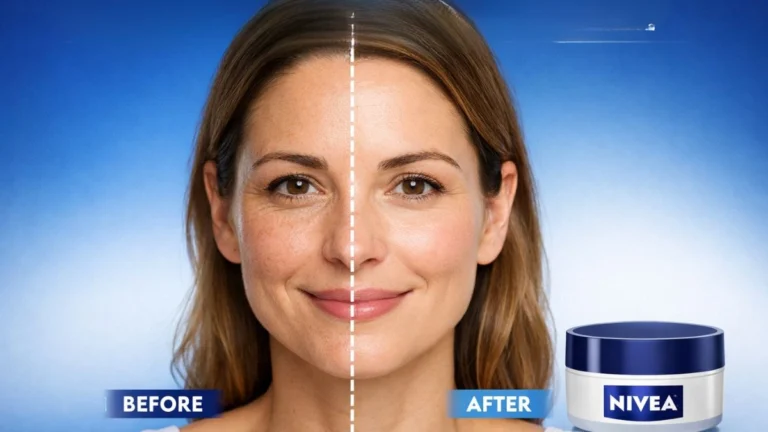
Nivea experiment: I applied the iconic blue cream to only one side of my face every night for a week — here’s what actually changed. I wanted a simple, visual test: would the classic Nivea Creme make a noticeable difference if I applied it to only one side of my face each night for seven nights? The idea was to isolate the effect of a rich, occlusive moisturizer and see short-term changes in hydration, texture, and skin appearance.
Why I tried this Nivea experiment
Nivea’s blue tin is legendary for a reason — it’s thick, inexpensive, and marketed as a universal moisturizer. I’ve used lighter lotions before, but never compared this kind of heavy cream against my usual routine in a controlled way. The one-sided approach felt obvious: it minimizes variables (same diet, weather, pillowcase) and lets me compare directly in the mirror.
For context: my skin is combination (slightly oily T-zone, patchy dryness on cheeks), I live in a temperate climate, and I wear sunscreen during the day. I stopped applying other night treatments on both sides for the week so the only nightly difference was Nivea on the left side of my face.
How I tested
- Cleanse both sides of my face nightly with the same gentle cleanser.
- Apply a pea-sized amount of Nivea Creme to the left cheek, left side of the nose, and left half of the forehead and chin. I massaged it in lightly until mostly absorbed.
- Left the right side with nothing else beyond the cleanser.
- Took photos each morning under the same lighting and checked texture, flakiness, redness, and any new breakouts.
I kept everything else constant: same diet, same pillowcase, no exfoliating acids or masks during the week.
The results after 7 nights
My observations were subtle but consistent. Here’s what actually changed.
Hydration: noticeably better on the Nivea side
The most obvious difference was hydration. The left side felt softer and looked less dull in the mornings. Fine dry patches that appeared after cleansing on the untreated side were mostly gone where I’d used Nivea. The cream’s occlusive nature seemed to lock in moisture and reduce overnight transepidermal water loss.
Texture and smoothness: improved, especially on dry areas
The left cheek had a finer, smoother appearance. Pores didn’t shrink, but skin looked more even in texture. Areas that felt rough the night before were visibly calmer and more supple. Makeup applied more evenly to the Nivea-treated half, though I didn’t use foundation the whole week to avoid introducing another variable.
Shine and finish: more “dewy” than greasy
After a few minutes the cream absorbed to a satin finish, not an oily sheen. In the morning there was a mild glow on the treated side, which some might call “dewy.” If you prefer a matte finish, this might feel too rich, but for dry to normal skin it looked healthy rather than greasy.
Pores and breakouts: no dramatic change
I didn’t notice a significant increase in breakouts on the treated side during the week. However, acne-prone skin can react differently, and a one-week window is short to judge comedogenicity. Pores remained the same size visually; the smoother surface made them less obvious but didn’t minimize them structurally.
Redness and sensitivity: calming effect
Any post-cleansing redness subsided faster on the Nivea side. The barrier-supportive nature of a heavier cream likely helped reduce mild irritation from occasional dryness.
What I learned and who should try the Nivea experiment
This quick at-home test confirmed what a lot of people already say: Nivea Creme is a reliable, affordable occlusive moisturizer that improves overnight hydration and smooths texture—especially for dry or combination skin with dry patches.
Who might like it:
- Dry, very dry, or winter-dry skin types
- People who want a cheap, effective night cream
- Those who tolerate fragrance in skincare (Nivea has a classic scent)
Who should be cautious:
- Oily, acne-prone skin types may find it too heavy
- People with sensitive skin should patch-test first
- If you use active ingredients (retinoids, strong acids), consult how to layer them—heavy occlusives can interfere with absorption timing
Tips if you want to try this Nivea experiment yourself
- Patch-test on a small area first (behind the ear or jawline).
- Start with a very small amount; the cream is rich and a little goes a long way.
- Use it at night only initially to see how your skin reacts.
- If you wear it under makeup, allow extra time to absorb or use it as a pre-bed treatment instead.
One week is short, but it was enough to see clear improvements in hydration and texture. For more lasting changes—reduced pigmentation, pore size, or acne—you’d need to combine a moisturizer with targeted actives and give them several weeks to months. But if you’re curious about the classic blue tin, this quick Nivea experiment is an easy, low-cost way to test whether it suits your skin.