
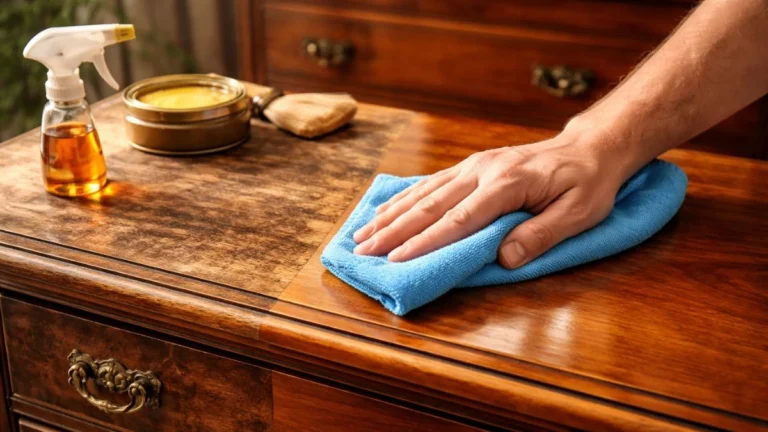
A simple trick that brings old wood back to life. A microfiber cloth soaked in this simple homemade solution can restore old wooden furniture to an almost brand-new finish, according to restoration experts. It’s an inexpensive, low-fuss method that lifts dirt, fills fine scratches, and revives dried-out finishes so surfaces look richer and more even — without sanding or expensive products.
This guide shows you how to make the solution, the right technique for application, and important cautions so you don’t accidentally harm delicate pieces.
What you’ll need
- 2 parts extra-virgin olive oil (nourishes and conditions wood)
- 1 part white vinegar (cuts grease and lifts grime)
- Optional: 5–10 drops lemon or orange essential oil (for scent and added cleaning power)
- A clean microfiber cloth (soft, lint-free)
- Gloves (optional)
- Small bowl or spray bottle
This simple mix (for example, 1/2 cup olive oil + 1/4 cup white vinegar) creates a balanced cleaner/conditioner. The oil restores moisture and sheen; the vinegar helps break down surface grime. Essential oil is optional and purely for fragrance.
Step-by-step: restore your wooden furniture
- Clean and prep
- Remove loose dust and debris with a soft brush or vacuum. If the piece has sticky spots, wipe lightly with a damp cloth and mild dish soap, then dry thoroughly.
- Test first
- Always test the solution in an inconspicuous area (inside a drawer, underside, or behind a leg). Wait a few minutes to confirm there’s no adverse reaction or unwanted darkening.
- Prepare the cloth
- Pour a small amount of your homemade solution into a bowl or spray it lightly onto the microfiber cloth. The cloth should be damp, not dripping.
- Apply with the grain
- Working in the direction of the wood grain, rub gently with the damp cloth. Use light pressure and longer strokes for even coverage. For small scratches or dry spots, go back and forth over the area a few times.
- Buff dry
- Immediately follow with a dry microfiber cloth to remove excess oil and buff the surface to a soft shine. Avoid leaving oily residues.
- Repeat if needed
- For very dull or dry surfaces, you can repeat the process once or twice, always buffing off excess after each pass.
Tips from restoration experts
- Less is more: a little oil goes a long way. Excessive oil can leave a sticky film and attract dust.
- Work in small sections so you can buff each area before moving on.
- For water rings, try gentle circular rubbing with the damp cloth and then buff. Deeper rings may require special treatment.
- Use a soft toothbrush to work the solution into carved or detailed areas, then wipe and buff.
- Keep the piece in a room at stable humidity after treatment to allow the finish to settle.
What this method won’t do (and when to call a pro)
This homemade solution excels at refreshing finishes, concealing minor scratches, and removing surface grime. However, it won’t fix deep gouges, structural damage, or severely flaking finishes. Don’t use it on:
- Raw, unfinished wood (the oil can darken or discolor it)
- Pieces with loose paint or flaking varnish
- Certain antique finishes — when in doubt, consult a professional restorer
- Floors or surfaces where oil residue could make them slippery
Always test first and, if the furniture is valuable or historically important, get expert advice before proceeding.
Final thoughts
A microfiber cloth soaked in this simple homemade solution can restore old wooden furniture to an almost brand-new finish, according to restoration experts — and it’s something anyone can try with everyday ingredients. With careful testing and a gentle technique, you can revive the look of dressers, tables, chairs, and cabinets without stripping or heavy refinishing. Start small, use moderation, and enjoy seeing your wood regain warmth and luster.