
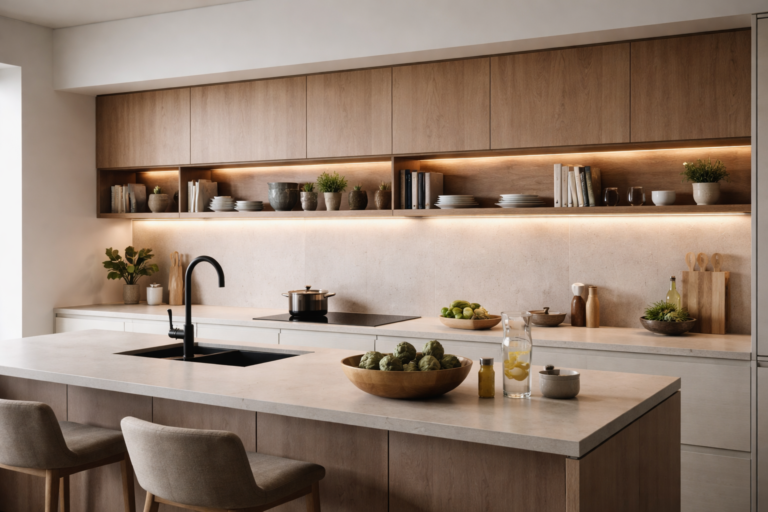
Kitchens are changing. The bulky run of high wall units that once dominated kitchens is giving way to smarter, lighter solutions that prioritize comfort, usability, and aesthetic calm. Homeowners and designers alike are saying goodbye to traditional high kitchen wall units and choosing modern, space-saving alternatives that look better and work harder.
Why the shift is happening
High wall units were once the go-to for maximizing storage. But they have downsides: hard-to-reach shelves, visual heaviness, and a tendency to trap dust and clutter. Modern living demands flexibility and comfort. People want kitchens that are easier to use every day, feel more open, and reflect a contemporary design sensibility.
Ergonomics play a key role. Lower storage and drawer-based systems reduce bending and stretching, making kitchens safer and more accessible for everyone — children, older adults, and those with mobility limitations.
Popular space-saving alternatives
Here are the alternatives designers and homeowners are choosing instead of high wall units:
- Open shelving
- Creates an airy, open feel and makes frequently used items easy to grab.
- Encourages decluttering and styling with attractive dishware and glassware.
- Floating cabinets at counter height
- Keeps storage within comfortable reach while maintaining a streamlined look.
- Can include integrated LED lighting underneath for both task light and ambiance.
- Deep drawers and drawer stacks
- More efficient than upper cupboards for pots, pans, and bulky items.
- Pull-out organizers keep everything visible and accessible.
- Tall pantry towers
- Consolidates storage into a single vertical unit with pull-out shelves.
- Uses vertical space intelligently while reducing the need for multiple wall cabinets.
- Built-in appliance niches and integrated appliances
- Frees up cabinet space and gives the kitchen a cohesive, modern appearance.
- Microwave drawers, under-counter ovens, and integrated fridges are popular choices.
- Wall rails, pegboards, and magnetic strips
- Turn vertical spaces into functional zones for utensils, knives, and small pans.
- Flexible and reconfigurable to suit changing needs.
- Recessed shelving and niches
- Built into walls for hidden storage that doesn’t bulk out the room.
- Ideal over backsplashes or in kitchen alcoves.
Benefits beyond storage
Choosing these modern alternatives delivers more than just efficient storage:
- Improved sightlines and light: Removing heavy wall units opens up the room, allowing natural light to travel and making small kitchens feel larger.
- Easier maintenance: Fewer high, dust-catching surfaces means less cleaning and fewer forgotten corners.
- Personalization: Open elements and visible storage encourage styling and seasonal updates, letting you change the kitchen’s look without a remodel.
- Accessibility: Lower, pull-out storage reduces strain and makes everyday tasks simpler for all family members.
- Increased resale appeal: Contemporary kitchens with smart storage solutions are highly desirable in today’s market.
How to transition without losing storage
If you’re worried about losing cupboard capacity, consider a hybrid approach:
- Audit what you use daily and what can be stored elsewhere.
- Replace some high units with deep drawers and a tall pantry tower to consolidate storage.
- Use open shelving for items you use frequently and attractive pieces to minimize clutter.
- Add wall rails or pegboards in cooking zones for utensils and pots, freeing up cabinet space.
- Invest in organizers — dividers, pull-out trays, and vertical racks maximize every inch.
Design tips for comfort and style
- Keep sightlines clean: Choose a minimal color palette for open shelves and back walls to avoid visual clutter.
- Use consistent materials: Match floating cabinetry finishes with your counter or island to create cohesion.
- Add lighting: Undercabinet LEDs and shelf lighting enhance usability and mood.
- Mix textures: Glass, wood, and metal together create interest without adding bulk.
- Prioritize workflow: Arrange storage by task zones — prep, cooking, and cleaning — to minimize movement.
Final thought
Saying goodbye to traditional high kitchen wall units doesn’t mean sacrificing storage. It means rethinking how storage serves the people who use the space. The modern space-saving alternative everyone is choosing blends comfort, accessibility, and style so kitchens feel lighter, work better, and reflect how we live today. If you’re planning a refresh, consider swapping out those top-heavy cupboards for solutions that make the kitchen a more comfortable, elegant center of the home.