
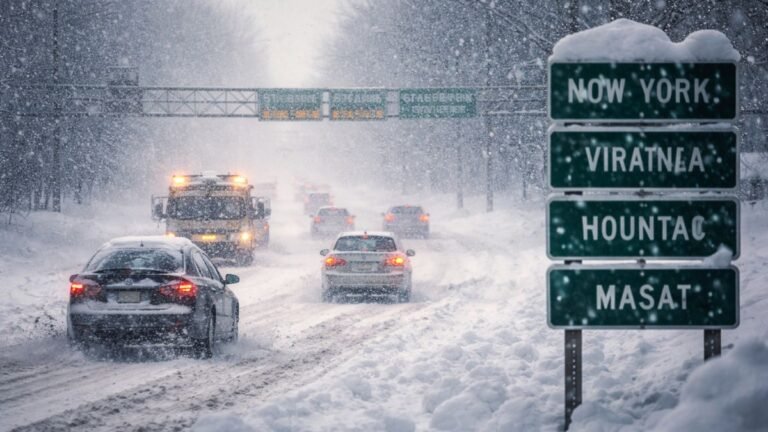
Meteorologists are forecasting a significant snowfall event that could drop up to 30 cm (about 12 inches) in parts of the country. Timing and exact amounts will change as the storm develops, so the most important thing is to know where to look for confirmed updates and how to prepare.
Note: the list below is an illustrative example of how affected states and timing are typically presented. Always check official sources (National Weather Service, regional weather agencies) for confirmed, up-to-date warnings and watches for your area.
How this kind of forecast is confirmed
- Models (GFS, ECMWF, Canadian) identify a potential heavy-snow system.
- Meteorologists compare model outputs, surface observations and satellite/radar to assess confidence.
- Regional forecast offices issue watches, warnings or advisories when confidence reaches certain thresholds.
- Confirmation typically comes as a published Winter Storm Watch (48 hours), Warning (24 hours) or Advisory (less severe but still impactful).
Because model runs change, a “confirmed” message usually means the local forecast office has issued an advisory, watch, or warning for specific counties or zones.
Which states are typically affected — and when
Below is an example timeline showing how forecasters might list states and timing for a storm expected to produce up to 30 cm of snow. Treat this as a template: swap in your local forecast details from official sources.
Example: possible impact areas and timing (illustrative only)
- New York (upstate and western counties) — Late Thursday night into Friday afternoon
- Pennsylvania (northern and central regions) — Friday morning through Friday night
- Vermont and New Hampshire — Friday morning into Saturday
- Massachusetts and Maine (interior) — Friday afternoon through Saturday morning
- Ohio (northeastern counties) — Friday night into Saturday
- Michigan (southern Lower Peninsula) — Saturday, with lingering flurries into Sunday
- Wisconsin (eastern counties) — Saturday into Sunday
Why timing matters
- Start time determines travel decisions: a morning start affects commutes; an overnight start changes evacuation or rescheduling plans.
- Duration influences accumulation: a multi-day event can produce sustained heavy snowfall and drifting.
- Transition zones matter: coastal or southern edges of the storm might see rain or mixed precipitation instead of heavy snow.
What to do now: practical preparedness
- Monitor official updates: check your county-level forecast and any issued watches/warnings.
- Prepare emergency supplies: water (3 days), nonperishable food, flashlight, batteries, a charged phone, and blankets.
- Winterize your vehicle: full tank, emergency kit, warm clothing, shovel and ice scraper, jumper cables.
- Plan travel carefully: avoid nonessential travel during active warnings. If you must drive, inform someone of your route and expected arrival.
- Protect your home: insulate pipes, clear gutters, and secure outdoor items that could become hazards in wind-driven snow.
- Check on vulnerable neighbors: elderly or immunocompromised residents may need help with supplies or snow removal.
Where to get real-time, confirmed information
- National Weather Service (NWS) local forecast pages — county and zone forecasts, official watches and warnings.
- Regional meteorological agencies (state climatology offices or provincial equivalents).
- Trusted weather apps that source NWS or national agencies (look for official badge or partnership).
- Local news stations and radio — useful when power or internet are down.
- Road and transit agencies for closures and travel advisories.
Final tips
- Treat any “up to 30 cm” headline as a prompt to check your local forecast; amounts are rarely uniform across wide areas.
- Keep an eye on watch-to-warning transitions: those are when forecasters gain confidence and issue definitive guidance.
- Prepare early. Even if your area receives the lower end of expected totals, cold, wind and travel impacts can make modest accumulations hazardous.
Stay safe and stay informed—check the official forecast for your county to know exactly when and how much snowfall is expected where you live.