
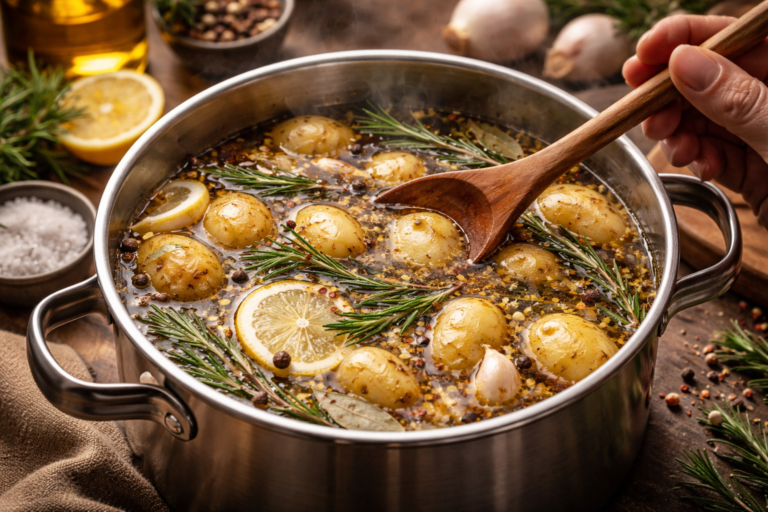
Boiling potatoes in plain water is practical, but it leaves the tubers bland and misses an easy opportunity to layer flavor. I stopped doing that years ago. Now I simmer potatoes in an aromatic broth that infuses them from the inside out, making mash, salads, and stews more interesting with almost no extra effort.
Below is the simple method I use and why it works so well.
Why aromatic broth works better
Plain water extracts starch and nothing else. A flavorful broth does the opposite: it gives potatoes subtle savory notes while still cooking them to tender perfection. The benefits are immediate:
- Potatoes pick up herbs and aromatics as they cook.
- You need less added butter, cream, or salt later.
- The cooking liquid becomes a ready-made, lightly flavored stock for soups, gravies, or sauce bases.
- It makes everyday dishes feel special with very little extra work.
Basic aromatic broth — what you need
This is the foundation recipe I use for about 1.5–2 pounds (700–900 g) of potatoes. Scale up as needed.
Ingredients:
- 6 cups water (or low-sodium chicken/vegetable stock for extra depth)
- 1 medium onion, halved
- 2 garlic cloves, smashed
- 1 carrot, roughly chopped
- 1 celery stalk, roughly chopped
- 1 bay leaf
- 6–8 peppercorns
- 2–3 sprigs fresh thyme (or 1 tsp dried)
- 1 sprig rosemary (optional)
- 1 tsp kosher salt (adjust later)
- 1–2 tbsp olive oil (optional; adds mouthfeel)
If you want an even richer broth, substitute part of the water with white wine or use homemade stock. For vegetarian cooking, use vegetable stock and add a splash of soy sauce or miso for umami.
Step-by-step: cooking potatoes in aromatic broth
- Clean and prep potatoes. Scrub small potatoes; halve large ones so pieces are about the same size for even cooking. Leave skins on for texture and nutrients, or peel if you prefer.
- Combine the broth ingredients in a large pot and bring to a simmer. If using raw stock, bring to a gentle boil to wake up flavors.
- Add the potatoes to the simmering broth. The liquid should just cover the potatoes. If it doesn’t, add a bit more water/stock.
- Simmer gently. Cook until a fork slides in easily — usually 12–20 minutes depending on size and type.
- Drain or reserve liquid. For mashed potatoes, reserve 1–2 cups of the cooking liquid to adjust texture and flavor. For salads or roasted finishing, drain well to avoid sogginess.
- Finish as desired: mash with butter and warm broth, toss with vinaigrette for a warm potato salad, or use whole potatoes in a stew.
Best potatoes and serving suggestions
Potato types:
- Yukon Gold: great for mashing — creamy texture and absorb flavor.
- Red potatoes: hold shape and are perfect for salads.
- Russet: good for classic fluffy mash but might disintegrate in soups.
Serving ideas:
- Creamy herb mash: mash with butter and reserved broth instead of milk for brighter flavor.
- Warm potato salad: toss cooked potatoes with mustard vinaigrette, chopped herbs, and the cooking broth reduced to a glaze.
- Stews & soups: add whole or halved flavored potatoes to beef stews or vegetable soups for more complexity.
Variations to try
- Mediterranean: add a strip of lemon peel, oregano, and a glug of olive oil.
- Asian-style: simmer with a piece of kombu, a star anise, and a splash of soy sauce; finish with sesame oil.
- Indian-inspired: add a small cinnamon stick, a few cardamom pods, and turmeric for color and warmth.
Tips and leftovers
- Don’t over-salt the broth at the start; potatoes concentrate flavors. Taste and finish seasoning after cooking.
- The leftover broth is valuable — strain and freeze in ice cube trays for quick stock additions to sauces and soups.
- If making mashed potatoes, warm the reserved broth before adding to avoid cooling the mash.
Switching from plain water to an aromatic broth is a tiny change with a big payoff. It elevates everyday potatoes into something you’ll want to serve again and again — and leaves you with flavorful stock for the next dish.