
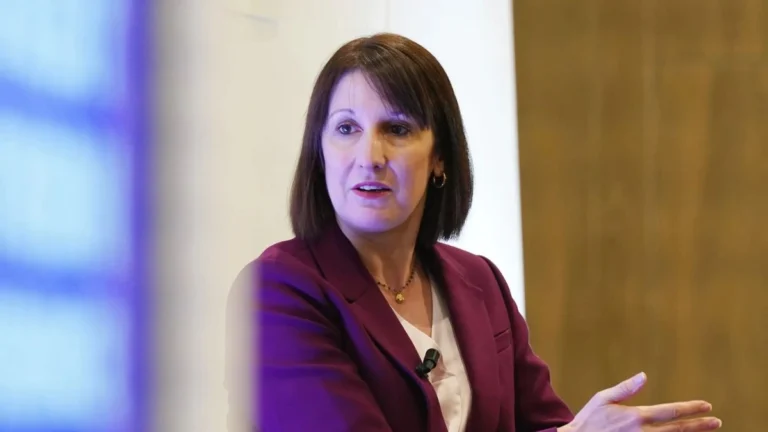
The United Kingdom is currently navigating a challenging economic environment, largely impacted by rising energy costs linked to the ongoing Iran conflict. Amid these pressures, Chancellor Rachel Reeves is set to outline a forward-looking strategy focused on accelerating artificial intelligence (AI) adoption, strengthening ties with the European Union, and boosting regional development.
Her keynote address at the Mais Lecture 2026, held at Bayes Business School in London, is expected to highlight these priorities as central to the country’s long-term economic recovery and growth.
Reeves’ Growth Strategy: Three Core Pillars
1. Advancing AI And Innovation
A key element of the Chancellor’s plan is to position the UK as a global leader in emerging technologies. Reeves is expected to announce a £2.5 billion investment package aimed at advancing AI and quantum computing capabilities.
Breakdown Of The Funding Package
- £500 million Sovereign AI Fund launching in April to support British tech firms
- £2 billion investment in quantum computing, including procurement of large-scale systems
- £13.8 million allocated to five National Quantum Research Hubs
- £12 million for a commercialization skills center to bring research into practical use
Reeves is likely to emphasize that the UK must not fall behind in the global technology race, especially as AI continues to reshape industries worldwide.
2. Strengthening Relations With The European Union
Another major focus of the speech will be rebuilding and deepening economic ties with the EU. Reeves is expected to argue that closer cooperation could help improve trade, productivity, and overall economic stability.
However, this approach has already sparked political debate, with critics accusing the government of attempting to reverse aspects of Brexit policy.
3. Promoting Regional Economic Growth
Reeves will also highlight plans to drive development across all regions of the UK. A major proposal includes creating a “Silicon Valley of Europe” in the Oxford-Cambridge corridor.
To accelerate this project, the government may use compulsory purchase powers to overcome land development barriers and ensure progress.
AI Adoption Accelerates Across UK Businesses
Growing Use Among Mid-Sized Companies
Recent research by the Centre for Economics and Business Research (Cebr), commissioned by HSBC UK, shows a significant rise in AI adoption:
- Adoption among mid-sized firms increased from 35% to 55% over two years
This growth is driven by advancements such as:
- Large language models
- Advanced data analytics
- Workflow automation tools
Despite this progress, experts note that many companies are still in early stages of adoption, leaving room for substantial productivity gains in the future.
Financial Support For AI Investment
To encourage further adoption, HSBC UK has launched a £5 billion AI & Productivity Financing Initiative, aimed at helping businesses invest in advanced technologies and improve efficiency.
Economic Pressures: Inflation, Energy, And Global Uncertainty
The ongoing conflict involving Iran has led to sharp increases in energy costs:
- Brent crude oil has risen to over $104 per barrel
- Prices are nearly 50% higher than pre-war levels
- European gas prices have also increased significantly
These rising costs are contributing to inflationary pressures across the UK and global economy.
Mortgage Costs And “Trumpflation” Concerns
Higher inflation expectations have pushed up mortgage rates:
- Average 2-year fixed rate increased to 5.28%
- Average 5-year fixed rate rose to 5.32%
For a typical £250,000 mortgage, this means:
- Up to £788 more annually on a two-year fixed deal
- Around £651 more annually on a five-year deal
Additionally, the number of mortgage products has declined, reflecting market uncertainty.
Rising Insolvencies In England And Wales
Financial strain is also visible in rising insolvency figures:
- 11,609 individual insolvencies recorded in February 2026
- This marks an 18% increase year-on-year
- Debt Relief Orders (DROs) reached a record high
Company insolvencies rose month-on-month but remain slightly lower than the previous year.
Global Economic Signals And Central Bank Actions
Germany’s ZEW Economic Sentiment Index has fallen sharply:
- Dropped to -0.5 points in March from 58.3 in February
This decline reflects growing concerns about inflation and economic disruption caused by global instability.
Interest Rate Changes Worldwide
Central banks are responding to inflation pressures:
- The Reserve Bank of Australia raised interest rates to 4.1%
- Other major central banks, including the Bank of England, Federal Reserve, and European Central Bank, are also reviewing policies this week
AI And Employment: Opportunities Vs Risks
While rapid AI adoption raises concerns about job displacement, government officials suggest that technological change may ultimately create more employment opportunities.
Treasury representatives argue that historically, innovation has shifted job types rather than reducing overall employment levels.
Conclusion
Rachel Reeves’ upcoming Mais Lecture outlines a bold vision for the UK economy, centered on technological advancement, stronger European partnerships, and regional development.
While the strategy aims to position Britain as a leader in AI and innovation, it comes at a time of significant economic pressure driven by global conflict, rising inflation, and financial instability. The success of these policies will depend on how effectively the government balances innovation with economic resilience. As the UK navigates these challenges, the push for AI-driven growth could play a निर्णायक role in shaping the country’s economic future.
FAQs
What Is The Mais Lecture?
It is an annual event where UK leaders present their economic vision and policy direction.
How Much Is The UK Investing In AI?
The government plans to invest £2.5 billion in AI and quantum computing.
Why Are Energy Prices Rising?
The Iran conflict has disrupted oil and gas production, pushing global energy prices higher.