
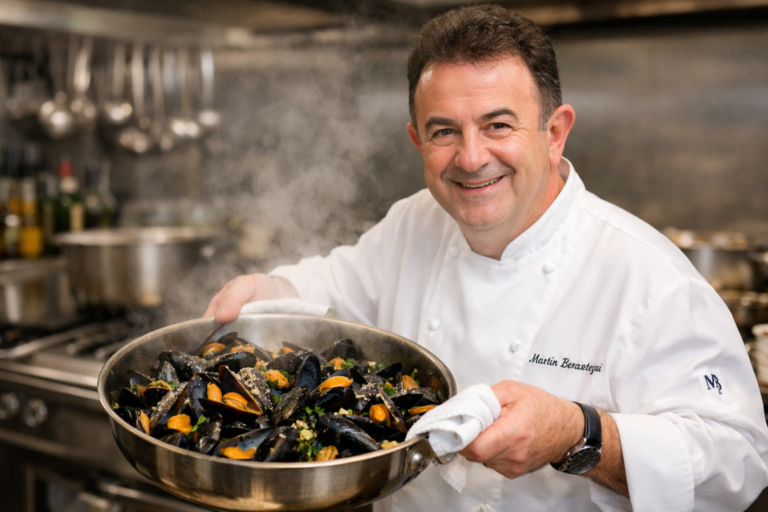
One of Spain’s most celebrated chefs, Martín Berasategui, has shared a surprisingly simple yet powerful cooking insight: when preparing steamed mussels, do not add water. This advice challenges a common kitchen habit and highlights the importance of respecting natural flavors and textures in seafood cooking.
Berasategui, a pioneer of modern Spanish gastronomy, is known for combining tradition with innovation. His approach reflects a broader philosophy in Spanish cuisine, which emphasizes fresh ingredients, simplicity, and minimal interference to preserve natural taste .
Who Is Martín Berasategui?
Martín Berasategui is one of the most decorated chefs in the world, associated with multiple Michelin-starred restaurants. He emerged from the Basque culinary revolution of the 1970s, a movement that reshaped modern gastronomy and emphasized creativity with high-quality ingredients .
Key Highlights
- Among Spain’s top chefs with multiple Michelin stars
- Known for Basque cuisine innovation
- Focuses on precision cooking techniques
- Advocates ingredient purity and natural flavors
His culinary philosophy plays a key role in understanding why he recommends avoiding water when steaming mussels.
Why Steamed Mussels Turn Tough When Overcooked
Mussels are delicate shellfish that cook very quickly. When exposed to excessive heat or prolonged cooking, their proteins tighten, leading to a rubbery and tough texture.
Main Causes Of Tough Mussels
- Overcooking beyond 3–5 minutes
- Excess liquid diluting heat control
- Reheating after initial cooking
- Poor-quality or non-fresh mussels
The addition of water can worsen the problem by prolonging cooking time and reducing temperature precision.
The No-Water Technique Explained
Berasategui’s key tip is simple: steam mussels in their own juices instead of adding water.
How It Works
- Mussels naturally contain sea water and internal moisture
- When heated, they release flavorful liquid
- This liquid creates natural steam inside the pot
- The mussels cook quickly and evenly in their own juices
This technique aligns with Spanish cooking traditions that rely on natural extraction of flavor rather than dilution.
Step-By-Step Cooking Method
Ingredients
- Fresh mussels (1 kg)
- Olive oil (1–2 tablespoons)
- Garlic (2 cloves, chopped)
- Optional: white wine, parsley, lemon
Method
- Clean and debeard the mussels thoroughly.
- Heat olive oil in a wide pot.
- Add garlic and lightly sauté.
- Add mussels directly without water.
- Cover with a lid and cook for 3–4 minutes.
- Shake the pot occasionally for even cooking.
- Once shells open, remove from heat immediately.
The result is juicy, tender mussels with concentrated flavor.
Table: Mussel Cooking Comparison
| Method | Texture Outcome | Flavor Intensity | Cooking Time | Risk Level |
|---|---|---|---|---|
| With Added Water | Often tough or rubbery | Diluted | Longer | High |
| No-Water Technique | Tender and juicy | Rich and natural | Short | Low |
| Overcooked Mussels | Very tough | Lost flavor | Excessive | Very High |
Why This Technique Matters In Modern Cooking
Modern gastronomy increasingly focuses on minimal intervention cooking, where ingredients are allowed to shine. This is especially important for seafood, where delicate textures can easily be ruined.
Spanish cuisine, particularly from regions like Galicia, is famous for its high-quality shellfish dishes, often prepared simply to highlight freshness .
Berasategui’s advice reflects this principle:
- Preserve natural juices
- Avoid unnecessary ingredients
- Maintain short cooking times
Additional Tips For Perfect Mussels
Choose Fresh Mussels
- Shells should be tightly closed
- Smell should be fresh, like the sea
- Avoid cracked or open shells
Control Heat Carefully
- Use medium-high heat
- Avoid prolonged steaming
Use Wide Pots
- Allows even heat distribution
- Prevents overcrowding
Serve Immediately
- Mussels should be eaten fresh
- Delayed serving reduces quality
Future Trends In Seafood Cooking
The future of cooking is moving toward:
- Sustainable seafood sourcing
- Low-waste cooking techniques
- Increased focus on natural flavors
- Use of traditional methods with modern precision
Techniques like Berasategui’s no-water method are becoming more popular as chefs and home cooks seek authentic taste with minimal processing.
Conclusion
Martín Berasategui’s advice to avoid adding water when steaming mussels may seem simple, but it reflects a deeper culinary philosophy rooted in respect for ingredients. By allowing mussels to cook in their own juices, you preserve their natural flavor, achieve perfect tenderness, and elevate a basic dish into something exceptional.
This technique is a reminder that sometimes, the best cooking methods are not about adding more—but about doing less, better.