
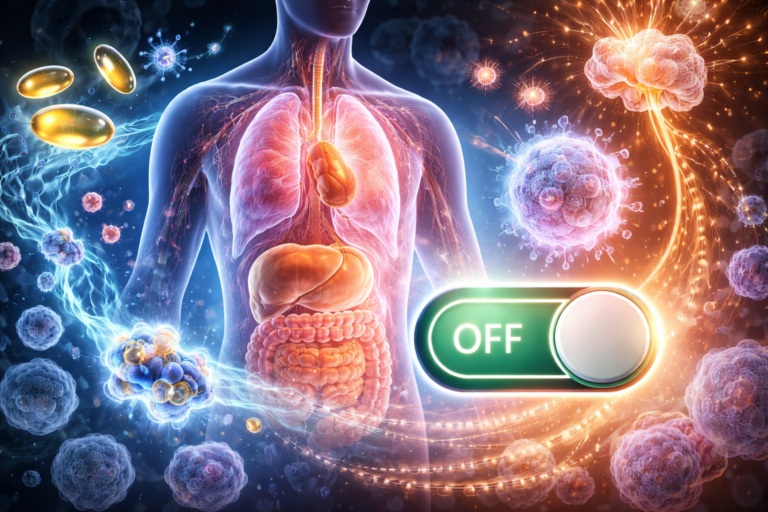
The so-called “off switch” is not a single molecule or organ. Instead, it is a complex biological process known as inflammation resolution. This phase actively signals the immune system to stop attacking and begin healing. Scientists have identified fat-derived molecules called epoxy-oxylipins as key players in this process.
These molecules regulate immune cells and prevent excessive inflammatory responses. Additionally, a group of compounds known as specialized pro-resolving mediators (SPMs)—including resolvins, protectins, and lipoxins—play a crucial role in shutting down inflammation and promoting tissue repair.
Key Scientific Findings
1. Epoxy-Oxylipins: The Newly Identified Regulators
Recent human studies show that epoxy-oxylipins help:
- Reduce harmful immune cells (intermediate monocytes)
- Lower inflammation-related damage
- Speed up recovery from inflammatory conditions
Researchers also found that boosting these molecules using specific drugs significantly reduced pain and inflammatory markers.
2. Specialized Pro-Resolving Mediators (SPMs)
SPMs are lipid-based molecules derived from fatty acids, particularly omega-3s. They:
- Stop immune cell overactivation
- Promote clearance of dead cells
- Stimulate tissue regeneration
- Prevent chronic inflammation
Scientists have identified over 40 different SPMs, highlighting the complexity of this natural system.
3. The Role Of The Nervous System
The vagus nerve plays a central role in regulating inflammation through what scientists call the inflammatory reflex. This neural pathway helps:
- Detect inflammation signals
- Release anti-inflammatory mediators
- Activate resolution pathways
Studies show that the vagus nerve controls molecules like netrin-1 and SPMs, which actively reduce inflammation and promote healing.
How The Resolution Process Works
The inflammation “off switch” operates in several stages:
- Initial Response – Immune cells attack pathogens or damaged tissue
- Signal Transition – Pro-inflammatory signals shift toward anti-inflammatory signals
- Resolution Phase – SPMs and epoxy-oxylipins halt immune activity
- Healing Phase – Tissue repair and regeneration begin
This process ensures that inflammation ends efficiently without damaging healthy tissues.
Table: Key Components Of The Inflammation Off Switch
| Component | Function | Key Benefit |
|---|---|---|
| Epoxy-Oxylipins | Regulate immune cells | Reduce chronic inflammation |
| SPMs (Resolvins, Protectins) | Stop immune overreaction | Promote healing |
| Vagus Nerve | Neural regulation | Controls inflammation reflex |
| Netrin-1 | Guides immune response | Enhances resolution |
| Omega-3 Fatty Acids | Precursor to SPMs | Supports anti-inflammatory pathways |
Why This Discovery Matters
This breakthrough challenges the traditional approach to treating inflammation. Instead of suppressing the immune system, scientists are now focusing on activating the body’s natural resolution pathways.
Current Treatment Limitations
- Anti-inflammatory drugs often suppress immunity
- Long-term use can cause side effects
- They do not promote healing
New Approach Benefits
- Encourages natural healing
- Reduces risk of immune suppression
- Targets root causes of chronic inflammation
This shift represents a major evolution in medical science.
Potential Future Treatments
The discovery opens the door to innovative therapies, including:
1. sEH Inhibitors
These drugs increase levels of epoxy-oxylipins and may help treat:
- Rheumatoid arthritis
- Cardiovascular disease
- Chronic pain
2. Bioelectronic Medicine
Devices that stimulate the vagus nerve could regulate inflammation without drugs.
3. Nutritional Interventions
Diets rich in omega-3 fatty acids may enhance the production of SPMs, supporting the body’s natural healing mechanisms.
Diseases Linked To Failed Inflammation Resolution
When the body’s “off switch” fails, it can lead to:
- Autoimmune diseases
- Alzheimer’s disease
- Atherosclerosis
- Diabetes
- Chronic pain conditions
These conditions often arise not from excessive inflammation alone, but from the failure to properly resolve it.
Future Outlook: A New Era In Medicine
Scientists believe this discovery could lead to a paradigm shift in how inflammatory diseases are treated. Instead of fighting inflammation aggressively, future therapies may focus on guiding the body to resolve it naturally.
This approach aligns with precision medicine, where treatments are tailored to enhance the body’s own biological systems.
Conclusion
The discovery of the body’s natural “off switch” for inflammation marks a transformative moment in medical science. By understanding how molecules like epoxy-oxylipins and specialized pro-resolving mediators function, researchers are unlocking new ways to treat chronic diseases more safely and effectively.
Rather than suppressing the immune system, the future of medicine lies in activating the body’s own healing intelligence. This breakthrough not only deepens our understanding of human biology but also offers hope for millions suffering from inflammation-related conditions.