
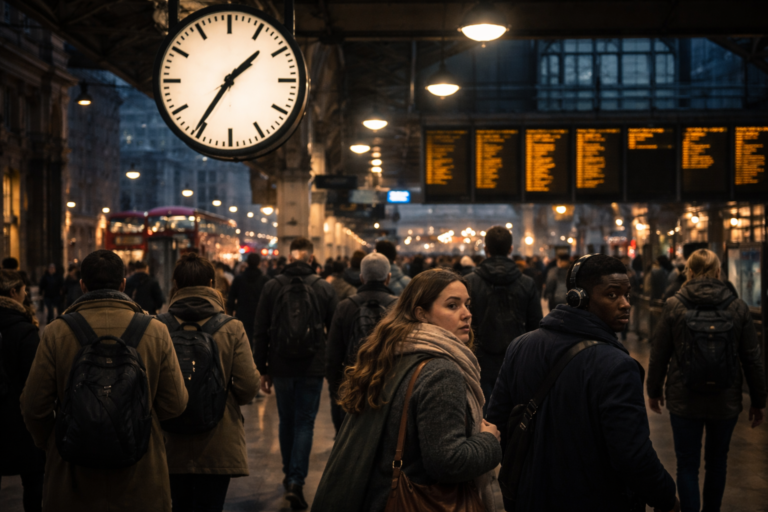
The government’s proposal that the clocks change earlier in 2026 has sparked a heated debate across the UK. If implemented, the shift — effectively moving more daylight into the morning and creating darker evenings — could touch almost every part of daily life. People are split: some welcome brighter starts to the day, while others fear a rise in evening crime, commuter insecurity, and wider social disruption.
What the proposal means in practice
Under the plan, the UK’s national clock change would be brought forward so that the switch to summer-time occurs sooner in the year. Supporters say this will give earlier daylight for school runs and early-shift workers. Critics argue the real-world result will be noticeably darker evenings through spring and autumn, when many people are travelling home from work, attending leisure activities, or supervising children.
Clocks changing earlier in 2026 would not only alter sunrise and sunset times; it would reshape routines that are currently calibrated to the existing light-dark cycle.
Immediate impacts on commuters and safety concerns
One of the loudest reactions comes from commuters. For many, the evening commute would shift from daylight or twilight into dusk or full darkness.
- Increased fear of crime: Commuters walking or cycling home in darker conditions report heightened anxiety about personal safety and theft.
- Public transport concerns: Fewer pedestrians and dimly lit pathways around some stations could make waiting for buses and trains feel less secure.
- Vulnerable groups: Women, older adults, and shift workers may be disproportionately affected by the earlier dusk.
Transport groups and local authorities are already discussing mitigation measures, such as improved station lighting, targeted policing at peak times, and better visibility infrastructure for cyclists and pedestrians.
Broader effects on daily life and services
Beyond commuting, changing the clocks earlier would have ripple effects:
- Schools and childcare: Morning drop-offs could be brighter, which some parents and headteachers support. But after-school activities and clubs might be forced indoors or see reduced attendance.
- Retail and hospitality: Quieter evenings could lead to decreased footfall in restaurants and shops that rely on post-work customers.
- Health and wellbeing: Shorter daylight in the evenings can negatively influence mood and reduce opportunities for outdoor exercise, potentially affecting mental and physical health.
- Agriculture and small businesses: Farmers and tradespeople who schedule around daylight will need to adapt their routines, potentially incurring costs or logistical headaches.
The divided public opinion
Public opinion is split. Those favoring the change often stress benefits for early-morning workers, children’s safety during school runs, and potential reductions in morning road accidents. Opponents counter that the cost to evening leisure, safety, and small businesses outweighs these gains.
Some regional variations are evident: northern and western parts of the UK, where winter daylight is already limited, worry more about long, darker evenings, while more southerly areas may feel the impact less acutely.
Evidence and unanswered questions
The debate is complicated by mixed evidence. Studies on daylight saving time and clock changes have produced varied results on crime rates, road safety, and energy usage. Key questions remain:
- Would earlier clocks genuinely reduce morning accidents enough to justify darker evenings?
- Could improved street lighting and targeted policing offset safety concerns?
- How would hospitals, emergency services, and transport operators adapt to a changed pattern of demand?
Decision-makers will need clear, localised data and pilot studies to answer these questions convincingly.
How communities can prepare
While the national debate continues, communities and individuals can take steps to adapt:
- Improve lighting on walking and cycling routes; councils can prioritise hotspot areas.
- Employers can stagger finish times or offer flexible working to reduce lone commuting in the dark.
- Personal safety measures: high-visibility clothing, lights for cyclists, and travel apps that share journeys with friends/family.
- Schools and community groups can reconfigure after-school activities to maximise daylight usage.
Conclusion
Clocks changing earlier in 2026 would be more than a technical adjustment: it would reshape evenings for millions, amplifying concerns about commuter safety and altering local economies and social life. With opinion divided and evidence mixed, the choice demands careful consideration, robust data, and meaningful local input. Whatever the outcome, policymakers and communities should focus on measures that protect safety, support vulnerable groups, and keep daily life running smoothly through the transition.