
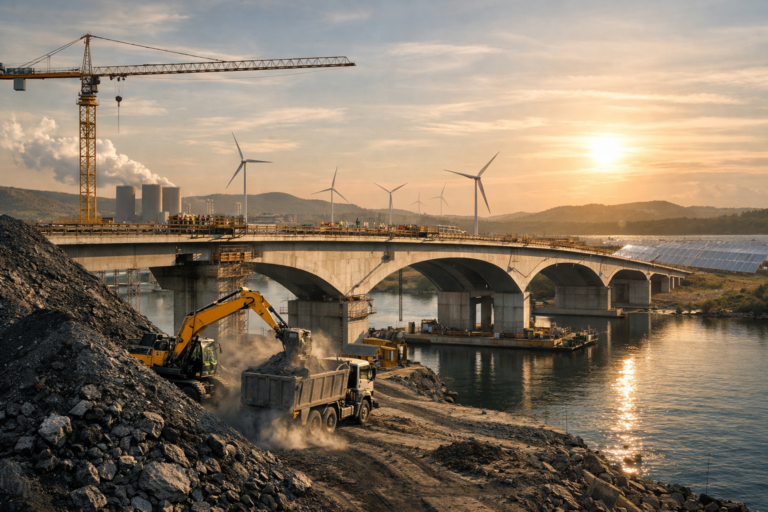
As Queensland transitions from fossil fuels to cleaner energy, an unexpected ally has emerged from the very infrastructure it is moving away from: coal plant waste. By repurposing materials like fly ash, bottom ash and synthetic gypsum in concrete, engineers are literally building a bridge to renewables—using waste from coal-fired plants to construct durable, lower-carbon infrastructure that supports wind, solar and storage projects.
What coal plant waste is being reused — and why it works
Coal combustion produces several by-products that, when processed and tested, make effective ingredients in modern concrete:
- Fly ash: a fine, powdery residue captured from flue gases. It acts as a supplementary cementitious material (SCM) with pozzolanic properties, reacting with calcium hydroxide to strengthen concrete over time.
- Bottom ash: coarser particles that can be used as aggregate or blended into concrete mixes after appropriate processing.
- Synthetic gypsum (FGD gypsum): generated by flue gas desulfurization systems; it can replace natural gypsum in cement manufacturing and help control setting times.
These materials are not simply “fillers.” When incorporated according to engineering standards, they improve workability, reduce heat of hydration, increase durability and lower the amount of Portland cement required—directly cutting the embodied carbon of concrete.
Environmental and technical benefits
Using coal plant waste in concrete delivers multiple advantages:
- Lower carbon footprint: Replacing a portion of cement with fly ash reduces CO2 emissions associated with cement production, one of the most carbon-intensive industrial processes.
- Reduced landfill and pollution risk: Beneficial reuse diverts large volumes of ash from disposal sites and prevents potential dust or water contamination.
- Enhanced performance: Fly ash can improve long-term strength and reduce permeability, increasing resistance to sulfate attack and chloride ingress—key for longevity in coastal and industrial settings.
- Cost-effectiveness: Locally available industrial by-products can lower material costs and shorten supply chains for construction projects.
These benefits make ash-blended concretes attractive for heavy infrastructure like bridge decks, foundations and transmission pylons—elements that form the physical backbone for renewable energy deployment.
How this helps build a bridge to renewables in Queensland
Renewable energy rollout depends on robust civil works: foundations for turbines, concrete pads for solar arrays and battery enclosures, substations, access roads and bridges for grid connection. Reusing coal plant waste in these structures helps in several ways:
- Speeding infrastructure delivery: Readily available ash supplies from nearby power stations reduce lead times for large pours and precast elements.
- Improving durability: Offshore wind and coastal solar sites demand concrete resistant to corrosion and chemical attack—qualities that properly designed ash-blended mixes can provide.
- Demonstrating transition value: Using legacy coal by-products to construct renewable infrastructure symbolizes a practical, circular approach to the energy transition.
Projects across regions with coal histories have already shown that integrating industrial residues into construction can reduce waste liabilities while meeting performance requirements for new energy assets.
Challenges and safeguards
Reuse of coal combustion products must be carefully managed:
- Quality control: Ash composition varies with coal source and combustion conditions; standardised testing and mix design are essential.
- Environmental monitoring: Concerns about trace metals and leaching require leachability testing and adherence to environmental regulations.
- Regulatory frameworks: Compliance with Australian standards and local engineering codes ensures safety and long-term performance.
- Public perception: Transparent communication about testing, performance and safeguards helps build community trust.
When these safeguards are in place, the technical and environmental upsides are significant.
Looking ahead: circular solutions for a just transition
Repurposing coal plant waste in concrete is a practical example of a circular economy approach that supports a just transition. It reduces the environmental footprint of both legacy power generation and new construction while creating local supply chains and jobs linked to recycling and materials processing.
As Queensland expands its renewable capacity, using coal combustion by-products responsibly can help deliver resilient, lower-carbon infrastructure faster and more affordably. In that sense, How Queensland coal plant waste is helping to build a (concrete) bridge to renewables is more than a headline: it’s a working model for turning past liabilities into future assets—bridging the gap to a cleaner energy system.