
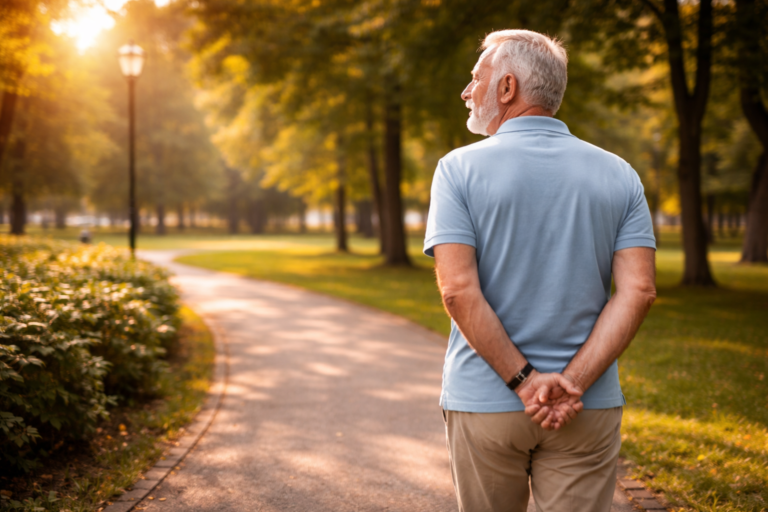
Body language plays a powerful role in how we communicate without speaking. Studies suggest that a significant portion of human communication is nonverbal, including posture, gestures, and movement . One subtle yet fascinating gesture is walking with your hands behind your back—a habit often seen in leaders, teachers, and deep thinkers.
But what does this posture actually mean from a psychological perspective? Is it confidence, authority, or something more complex?
This article explores the latest psychological interpretations, facts, and behavioral insights behind this intriguing walking style.
Understanding Body Language And Posture Psychology
Body posture is a core component of nonverbal communication, revealing emotional states, attitudes, and personality traits . Psychologists categorize posture into:
- Open posture – indicates confidence, comfort, and approachability
- Closed posture – suggests defensiveness or insecurity
Interestingly, walking with hands behind the back combines elements of both. While the chest remains open, the hands are hidden—creating a unique psychological signal.
What Walking With Hands Behind Your Back Means
1. Deep Thinking And Reflection
One of the most widely accepted interpretations is that this posture signals deep cognitive processing.
- People often adopt this position to minimize distractions
- It helps focus on internal thoughts and problem-solving
- Common among intellectuals, philosophers, and older adults
Psychology insights indicate that individuals using this posture are often mentally engaged in analysis or reflection .
2. Confidence Without Aggression
Walking with your hands behind your back exposes vulnerable areas like the chest and abdomen. In body language, this is a sign of:
- Confidence
- Calmness
- Lack of fear
Unlike dominant gestures (like crossed arms or puffed chest), this posture communicates quiet confidence rather than intimidation .
3. Authority And Leadership Presence
This walking style is commonly seen in:
- Military officers
- Teachers and professors
- Political leaders
Why? Because it conveys:
- Control over the environment
- Composure under pressure
- Leadership authority
Psychologically, it signals that the person feels secure and in command, even without speaking.
4. Emotional Balance And Calmness
Experts associate this posture with emotional regulation. People walking this way are often:
- Relaxed
- Self-controlled
- Mentally stable
Observational psychology suggests such individuals appear balanced and composed, even in stressful environments .
5. Openness And Approachability
Although hands are hidden, the overall posture remains open. This creates a paradox:
- Not defensive
- Not aggressive
- Quietly inviting interaction
Open posture generally signals friendliness and trustworthiness .
6. Improved Posture And Physical Benefits
Beyond psychology, there are physical advantages:
- Pulls shoulders back
- Opens chest
- Aligns spine
Regularly walking this way can gradually improve postural alignment and body awareness .
Table: Psychological Meanings Of This Body Language
| Behavior | Psychological Meaning | Explanation |
|---|---|---|
| Hands behind back while walking | Deep thinking | Reduces distractions and enhances focus |
| Open chest posture | Confidence | Shows lack of fear and emotional stability |
| Slow, steady walking style | Calmness | Indicates control over emotions |
| Upright spine and shoulders back | Authority | Reflects leadership and dominance |
| Hands hidden | Self-restraint | Suggests control and discipline |
| Relaxed movement | Approachability | Signals openness and friendliness |
Does Context Change The Meaning?
Yes—context is everything in psychology.
The same gesture can mean different things depending on:
1. Environment
- In a park → relaxation and reflection
- In a workplace → authority and control
2. Speed Of Walking
- Slow pace → thoughtful
- Fast pace → stress or urgency
3. Facial Expression
- Neutral face → calm confidence
- Tense face → suppressed anxiety
Scientific Perspective On Body Posture
Modern psychology supports the idea that posture doesn’t just reflect emotions—it can influence them.
- Posture affects self-perception and emotional state
- Body positioning can alter cognitive processing
- Certain gestures reduce or increase mental engagement
Research shows that even subtle changes in posture can impact how we think and feel internally .
When This Gesture May Indicate Something Else
While generally positive, there are exceptions:
1. Hidden Anxiety Or Nervousness
Some individuals use this posture to:
- Control fidgeting
- Hide nervous movements
2. Cultural Or Habitual Behavior
In some cultures, this walk reflects:
- Respect
- Discipline
- Formality
3. Age-Related Habit
Older adults often adopt this posture for:
- Balance
- Comfort
- Habitual movement
Future Insights: Why This Gesture Matters More Today
In today’s fast-paced digital world, nonverbal communication is becoming more important:
- Helps in leadership and professional settings
- Improves first impressions
- Enhances emotional intelligence
Understanding gestures like this can give you a psychological advantage in social and professional interactions.
Conclusion
Walking with your hands behind your back is far more than a simple habit—it is a complex psychological signal that blends confidence, reflection, authority, and emotional balance. From a body language perspective, it represents a unique mix of openness and restraint, making it one of the most intriguing nonverbal cues in human behavior.
In many cases, this posture reflects a calm, thoughtful, and self-assured personality, often associated with leadership and intellectual depth. However, as psychology emphasizes, context plays a crucial role. The same gesture can signal quiet confidence in one situation and hidden anxiety in another.
As we move toward a future where emotional intelligence and nonverbal communication are increasingly valued, understanding such subtle cues can offer a powerful edge in personal and professional life. By becoming aware of how posture shapes perception—and even internal emotions—you can consciously use body language to project the image you want while better understanding those around you.