
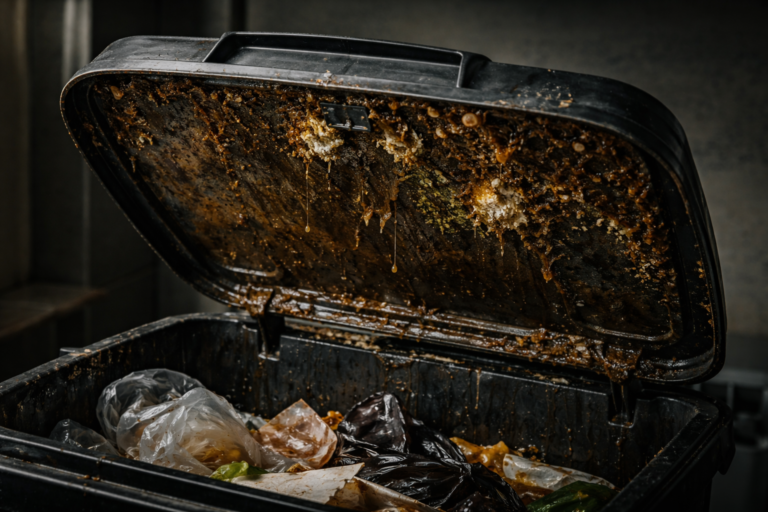
I thought my trash bin was clean, but this lid was the real problem. I’d been dutifully rinsing the bin, bagging waste, and airing it out, but a lingering smell and sticky streaks kept returning. It took lifting the lid and taking a closer look to discover the real culprit: grime, trapped moisture, and bacteria hiding in the nooks of the lid.
If your trash area smells or insects keep visiting, don’t assume the bin itself is to blame. The lid is where spills collect, odors concentrate, and microscopic life thrives. Here’s what I learned and exactly what to do to fix the problem for good.
Why the lid matters more than you think
The lid gets the most contact and the least attention. It’s where:
- Food residues from poorly secured bags land.
- Condensation pools and then dries, leaving sticky films.
- Flies and ants access the bin through small gaps.
- Plastic degradation and scratches create hiding spots for bacteria.
A clean-looking bin interior can’t fully control odor or pests if the lid is porous, cracked, or coated in residue. Once you know to focus on the lid, the rest is straightforward.
What I found when I looked closer
When I removed the lid, I found:
- A brownish ring of dried food and grease around the rim.
- Moldy spots in the rubber gasket.
- A slimy film under the hinge where water couldn’t evaporate.
- Tiny crumbs and residue stuck in textured plastic.
Those signs explained the smell and why it returned within days: the lid was a persistent reservoir for organic matter and bacteria.
How to clean a trash bin lid (step-by-step)
Materials you’ll need:
- Dish soap
- White vinegar or household disinfectant
- Baking soda (optional)
- Scrub brush or old toothbrush
- Microfiber cloths or paper towels
- Gloves
- Bucket or hose
Cleaning steps:
- Put on gloves and work in a well-ventilated area.
- Remove the lid and shake away loose debris into the bin or a garbage bag.
- Rinse the lid with warm water to loosen grime.
- Mix hot water with dish soap in a bucket. Scrub the entire lid, paying special attention to hinges, gaskets, and seams. Use an old toothbrush for tight spots.
- For stubborn stains or odors, sprinkle baking soda on the surface and scrub with vinegar — it fizzes and lifts deposits.
- Rinse thoroughly. If possible, hose the lid down and let the water carry away residue.
- Disinfect by wiping or spraying with a 1:10 bleach-to-water solution, a household disinfectant, or full-strength white vinegar. Let it sit 5–10 minutes.
- Rinse again and dry completely with a cloth or let air-dry in sunlight.
Pro tip: If the lid has a rubber gasket, remove it (if possible) and clean beneath. Mold loves hiding under seals.
Daily and weekly maintenance
Keeping the lid clean is easier than deep-cleaning every month. Try this routine:
- Daily: Wipe the rim and top of the lid with a disinfectant wipe or soapy cloth.
- Weekly: Rinse and scrub the lid quickly, pay attention to the hinge and gasket.
- Monthly: Deep clean and disinfect as described above.
Also, use sturdy, properly sized trash bags and close them tightly before removing. That simple habit reduces spills and stains on the lid.
Products and tools I recommend
- Soft-bristled brush or old toothbrush for crevices.
- Microfiber cloths – they trap residue without scratching.
- White vinegar – gentle, natural disinfectant that fights odor.
- Hydrogen peroxide – an alternative to bleach for sensitive surfaces.
- Baking soda – natural deodorizer for persistent smells.
- Rubber gasket replacement – if the seal is cracked or moldy beyond cleaning, replace it.
If your bin is made of biodegradable or sensitive materials, check the manufacturer’s cleaning instructions before using harsh chemicals.
When to replace the lid (or the whole bin)
Sometimes cleaning isn’t enough. Replace the lid if:
- The seal is cracked and can’t form a proper barrier.
- Deep scratches or porous degradation trap debris.
- Persistent mold returns within days despite cleaning.
If the interior is also damaged, replacing the whole bin may be a better long-term solution.
Final thoughts
I thought my trash bin was clean, but this lid was the real problem — and focusing on it transformed my trash routine. A clean lid controls odor, reduces pests, and keeps your bin feeling fresh longer. A little attention to hinges, gaskets, and seams will save you time, hassle, and unpleasant smells in the long run.