
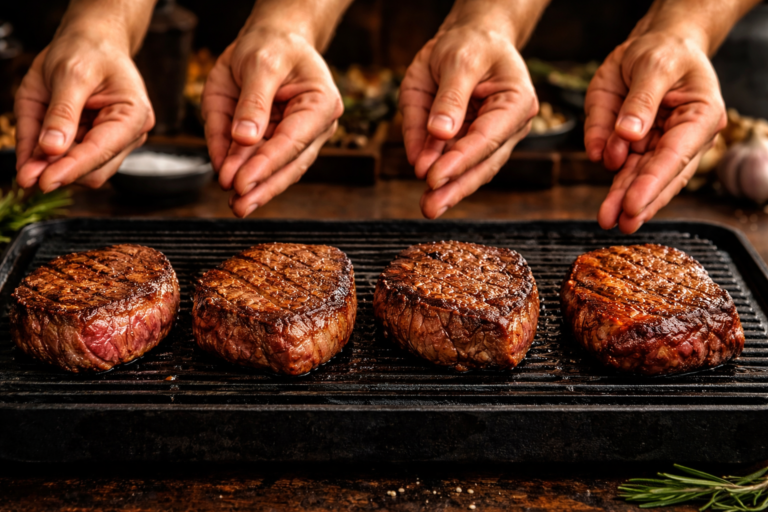
Cooking a steak to the perfect doneness can feel intimidating, especially if you want to keep all the juices inside. The simple “finger test” to check if your steak is cooked perfectly without cutting into it is an easy, reliable trick you can use at the grill or in the pan. It uses the firmness of the meat as a guide and takes only a few seconds.
How the finger test works
When steak cooks, the muscle fibers tighten and the meat becomes firmer. The finger test compares that firmness to the feel of the fleshy part of your palm below the thumb while you touch your thumb to different fingers. Each thumb-to-finger position produces a different tension in that pad — and that tension mimics how rare to well-done a steak feels.
This method doesn’t replace a thermometer for food safety or precision, but it’s great for quick checks once you’ve practiced.
Step-by-step: do the finger test
- Relax your hand and hold it open.
- Touch the tip of your thumb to the tip of your index finger. With your other hand, press the fleshy pad at the base of your thumb (the thenar eminence) to feel the tension.
- Now press the cooked steak gently with your tongs or the back of a spoon and compare the firmness to that pad.
- Repeat by touching your thumb to your middle, ring, and pinky fingers, comparing the steak’s feel at each step.
Important: Don’t press a hot steak with your bare fingers. Use tongs or a utensil and only compare textures — do not touch the meat directly.
What each position means
- Thumb + index finger = Rare
- Very soft, with a cool red center. The pad feels soft and springy.
- Thumb + middle finger = Medium-rare
- Slightly firmer, warm red center. A common preferred doneness for flavor and juiciness.
- Thumb + ring finger = Medium
- Noticeably firmer, warm pink center.
- Thumb + pinky = Well-done
- Firm with little to no pink.
Use this as a quick mental map while cooking. For thinner cuts, remember that doneness changes fast; for thicker steaks you’ll have more time to check and adjust.
Quick temperature reference (optional)
If you want to pair the finger test with a thermometer until you learn the feel, these are common internal temperature targets (Fahrenheit / Celsius):
- Rare: 125°F (52°C)
- Medium-rare: 135°F (57°C)
- Medium: 145°F (63°C)
- Medium-well: 150–155°F (66–68°C)
- Well-done: 160°F (71°C) and above
Insert a thermometer into the thickest part of the steak, avoiding bone, for an accurate read.
Tips for more reliable results
- Use tongs or a spatula to press the steak — avoid puncturing it and losing juices.
- Let the steak rest 5–10 minutes after cooking. Resting lets juices redistribute and adds a bit of carryover cooking; the finger test should be done during cooking, but remember resting will firm it slightly more.
- Practice with a thermometer. Compare the finger test to actual temperatures until you’re confident.
- Thickness matters. Thin cuts cook quickly and can be deceptive; thicker cuts give you more control.
- Different cuts and fat content change feel. Ribeye with marbling will feel different than lean flank steak at the same temperature.
- For safety, use a thermometer for ground beef, poultry, or when cooking for people with compromised immune systems.
When to trust the finger test — and when not to
The simple “finger test” to check if your steak is cooked perfectly without cutting into it is a fantastic skill for home cooks who want to avoid slicing into a juicy steak. It’s quick, free, and intuitive after a few tries. However, it’s not 100% precise — use a thermometer when accuracy matters, and always follow safe cooking guidelines for certain meats.
With a little practice, you’ll find the finger test becomes second nature and you’ll deliver perfectly cooked steaks more often — with all the juices safely locked in.