
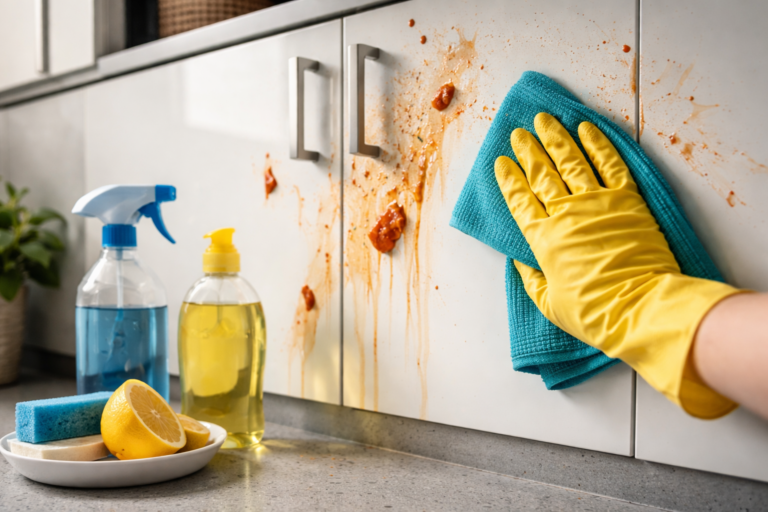
Food splashes on cabinet doors are an everyday nuisance. Whether you’re cooking a quick weeknight meal or frying something aromatic, grease and sauce can land on cabinet surfaces and leave stubborn marks. This guide explains how to remove food splashes from cabinet doors easily, using safe, effective methods that protect finishes and save time.
Why act quickly?
Fresh splashes are easier to remove. Once grease or sauces dry, they can set into paint, laminate, or wood grain and require stronger cleaning — or even refinishing. Wiping up splashes soon after they occur reduces scrubbing and preserves your cabinets’ appearance.
What you’ll need
- Microfiber cloths or soft, lint-free rags
- Warm water
- Mild dish soap
- White vinegar (optional)
- Baking soda (for stubborn spots)
- Spray bottle
- Soft-bristled brush or old toothbrush
- Olive oil or furniture polish (for wood cabinets)
- Rubber gloves (optional)
Quick daily clean: fast and gentle
- Mix a few drops of mild dish soap with warm water in a bowl or spray bottle.
- Dampen a microfiber cloth and wring it out so it’s not dripping.
- Wipe the splash area, following the grain if it’s wood.
- Rinse the cloth and wipe again to remove soap residue.
- Dry with a clean cloth to prevent water spots.
This method removes most fresh food splashes without damaging finishes. Microfiber lifts grease and particles instead of spreading them.
For greasy or dried-on splashes
If splashes have dried or feel greasy, try this stepped approach:
- Rehydrate the spot: Dampen a cloth with warm, soapy water and press it against the splash for 30–60 seconds. Letting the moisture loosen the residue reduces scrubbing.
- Gently rub with the cloth following the grain. For crevices or decorative details, use a soft-bristled brush or old toothbrush.
- If grease remains, mix equal parts warm water and white vinegar in a spray bottle. Lightly mist the area and wipe with a microfiber cloth. Vinegar cuts grease and disinfects, but avoid prolonged use on natural stone or delicate finishes.
- For very stubborn stains, make a paste of baking soda and water. Apply it sparingly, rub gently with a damp cloth, then rinse and dry. Baking soda is mildly abrasive — use it cautiously on glossy or painted surfaces.
Special considerations by cabinet type
- Painted cabinets: Use mild soap and avoid abrasive cleaners. Test vinegar or baking soda in an inconspicuous spot first.
- Laminate and thermofoil: These surfaces are durable; warm soapy water and vinegar solutions work well. Avoid sharp scrubbing that could lift edges.
- Wood cabinets: Avoid soaking. Use minimal water and always wipe dry. Finish with a small amount of furniture polish or olive oil on a soft cloth to restore shine and seal the surface.
- Glass-front cabinets: Use a glass cleaner or vinegar solution for the glass and soap solution for the frame.
Preventive tips to minimize future splashes
- Use lids and splatter guards when frying or simmering.
- Wipe spills right away with a damp microfiber cloth.
- Keep a small caddy with cleaner and cloths near the stove for quick access.
- Install a backsplash or extend current backsplashes in high-splash areas.
- Consider a clear adhesive film on the lower cabinets nearest the stove for added protection.
Do’s and don’ts
Do:
- Test cleaners in a hidden area first.
- Use soft cloths and gentle pressure.
- Dry cabinets after cleaning to prevent damage.
Don’t:
- Use scouring pads or steel wool on delicate finishes.
- Apply harsh chemical degreasers to painted or varnished wood without testing.
- Leave vinegar or baking soda on surfaces for long periods.
Quick checklist for tackling splashes
- Fresh splash: warm soapy water, wipe, dry.
- Greasy/dried: soak with warm soapy cloth, scrub gently, use vinegar if needed.
- Stubborn: baking soda paste, gentle rubbing, rinse, dry.
- Finish wood: minimal water, dry immediately, apply oil or polish.
Removing food splashes from cabinet doors easily is mostly about timing and the right tools. With a few simple supplies and gentle techniques tailored to your cabinet type, you can keep doors looking clean and well-maintained without harsh chemicals or costly repairs.