
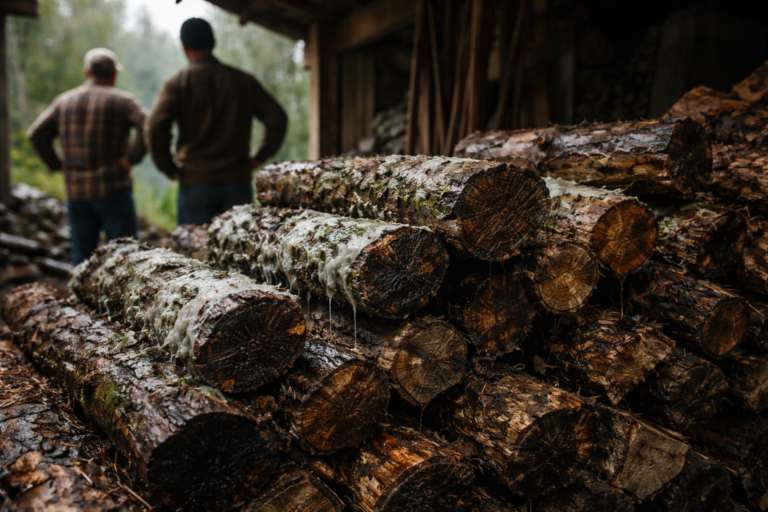
Many people discovered a hard truth the first time they tried to store firewood: No one explained how to do it — their firewood stored for months was actually unusable. You stack a cord, pat yourself on the back, and then months later you get damp, smoky, slow-burning logs that won’t light. Here’s why that happens and exactly what to do so your wood is ready when you need it.
Why stored wood becomes unusable
There are a few common reasons stored firewood fails:
- It was too green when stacked. Fresh-cut wood can take 6–24 months to season depending on species.
- It was stacked directly on soil. Ground contact leads to rot and insects.
- There wasn’t enough airflow. Poor ventilation keeps moisture in and encourages mold.
- It was covered incorrectly. A tarp that traps moisture or covers the sides can prevent drying.
- It wasn’t split. Whole rounds dry very slowly and often rot inside.
- The wood absorbed rain or snow during storage. Wet wood doesn’t burn well and can sprout fungus.
Understanding these causes helps you fix the problem before the next heating season.
How to store firewood the right way
Follow these practical steps to keep your firewood usable.
- Choose the right wood and timing
- Prefer hardwoods (oak, maple, ash) for long burns; softwoods (pine, fir) are fine for kindling.
- Cut and split wood as soon as possible after felling to expose the drying surface.
- If you get wood in winter, plan to season it the following spring and summer.
- Split logs into manageable pieces
- Split logs into 3–6 inch diameters so air can move through and moisture escapes.
- Smaller pieces dry faster and are easier to light.
- Stack off the ground
- Use pallets, cinder blocks, or a purpose-built rack to keep the bottom row at least 6 inches above soil.
- This prevents ground moisture and insects from invading the stack.
- Orient and space for airflow
- Stack wood with the bark side up for the top; arrange rows so air can pass through the pile.
- Leave gaps between rows and avoid packing too tightly.
- Cover the top only
- Cover the top of the stack with a tarp, metal sheet, or purpose-built cover to keep rain off.
- Keep the sides exposed so wind can dry the wood. A fully covered stack will trap moisture.
- Store in sun/ventilated locations
- A south-facing spot or an open shed is ideal.
- Avoid low spots where water pools or shady corners that stay damp.
- Check moisture content
- Use a moisture meter; target 15–20% for seasoned firewood.
- If you don’t have a meter, look for cracks in the end grain, a hollow sound when two pieces are knocked together, and light weight.
Quick troubleshooting: what to do if your wood is already bad
- Smelly, slimy, or soft wood: toss it. Rotten wood won’t dry properly and burns poorly.
- Mold or fungus on the surface: brush off and move pieces to a sunnier, airier spot. If internal rot is present, discard.
- Insect-infested wood: remove and burn or discard; don’t bring it into your home.
- Wood still green after months: split smaller and restack with top cover; consider kiln-drying or using a wood stove that tolerates green wood only as a last resort (expect heavy creosote build-up).
Seasonal tips and maintenance
- Rotate your supply: use the oldest, driest wood first.
- Keep a small, covered stash near your house for quick access, but don’t store large amounts inside — pests and moisture risk.
- Regularly check stacks for settling, pests, or damp pockets and restack as needed.
Final thoughts
No one explained how to do it: their firewood stored for months was actually unusable — but it doesn’t have to be your story. With the right species, prompt splitting, elevated stacking, top-only covering, and good airflow, you’ll turn your next cord into warm, efficient fires rather than smoky disappointment. Simple practices prevent wasted wood and make winter nights cozier and safer.