
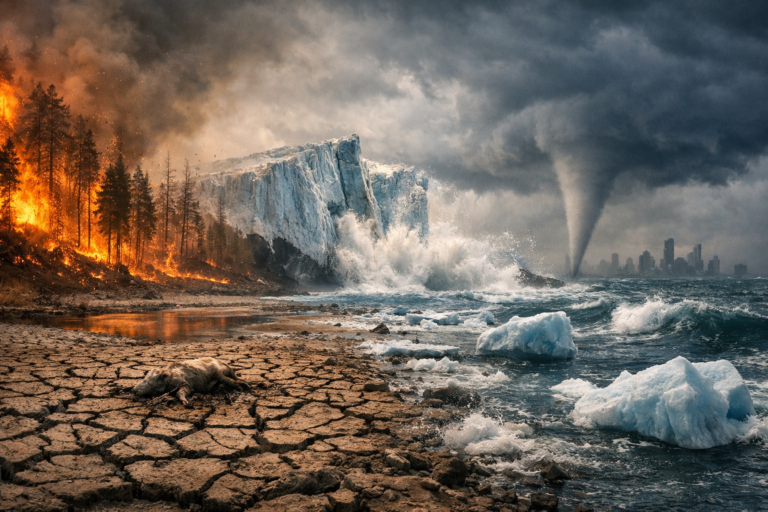
Human-caused warming has pushed the planet into a state we haven’t observed in modern times. The phrase “Unseen for 175 years: the world’s climate is tipping dangerously” captures a stark reality: since reliable global records began in the mid-19th century, the climate system is showing changes and feedbacks that threaten to accelerate warming in ways that are hard to control.
What does “tipping” mean?
A tipping point is a threshold in a complex system where small changes push the system into a qualitatively different state. In the climate, tipping points involve large physical or biological components—ice sheets, ocean currents, forests, or frozen soils—switching behavior and triggering feedbacks that amplify warming.
Tipping doesn’t always happen instantly. Some processes unfold over years or decades, but once initiated, they can be hard or impossible to reverse on human timescales.
Key tipping points to watch
Some parts of the Earth system are especially vulnerable:
Greenland and West Antarctic ice sheets
Continued warming can accelerate ice loss, increasing sea level rise for centuries. Rapid melt could inundate coastal cities and reshape shorelines worldwide.Arctic sea ice and permafrost
Loss of summer sea ice changes regional climates and opens darker ocean surfaces that absorb more heat. Thawing permafrost releases stored carbon and methane, creating a potent feedback loop.Atlantic Meridional Overturning Circulation (AMOC)
This large-scale ocean current helps regulate climate in the North Atlantic. Weakening or collapse would disrupt weather patterns, reduce heat transport to Europe, and alter rainfall patterns globally.Amazon rainforest dieback
Deforestation and drier conditions can convert rainforest to savanna, releasing vast carbon stores and reducing a critical carbon sink.Coral reef collapse
Warmer, more acidic seas bleach and kill corals, eliminating biodiversity hotspots and livelihoods that depend on them.
Each tipping element has its own threshold and timescale, but together they raise the risk of cascading effects: one tipping point can increase the pressure on others.
Why “175 years”?
Instrumental global climate records—systematic measurements of temperature, sea level, and other variables—begin in the mid-1800s. That 175-year window is the period during which humans industrialized and dramatically increased greenhouse gas emissions.
Within this timeframe the planet has warmed faster than at almost any time in the past millennia, and observed changes—shrinking ice, rising seas, more intense heatwaves—are now approaching or crossing thresholds that scientists warned could lead to tipping behavior. Saying something is “unseen for 175 years” underscores that current trends depart markedly from the climate baseline that shaped modern societies.
What this means for people and ecosystems
Tipping behavior threatens to amplify impacts already being felt:
- More frequent and severe heatwaves, storms, droughts, and floods
- Accelerated sea level rise and coastal erosion
- Food and water insecurity from disrupted rainfall and shrinking growing seasons
- Loss of biodiversity and ecosystem services (pollination, fisheries, carbon storage)
- Greater displacement and economic strain on vulnerable communities
The danger is not just incremental warming; it’s the increased probability of abrupt, hard-to-manage changes that cascade through human and natural systems.
What we can do now
Preventing the worst outcomes depends on rapid, sustained action across three fronts:
Cut emissions fast and deeply
- Rapidly transition energy systems to renewables, electrify transport, and reduce fossil fuel use.
- Implement strong policy frameworks: carbon pricing, regulations, and phase-outs.
Protect and restore natural systems
- Conserve forests, wetlands, and peatlands that store carbon and strengthen resilience.
- Support sustainable land use and regenerative agriculture.
Prepare and adapt
- Invest in climate-resilient infrastructure, early warning systems, and community-led adaptation.
- Advance carbon removal research and scale up proven solutions where safe and equitable.
Individual action matters, but systemic change—policy, finance, and technology deployment at scale—is essential. Time is short: the choices made in the next decade will largely determine whether the climate tips into runaway feedbacks or remains within pathways humanity can manage.
Conclusion
“Unseen for 175 years: the world’s climate is tipping dangerously” is both a warning and a call to action. The historic window of reliable observations shows a planet pushed toward thresholds it hasn’t experienced in the modern era. While the risks are real and rising, decisive collective action can still reduce the odds of catastrophic tipping and steer us toward a safer, fairer climate future.