
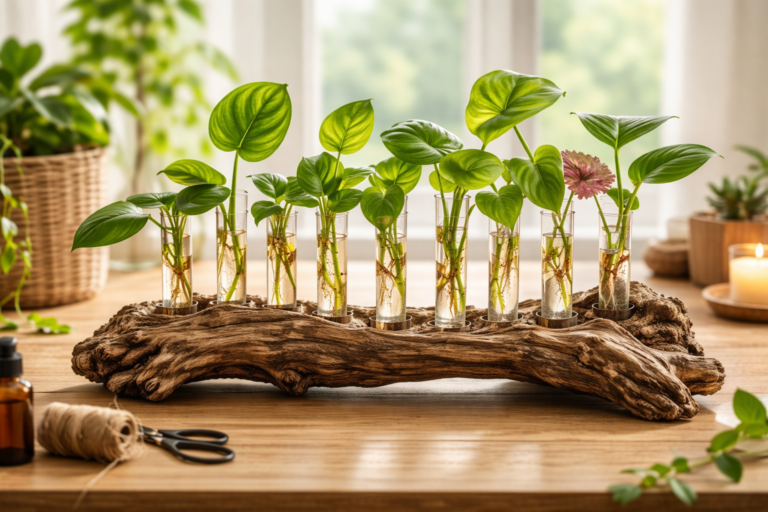
If you love growing plants from cuttings, you already know that plant propagation is both an art and a science. But what if you could elevate your propagation game while creating a breathtaking natural decor piece? A simple piece of driftwood or forest branch—often overlooked—can become a beautiful, eco-friendly display stand for your propagating plants.
With the rising popularity of indoor gardening, especially water propagation, more people are turning to natural materials to enhance aesthetics while supporting plant growth. This trend combines sustainability, creativity, and functionality—making your home greener and more stylish at the same time.
Why Forest Wood Is Perfect for Plant Propagation Displays
Using forest-found wood like driftwood or branches is not just trendy—it’s practical. Here’s why:
- Natural Stability: Dense, aged wood provides a sturdy base for holding glass jars or tubes.
- Aesthetic Appeal: Organic textures and shapes enhance modern and rustic interiors.
- Sustainability: Reusing natural materials reduces waste and supports eco-friendly living.
- Customization: Each piece is unique, allowing you to create one-of-a-kind displays.
Modern plant decor trends emphasize biophilic design, which connects indoor spaces with nature—making these displays highly desirable.
How Water Propagation Works (And Why It Looks Beautiful)
Water propagation is one of the easiest and most visually satisfying methods of growing plants. It involves placing plant cuttings in water until roots develop.
- Roots typically appear within a few weeks, depending on the plant
- Many houseplants like pothos, monstera, and philodendron thrive in water
- Roots are visible, turning plant growth into a living display
In fact, cuttings often root faster in water than in soil, and the process allows you to monitor growth easily .
This is why pairing propagation with a natural wood stand and glass containers creates a stunning decorative feature.
Step-By-Step: Turning Forest Wood Into a Display Stand
1. Choose The Right Wood
- Look for dry, sturdy branches or driftwood
- Avoid soft or rotting wood
- Ensure it’s free of pests and mold
2. Clean And Prepare
- Wash thoroughly and let it dry completely
- Optionally sand rough edges
- You can seal it with a natural finish for durability
3. Add Glass Containers
- Use test tubes, jars, or small vases
- Attach using wire, clamps, or drilled holes
4. Insert Plant Cuttings
- Cut just below a node (where roots grow)
- Place the node under water, not the leaves
5. Position In Proper Light
- Bright, indirect sunlight is ideal
- Avoid harsh direct sun to prevent algae growth
Essential Tips For Successful Propagation
Here are scientifically backed tips to ensure your setup thrives:
- Change water every 3–7 days to prevent bacteria buildup
- Use clean tools to avoid disease
- Keep humidity balanced to reduce water loss
- Transfer to soil when roots reach 3–5 inches
Plants rely on stored energy and proper hydration to form roots, so maintaining the right environment is critical .
Best Plants For A Wooden Propagation Display
| Plant Name | Growth Speed | Difficulty | Visual Appeal |
|---|---|---|---|
| Pothos | Fast | Easy | Trailing vines |
| Monstera | Medium | Easy | Large, split leaves |
| Philodendron | Fast | Easy | Heart-shaped leaves |
| Spider Plant | Fast | Very Easy | Arching foliage |
| Syngonium | Medium | Easy | Colorful leaves |
These plants are ideal because they root easily in water and adapt well indoors .
Design Ideas To Elevate Your Display
Transform your setup into a statement piece with these ideas:
- Wall-Mounted Driftwood: Create a vertical garden
- Hanging Branch Display: Suspend from ceiling hooks
- Minimalist Table Stand: Perfect for desks or shelves
- Cluster Arrangement: Combine multiple tubes for a lush look
These designs align with modern interior trends that emphasize natural textures and living decor elements.
Benefits Beyond Decoration
Using a forest-based propagation stand offers more than beauty:
1. Educational Value
Watching roots grow helps understand plant biology and development.
2. Low Maintenance
Water propagation requires less upkeep than soil-based gardening .
3. Cost-Effective
You can grow multiple plants from one parent without buying new ones.
4. Eco-Friendly Living
Repurposing natural materials reduces environmental impact.
Future Trends In Plant Propagation Displays
Looking ahead, plant lovers are embracing:
- Smart propagation stations with LED grow lights
- Hydroponic integrations for faster growth
- Sustainable decor using reclaimed wood
- Compact indoor gardens for urban homes
The fusion of technology and nature will continue to redefine how we grow and display plants indoors.
Conclusion
A simple piece of wood picked up from the forest can become a stunning propagation display stand, blending nature with creativity. By combining water propagation techniques with natural materials, you not only grow new plants but also create a living piece of art.
This approach reflects the future of indoor gardening—sustainable, aesthetic, and deeply connected to nature. Whether you’re a beginner or an experienced plant enthusiast, transforming forest finds into functional decor is a rewarding and inspiring journey.