
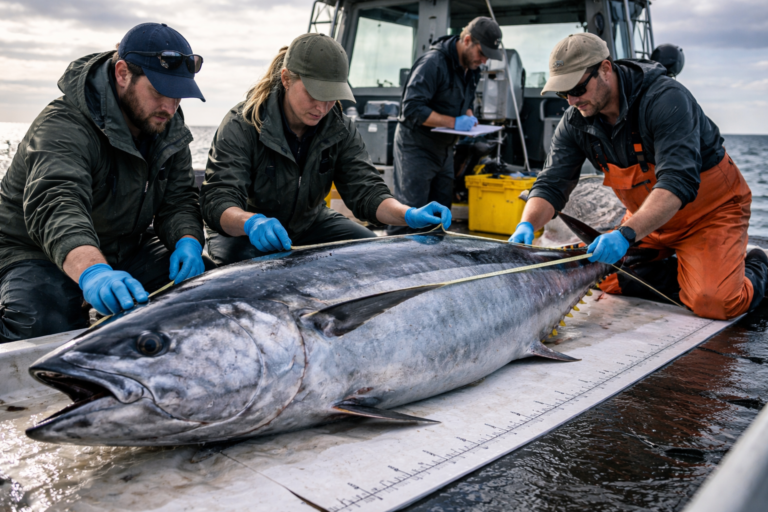
A recently measured specimen of giant bluefin tuna has captured the attention of the scientific and conservation communities. Verified by marine biologists using peer-reviewed protocols, the fish not only represents an extraordinary individual in size but also demonstrates how rigorous scientific methods are essential for credible monitoring of threatened marine species.
Why this confirmation matters
Bluefin tuna are prized commercially and ecologically. Populations have experienced steep declines worldwide due to overfishing and habitat pressures. Accurate records of exceptionally large individuals matter because they:
- Provide evidence of remaining genetic and ecological resilience.
- Inform stock assessments and fisheries management.
- Generate public interest that can support conservation measures.
But an eye-catching photo or an anecdotal report is not enough. To be accepted by the scientific community and fisheries managers, claims must be substantiated with standardized, peer-reviewed methods.
How the measurement was done
Marine biologists followed established, peer-reviewed protocols to ensure the size assessment was reproducible and scientifically defensible. Key steps included:
Secure handling and animal welfare
- The team prioritized minimal stress to the animal and safety for personnel.
- Protocols dictated handling time limits and use of specialized equipment for large pelagic fish.
Standardized morphometrics
- Length measurements were taken from the snout to the fork of the tail (fork length) and, where appropriate, total length.
- Girth and weight were measured with calibrated tapes and scales, adjusted for water buoyancy when needed.
Photographic documentation
- High-resolution photos were taken with scale references (measuring devices visible in frame).
- Multiple angles documented key identifying features and measurement points.
Biological sampling and validation
- Non-lethal tissue samples were collected for genetic confirmation and age estimation.
- Otoliths or fin spine samples—when ethically and legally permitted—helped verify age through validated aging techniques.
Independent verification
- Measurements and samples were reviewed by external experts.
- Data were submitted to peer review prior to public release or inclusion in management databases.
Peer-reviewed protocols: what they guarantee
Peer-reviewed protocols are methods that have been scrutinized and validated by other scientists through publication. Their use guarantees that results are:
- Repeatable by other teams using the same procedures.
- Transparent about error margins, assumptions, and limitations.
- Suitable for integration into formal stock assessments and scientific literature.
Using peer-reviewed methods reduces the risk of over- or underestimating size and age—errors that could mislead policy decisions or conservation priorities.
Broader implications for conservation and fisheries
A confirmed giant bluefin tuna has immediate and longer-term implications:
- Enhanced monitoring: Verified records enrich databases used to track population trends and recovery signals.
- Policy influence: Robust, peer-reviewed evidence can support tighter catch limits, protected areas, or targeted conservation measures.
- Public engagement: Verified stories of large, iconic animals can boost public support for sustainable fisheries and marine protection.
However, scientists caution against interpreting a single large individual as a sign of full population recovery. Effective management requires sustained, long-term data across multiple cohorts and regions.
What comes next
Following confirmation, researchers typically:
- Publish the findings in a peer-reviewed journal or submit a formal report to fisheries authorities.
- Share data with regional and international stock-assessment bodies.
- Continue tagging and monitoring efforts to understand movement patterns, growth rates, and survival.
Collaboration across research institutions, fisheries agencies, and local stakeholders is essential to translate such discoveries into meaningful conservation outcomes.
Conclusion
The measurement and confirmation of a rare giant bluefin tuna using peer-reviewed protocols is a win for science and transparency. It demonstrates how rigorous methods transform an impressive sighting into reliable data that can inform management and conservation. While a single specimen does not solve broader population challenges, it provides a valuable datapoint—and a reminder that careful scientific work is central to preserving our oceans’ most iconic species.