
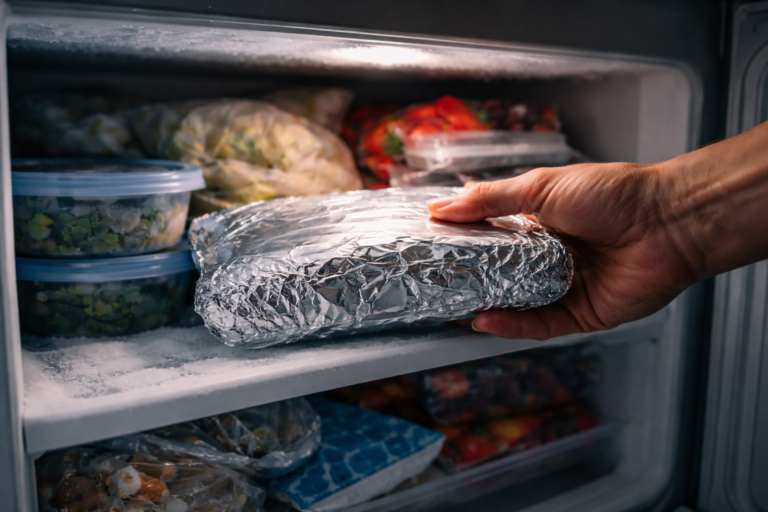
Putting aluminium foil in the freezer has become a foolproof household trick that more and more people are now using. It’s simple, cheap and often effective — whether you’re wrapping leftovers, shaping portions, or protecting delicate baked goods. Below I explain why it works, when to use it, and a few caveats to keep your food safe and tasting great.
Why aluminium foil helps in the freezer
Aluminium foil provides a tight barrier against air, moisture and light. When wrapped snugly around food, it:
- Reduces exposure to the dry air in the freezer, helping prevent freezer burn.
- Blocks light that can cause flavor changes or color loss in some foods.
- Conforms to shapes, making it easy to wrap awkward items like fish, half loaves, or individual portions.
These properties make foil a practical, low-cost option for many everyday freezing tasks. Because it’s thin and malleable, it’s also handy for quick fixes — cover a casserole, wrap a sandwich, or create individual meal portions before a busy week.
Best uses for foil in the freezer
Aluminium foil works well for:
- Short- to medium-term storage of cooked meats, casseroles and baked goods.
- Wrapping individual portions of leftovers for quick thaw-and-reheat meals.
- Protecting delicate items (e.g., pie crusts) from direct contact with ice or frost.
- Layering around a vacuum-sealed bag or zip-top freezer bag for extra protection.
For most frozen foods you plan to eat within a few weeks, foil alone is often sufficient if wrapped tightly with minimal air trapped inside.
How to wrap food properly
Follow these simple steps to get the best results:
- Cool food completely before wrapping to avoid condensation.
- Tear a sheet of foil large enough to cover the item with overlap.
- Fold the foil tightly around the food, smoothing seams and pressing out as much air as possible.
- For long-term storage, place the foil-wrapped item inside a labeled freezer bag or container.
- Label with contents and date so you can use older items first.
These steps help minimize air pockets — the main cause of freezer burn.
Limitations and things to avoid
Aluminium foil is not a universal solution. Keep these precautions in mind:
- Acidic and salty foods: Tomato-based sauces, citrus marinades and highly salty items can react with aluminium over time. For these, use a non-reactive container (glass or freezer-safe plastic) or an inner barrier like parchment or plastic wrap before foil.
- Long-term storage: For storage longer than a few months, vacuum sealing or using high-quality freezer bags with limited oxygen transmission is preferable.
- Microwaving: Never put aluminium foil in the microwave. Remove foil before reheating and transfer food to a microwave-safe dish.
- Sharp edges: Foil can tear. When wrapping items with bones or sharp corners, double-wrap or use a sturdier container to prevent punctures and exposure.
Recycling and environmental notes
Aluminium is recyclable, but only when it’s relatively clean. Scrape off food residues before placing foil in your recycling bin, and check local guidelines — some councils accept foil and trays, others do not. Reusing foil where practical reduces waste: if a sheet is only lightly soiled, rinse and reuse it for the next wrap.
Alternatives to foil
If you prefer other options, consider:
- Freezer-grade zip-top bags (squeeze out air for best results)
- Vacuum-sealed bags for long-term storage and professional-level protection
- Glass containers with airtight lids for soups, stews and sauces
- Parchment plus a bag or container for acidic foods
Each option has pros and cons related to cost, environmental impact and convenience.
Quick summary
Putting aluminium foil in the freezer has become a foolproof household trick that more and more people are now using because it’s affordable, flexible and effective for short- to medium-term storage. Wrap tightly, avoid direct contact with very acidic foods for extended periods, and use a secondary barrier for long-term preservation. With those simple rules, foil can be one of your most reliable kitchen helpers for freezing leftovers and prepping meals.