
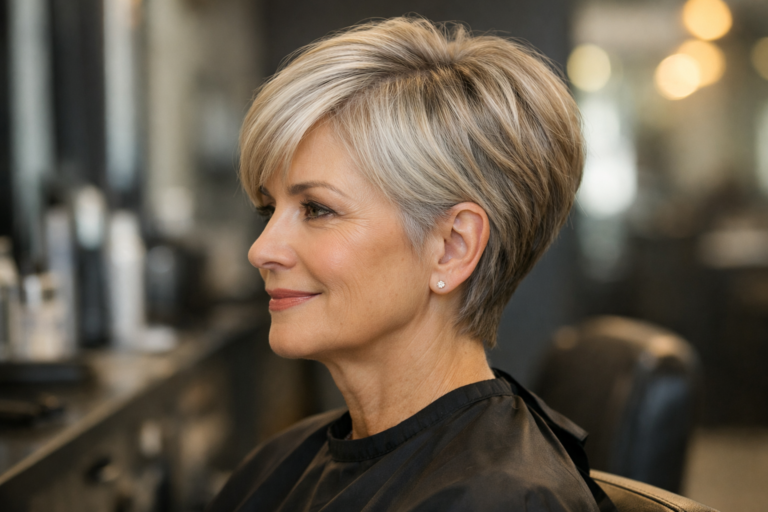
As a hairdresser who’s worked with hundreds of clients over 50, I’ve learned that fine hair needs a cut that creates the illusion of density, is easy to style, and flatters changing face shapes. I’m often asked what short haircut works best — and my go-to recommendation is a textured pixie with a longer top and soft, feathered layers.
This cut is versatile, modern, and surprisingly low-maintenance, making it perfect for active lifestyles and for women who want a fresh look without spending a lot of time each day styling.
Why the textured pixie works for fine hair after 50
Fine hair struggles to hold volume and can look limp with heavy or blunt cuts. A textured pixie addresses this by:
- Removing unnecessary weight that drags hair down.
- Introducing layers that create lift and movement at the crown.
- Allowing longer pieces on top that can be styled for fullness.
- Framing the face with a soft fringe that minimizes forehead lines and balances proportions.
The result is a cut that looks naturally fuller, highlights your best features, and feels light and comfortable.
Who it flatters
While every face is unique, the textured pixie is surprisingly adaptable. Consider these variations:
- Oval faces: Almost any pixie works; keep the top slightly longer for balance.
- Heart-shaped faces: Add side-swept bangs to soften the forehead and draw attention to the eyes.
- Round faces: Longer layers on top and tapered sides create height, elongating the face.
- Square faces: Softer, feathered edges around the jaw soften angles.
If you’re unsure, ask your stylist to personalize the length and texture to your bone structure and lifestyle.
Styling and daily maintenance
One reason I recommend this cut is how easy it is to style. A simple routine takes just a few minutes:
- Towel-dry and apply a lightweight volumizing mousse or root-lift spray.
- Blow-dry with a round brush or use your fingers to lift the roots while drying.
- Use a small amount of texturizing cream or matte paste to define layers and add separation.
- Finish with a flexible-hold hairspray to maintain lift without stiffness.
For mornings when you’re in a rush, finger-styling with a little mousse and air-drying can still give great results.
Color ideas to enhance texture
Strategic color can amplify the effect of a textured pixie:
- Soft highlights or balayage around the crown and face brighten features and add depth.
- Lived-in roots and subtle lowlights create contrast that makes hair appear thicker.
- A single-tone color works too—just avoid overly shiny, heavy finishes that can make fine hair look flat.
Ask your colorist for low-maintenance options that won’t require weekly touch-ups.
Cut and care timeline
To keep the shape fresh and the texture working for you:
- Schedule trims every 4–6 weeks. This maintains the structure and prevents the cut from becoming heavy.
- Use a protein-enriched shampoo and a lightweight conditioner to strengthen fine strands without weighing them down.
- Limit heavy oils and silicone-rich products that smooth texture away; instead choose products labeled “volumizing,” “lightweight,” or “texturizing.”
A weekly deep-conditioning mask (applied mainly to mid-lengths and ends) helps maintain shine and health without flattening the roots.
What to tell your stylist
Bring photos and be specific about lifestyle needs. Helpful points to say at the salon:
- “I want volume at the crown and a soft shape around my face.”
- “I prefer low-maintenance styling and quick morning routines.”
- “Please keep length on top for versatility, and taper the back and sides for lift.”
Good communication ensures the cut suits both your hair type and daily life.
Final thoughts
I’m a hairdresser and this is the short haircut I recommend most to clients with fine hair after 50 because it balances style, manageability, and the optical fullness fine hair often lacks. If you’re ready for a fresh, modern look that’s easy to live with, ask your stylist for a textured pixie with a longer top and soft, feathered layers — it might be the best short haircut you’ve had in years.