
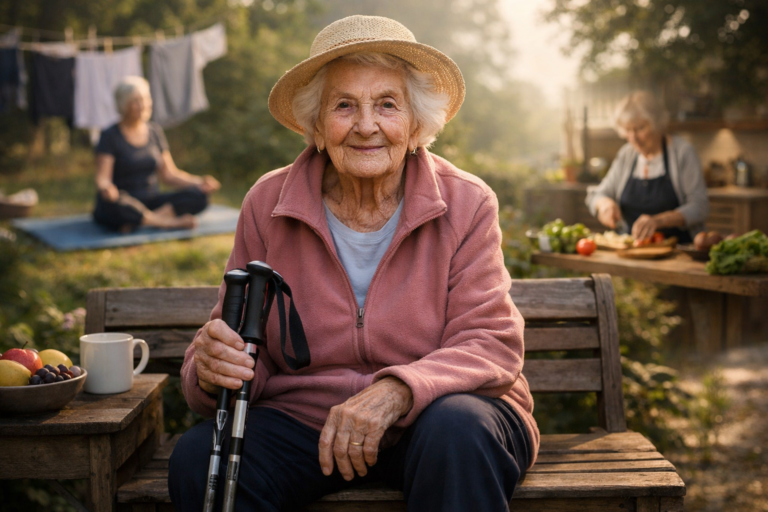
At 101 years old, a spirited centenarian shares a clear, no-nonsense view on longevity: small habits, steady independence, and an attitude that refuses to surrender. Her story isn’t about secrets or miracle cures. It’s about choices she’s made every day that add up to a long life lived on her own terms.
Morning: routines that set the tone
She wakes early and keeps mornings simple. A gentle stretch, a cup of tea, and a few minutes by the window are non-negotiable. These quiet moments center her and reduce the stress that can accumulate over a day.
Key morning habits:
- Light stretching to loosen joints and promote circulation.
- A balanced breakfast — often porridge or toast with fruit.
- Time for reflection: reading, journaling, or simply listening to the sounds outside.
She treats the morning as a foundation rather than a race. By starting slowly, she preserves energy for the day’s necessary tasks and small pleasures.
Movement: staying active, not extreme
Her daily activity is consistent and realistic. Rather than long workouts, she opts for movement that’s sustainable.
Daily movement includes:
- Short walks around the neighborhood or in the garden.
- Household chores like sweeping, watering plants, or folding laundry.
- Gentle balance exercises to reduce fall risk.
Keeping muscles engaged and balance sharp is critical for independence. She emphasizes that movement should be enjoyable and integrated into daily life, not a punishing obligation.
Food: nutritious, familiar, and social
Food is both fuel and ritual. She eats what she enjoys but makes choices that support steady energy and health.
Typical eating principles:
- Plenty of fruits and vegetables.
- Regular, modest portions — no extreme dieting.
- Occasional treats are allowed, especially during visits with friends or family.
Meals are often social. Sharing food and stories with neighbors or relatives is as important as the ingredients on the plate. The social aspect of meals keeps her connected and motivated to maintain a routine.
Mental life: curiosity, purpose, and routine
Mental sharpness for her comes from curiosity and small goals. She reads newspapers, solves crosswords, and keeps up with friends’ lives. Purpose matters — whether it’s tending a small patch of flowers, volunteering, or mentoring younger family members.
Habits for mental well-being:
- Daily reading or puzzles to stimulate cognition.
- Learning new, modest skills to keep the brain adaptable.
- Staying involved in community activities.
She credits much of her clarity to staying mentally engaged and not retreating into passivity.
Social connections: the glue of longevity
Isolation accelerates decline, she says. Maintaining relationships is central to her well-being.
Social habits include:
- Regular calls or visits with family.
- A weekly coffee with friends.
- Participation in local clubs or faith groups.
These connections supply emotional support and practical help when needed — but crucially, they also give her reasons to stay active and independent.
Practical choices that protect independence
Beyond exercise and diet, she plans for daily life in ways that reduce risk and preserve autonomy.
Practical habits:
- Keeping her living space simple and accessible to avoid falls.
- Managing medications carefully and keeping appointments.
- Staying financially organized so she can make choices freely.
These practical steps mean fewer emergencies and more control over how and where she lives.
Why she says, “I refuse to end up in care”
When asked about her firm statement, “I refuse to end up in care,” she explains it isn’t spiteful. It’s about dignity, control, and the desire to live deliberately. She prefers to invest in routines and supports that keep her independent rather than wait until circumstances force a different outcome.
Her stance is supported by:
- Proactive health management.
- Building a social net that can provide help before crises occur.
- Accepting help selectively — she will take assistance when it preserves her independence rather than diminishes it.
Refusing institutional care is less about rejecting help and more about designing a life that minimizes the need for it.
How to apply her wisdom
You don’t need to be 101 to borrow her habits. Start with small, consistent changes:
- Build a simple morning routine.
- Move a little every day in ways you enjoy.
- Eat well but reasonably, and make meals social when possible.
- Keep your mind active through reading or new hobbies.
- Cultivate strong social ties and practical plans to protect independence.
Her life shows that longevity is rarely the result of one dramatic action. It’s the sum of tiny choices made faithfully over time. By adopting a few of her habits, anyone can increase their chances of living longer, healthier, and with more control over how they age.