
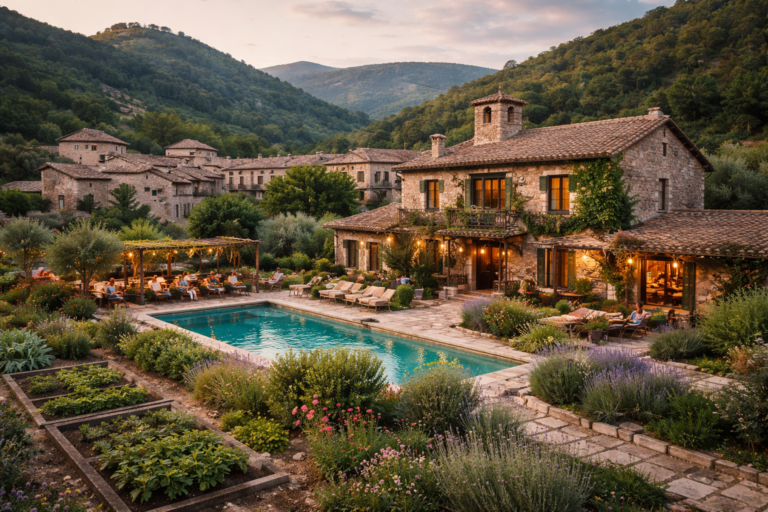
In recent years, rural tourism in Spain has seen an extraordinary revival as travelers increasingly seek authenticity, tranquility, and sustainable experiences. Against this backdrop, a visionary couple made a bold decision—leaving the fast-paced life of Madrid to build what is now considered Spain’s best rural guesthouse for 2025 in a village with fewer than 400 residents. Their story is not just about hospitality; it is about innovation, sustainability, and redefining modern rural living.
The Bold Decision: Leaving Madrid Behind
Madrid, Spain’s capital, offers endless opportunities, but it also comes with stress, high living costs, and urban congestion. Like many urban professionals, the couple sought a more meaningful lifestyle.
Their decision to relocate reflects a broader trend: urban-to-rural migration driven by remote work flexibility and the desire for a better quality of life. Spain’s diverse landscapes and cultural richness make it an ideal destination for such transitions.
By moving to a small village with under 400 inhabitants, they embraced a slower pace of life while identifying an untapped opportunity in rural hospitality.
Choosing The Perfect Village
The couple selected a remote village characterized by:
- Population below 400 residents
- Scenic natural surroundings
- Rich cultural heritage
- Limited but growing tourism infrastructure
Small Spanish villages, like some in Castilla y León or Andalusia, often have populations even below 100 residents, reflecting the depth of rural depopulation challenges.
This setting allowed the couple to create a unique destination that combines privacy, exclusivity, and authenticity—key elements modern travelers increasingly demand.
Building Spain’s Best Rural Guesthouse For 2025
Vision And Concept
The couple didn’t just renovate a property—they reimagined rural accommodation. Their goal was to create a premium countryside retreat blending:
- Traditional Spanish architecture
- Modern luxury amenities
- Eco-friendly design
Key Features Of The Guesthouse
- Restored stone or farmhouse structure
- Solar-powered energy systems
- Locally sourced materials and furnishings
- Farm-to-table dining experience
- Limited rooms to ensure exclusivity
The result is a guesthouse that offers high-end comfort while preserving rural authenticity—a combination that sets it apart in Spain’s competitive tourism sector.
Table: Key Details Of The Rural Guesthouse
| Feature | Details |
|---|---|
| Location | Small Spanish village (under 400 residents) |
| Founders | Former Madrid-based couple |
| Year Recognized | 2025 |
| Accommodation Type | Boutique rural guesthouse |
| Capacity | Limited rooms for exclusivity |
| Sustainability | Solar energy, local materials |
| Target Guests | Luxury rural travelers, eco-tourists |
| Unique Selling Point | Blend of tradition and modern luxury |
Why It Became The Best Rural Guesthouse In Spain
1. Focus On Sustainability
Sustainability is no longer optional in tourism. The guesthouse incorporates:
- Renewable energy systems
- Waste reduction practices
- Local sourcing
This aligns with the growing global emphasis on eco-tourism and responsible travel.
2. Personalized Guest Experience
Unlike large hotels, the guesthouse offers:
- Tailored itineraries
- Personalized dining experiences
- Direct interaction with hosts
This creates a memorable and intimate stay, which is highly valued in rural tourism.
3. Authentic Local Integration
Guests can experience:
- Traditional cuisine
- Cultural festivals
- Nature-based activities
Such immersive experiences enhance the appeal of rural destinations.
The Rise Of Rural Tourism In Spain
Spain has long been a global tourism leader, but rural tourism is now one of its fastest-growing segments. Travelers are moving beyond cities like Barcelona and Madrid to explore hidden countryside gems.
Key drivers include:
- Desire for quieter destinations
- Interest in local culture and traditions
- Post-pandemic travel preferences
Strategic travel planning in Spain can also reduce costs significantly while enhancing cultural immersion.
This trend has created opportunities for innovative entrepreneurs like this couple.
Challenges Faced During The Journey
Building a rural guesthouse is not without challenges:
Limited Infrastructure
Small villages often lack:
- Reliable transport links
- Modern utilities
Regulatory Hurdles
Obtaining permits and meeting hospitality regulations can be complex.
Seasonal Tourism
Rural destinations may experience fluctuating visitor numbers depending on the season.
Despite these obstacles, the couple’s vision and persistence allowed them to overcome barriers and succeed.
Economic And Social Impact On The Village
The guesthouse has had a transformative impact on the local community:
- Job Creation: Employment for local residents
- Boost To Local Economy: Increased demand for local products and services
- Revitalization: Attraction of new visitors and potential residents
Such initiatives play a crucial role in addressing rural depopulation in Spain.
Future Outlook: A Model For Rural Entrepreneurship
The success of this guesthouse sets a precedent for future ventures. Key trends likely to shape the future include:
- Growth of digital nomad-friendly rural stays
- Expansion of eco-luxury accommodations
- Increased government support for rural tourism
This model demonstrates how combining innovation with tradition can create sustainable business success.
Conclusion
The story of this couple is a powerful example of how bold decisions and innovative thinking can lead to extraordinary success. By leaving Madrid and investing in a small village, they not only built Spain’s best rural guesthouse for 2025 but also contributed to the revival of rural communities.
Their journey highlights a broader shift in tourism and lifestyle choices—one where quality of life, sustainability, and authenticity take center stage. As rural tourism continues to grow, stories like this will inspire many others to follow a similar path.