
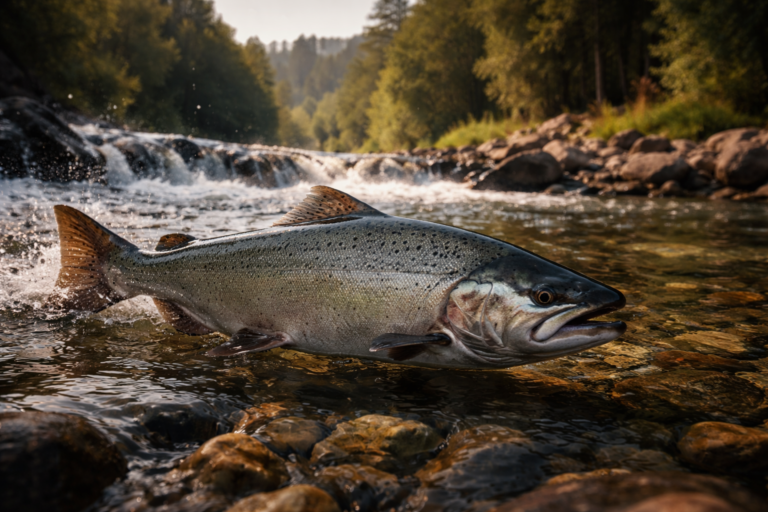
After a century-long absence, a Chinook salmon has been documented returning to its native California river — a hopeful milestone for conservationists, local communities, and Indigenous tribes. This single fish is more than a curiosity; it symbolizes the potential for ecosystems to rebound when habitat, policy, and people align.
Why this matters
Chinook salmon (Oncorhynchus tshawytscha) are anadromous: they hatch in freshwater, migrate to the ocean to grow, and return to spawn. In California, many historic runs were extirpated during the 20th century because of dams, water diversions, degraded river corridors, and overfishing. The return of a Chinook after a century suggests that restoration efforts and changing management strategies can create pathways back to resilience.
Ecologically, Chinook are keystone transporters of marine nutrients into freshwater and riparian systems. Their carcasses feed insects, birds, bears, and trees, cycling energy from the ocean into forests and floodplains. Culturally, salmon are central to the lifeways and spiritual traditions of many California tribes. A returning Chinook reconnects people to place and can reignite collaborative stewardship.
What likely allowed the return
A single fish can’t rebuild a population alone, but its presence points to a combination of positive factors. These often include:
- Habitat restoration: improvements to spawning and rearing habitat, such as regrading banks, planting native vegetation, and reconnecting side channels.
- Improved fish passage: new or retrofitted crossings and ladder systems that allow adult salmon to reach historic upstream habitat previously blocked by culverts or outdated infrastructure.
- Flow management: more strategic water releases from reservoirs and better water allocations that mimic seasonal flow regimes critical for migration and juvenile survival.
- Reduced harvest pressure: changes in commercial and recreational fishing regulations that give recovering runs more breathing room.
- Broodstock and hatchery reforms: when hatcheries are used, modern practices focus on genetic diversity and reducing negative interactions with wild fish.
The return may also reflect favorable ocean conditions during the salmon’s outmigration years, which boosted survival to adulthood.
What comes next — opportunities and challenges
One returning Chinook is cause for celebration, but it’s not a population recovery on its own. Recovery requires sustained attention across several fronts:
- Monitoring: scientists need to document whether other salmon are returning, assess spawning success, and track juvenile outmigration.
- Habitat protection: newly accessible reaches must be protected from future development, pollution, and water diversions.
- Watershed-scale planning: salmon need connected, functional watersheds. Restoration at isolated sites is less effective than coordinated, basin-wide efforts.
- Tribal collaboration: Indigenous knowledge and co-management are essential for culturally appropriate and ecologically effective recovery strategies.
Threats remain significant. Climate change is warming river temperatures and altering flow patterns, making some spawning grounds less viable. Drought and increased human water demand can reduce flows further. Invasive species, predation in altered habitats, and disease can also impede recovery.
How communities can support long-term recovery
Successful salmon recovery is a community endeavor. Here are practical ways people can help:
- Support local restoration projects: donate, volunteer, or participate in riparian planting and cleanup days.
- Advocate for smart water policy: encourage flow regimes that prioritize instream health and long-term ecosystem services.
- Learn and share: attend public meetings, follow scientific updates, and amplify tribal and local voices working on salmon recovery.
- Reduce pollution: minimize pesticide and fertilizer use, properly dispose of hazardous waste, and advocate for improved stormwater management.
- Responsible recreation and fishing: follow catch limits and closures designed to protect recovering runs.
A cautious optimism
The headline — “A first in 100 years: a chinook salmon returns to its native California river” — captures the emotional power of this event. It is both a reminder of what was lost and a signal that recovery is possible. With continued scientific monitoring, policy support, and community engagement, that single fish could be the precursor to a crescendo of returns: more spawners, stronger runs, and restored connections between ocean and river.
Restoration is rarely quick or linear, but nature often responds when given the chance. This returning Chinook is an invitation to keep working, together, toward rivers that once again teem with salmon and the rich life they sustain.