
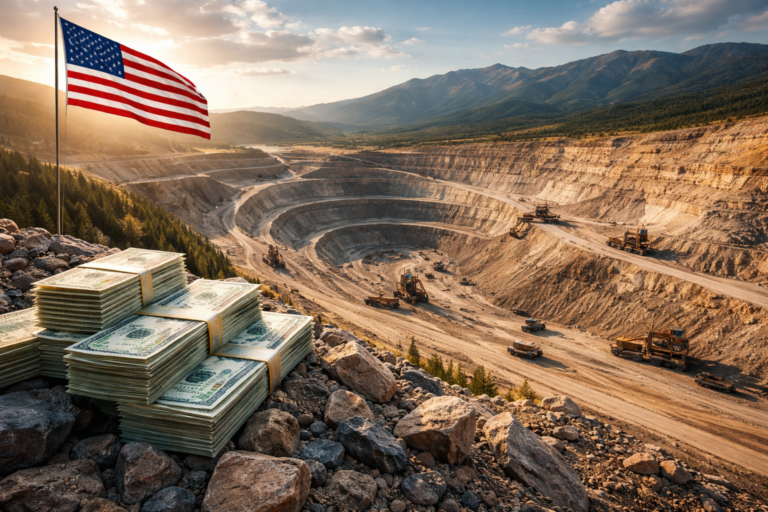
Reports that “A potential €120 billion mine found in the United States” have captured headlines and sparked debate across industries, governments, and local communities. The figure is striking, but the path from discovery to sustainable, responsible production is long and complex. Here’s a clear look at what the claim means, why it matters, and the factors that will determine the outcome.
What’s behind the valuation?
When headlines cite €120 billion, they usually refer to the in-ground value of metals and minerals multiplied by current market prices. That number can include copper, lithium, rare earth elements, gold, or a combination—materials essential for clean energy, electronics, and defense.
Key considerations in such valuations:
- Proven vs. inferred resources: Proven reserves are measured and economically extractable today; inferred resources are less certain.
- Commodity prices: Market volatility can swing a project’s worth dramatically.
- Extraction and processing costs: Remote location, infrastructure needs, and ore grade affect profitability.
- Regulatory and social costs: Permits, environmental mitigation, and community agreements factor into the economic equation.
Economic opportunities
A discovery of this magnitude could reshape local and national economies.
Potential benefits include:
- Jobs: Exploration, construction, and long-term mine operations create employment across skill levels.
- Investment: Infrastructure—roads, power, ports—often follows major projects and benefits surrounding areas.
- Supply chain security: Access to domestic critical minerals can reduce dependence on foreign suppliers, supporting manufacturing and strategic industries.
- Tax revenue and royalties: Local, state, and federal governments can gain substantial funds for public services if contracts and regulations are structured equitably.
These advantages can be lasting, but only if the project is managed transparently and the local workforce is prepared to capture high-value roles.
Environmental and social risks
Large-scale mining can also bring serious environmental and social challenges.
Common concerns include:
- Water use and contamination: Mining often requires significant water and can introduce pollutants to aquifers and rivers.
- Habitat and biodiversity loss: Clearing land and building infrastructure can disrupt ecosystems.
- Community disruption: Influx of workers, housing pressures, and cultural impacts can strain local populations, especially Indigenous communities.
- Long-term liabilities: Abandoned or poorly reclaimed mines can impose cleanup costs for generations.
Addressing these risks demands rigorous environmental impact assessments, strong regulatory oversight, and binding reclamation plans funded from project inception.
Regulatory, legal, and community hurdles
Turning a discovery into production requires a suite of approvals and local buy-in.
Steps typically include:
- Feasibility studies and permitting: Detailed engineering and environmental studies must pass regulatory review.
- Community consultations: Meaningful engagement with local residents and Indigenous groups is both an ethical and legal necessity.
- Financing: Large projects need capital from private investors, public-private partnerships, or state-backed loans.
- Legal agreements: Clear royalty, tax, and benefit-sharing arrangements reduce future disputes.
Projects that rush these processes risk delays, legal challenges, and reputational damage that can outweigh short-term gains.
Global and strategic implications
A major new source of critical minerals in the United States could shift global supply dynamics.
Possible effects:
- Price stabilization for certain metals, at least if production ramps up predictably.
- Reduced geopolitical leverage for countries that currently dominate these markets.
- Acceleration of domestic manufacturing tied to clean energy and defense sectors.
However, the global market will watch closely: the timeline from discovery to steady production often spans a decade or more, and many discoveries never reach commercial scale.
What to watch next
If the discovery is as significant as suggested, the following milestones will provide clarity:
- Independent resource estimates that separate inferred from proven reserves.
- Published feasibility studies showing projected costs, timelines, and environmental mitigation plans.
- Permitting decisions and the outcome of community consultations.
- Financing commitments and initial construction contracts.
Until those markers are reached, the headline valuation should be treated as a headline—indicative of potential but not a certainty.
Conclusion
“A potential €120 billion mine found in the United States” is an attention-grabbing statement that highlights both opportunity and responsibility. The economic upside could be transformative, particularly for supply chains tied to the energy transition. But the environmental, social, and regulatory challenges are equally real. For the discovery to deliver lasting benefits, stakeholders must prioritize transparency, rigorous safeguards, and equitable sharing of benefits from day one.