
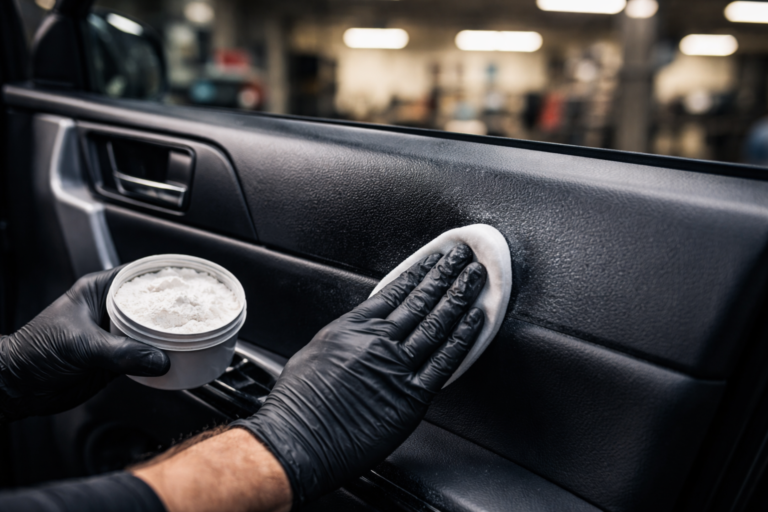
If you’ve ever stared at faded interior trim or sun-bleached plastic bumpers and wished for a quick fix, this kitchen-cupboard hack might become your new go-to. A simple pantry powder rubbed on car plastics restores a deep factory sheen that even surprises seasoned mechanics — when done carefully, it lifts grime and micro-oxidation and preps the surface for a lasting finish.
Below is a safe, easy method using common ingredients and tools. It’s inexpensive, effective, and ideal for routine maintenance or last-minute touch-ups before a sale or detailing.
Why this works
Baking soda (sodium bicarbonate) is mildly abrasive and alkaline. That makes it useful for:
- Loosening and lifting embedded dirt and oils without harsh chemicals.
- Gently removing light surface oxidation that makes plastics look dull.
- Acting as a deodorizer for interiors.
When used as a paste and followed by a proper rinse and protective dressing (or a light oil polish), the cleaned surface reflects light more evenly, creating a deeper, factory-like sheen. Because it’s gentle compared with stronger abrasives or solvents, baking soda is a good first-line treatment for many automotive plastics.
What you’ll need
- Baking soda (the pantry powder)
- Warm water
- Soft microfiber cloths (2–3)
- Soft-bristled toothbrush or detailing brush (for textured areas)
- Spray bottle (optional)
- A mild vinyl/plastic protectant or a small amount of mineral oil (optional)
- Gloves (if you have sensitive skin)
Step-by-step: pantry powder plastic restoration
Clean the area first
Wipe the plastic with a damp microfiber to remove loose dust and surface grime. This prevents scratching during the next step.Make a paste
Mix baking soda with enough water to form a thick paste (about 2 parts baking soda to 1 part water). It should be spreadable but not runny.Apply gently
Using a clean microfiber or the toothbrush for textured areas, rub the paste into the plastic with small circular motions. Use light to moderate pressure; don’t scrub aggressively.Work sections at a time
For dashboards, door trims, or bumpers, do one small area at a time so the paste doesn’t dry out before you rinse it.Rinse and dry
Wipe away the paste with a damp microfiber, then immediately dry the surface thoroughly. Make sure no gritty residue remains.Finish for sheen (optional but recommended)
If you want a deeper factory look, apply a small amount of a dedicated vinyl/plastic protectant or a very small dab of mineral oil on a microfiber and buff evenly. Avoid heavy or greasy applications — you want a thin, even layer.
Tips and precautions
- Always test in an inconspicuous spot first. Some plastics and trims have coatings that react differently.
- Avoid use on glossy instrument-cluster lenses, screens, or painted surfaces. Baking soda can be mildly abrasive.
- Don’t use household powders with added fragrances, brighteners, or bleach.
- If the plastic is heavily oxidized, this method may improve appearance but won’t replace professional restoration products or replacement.
- Keep products away from carpeting and fabric; baking soda can dull some textiles if left to dry.
Alternatives from the pantry
If you don’t have baking soda, other mild options include:
- Cornstarch: Helpful for absorbing oils and light polishing when applied and brushed off.
- Baby powder (talcum): Absorbs residues and can reduce surface shine caused by oils, but it tends to leave a matte look rather than a deep sheen.
Each alternative behaves differently — baking soda offers the best balance of light abrasive cleaning and safe use on many plastics.
Final thoughts
This pantry powder trick is not a miracle cure, but it’s a surprisingly powerful maintenance step. For everyday drivers, classic-car owners prepping a sale, or DIY detailers looking for a wallet-friendly solution, baking soda paste can refresh interiors and exterior trims and create that deeper, factory sheen that can even surprise seasoned mechanics. As always, test first, be gentle, and follow with a proper protectant for longer-lasting results.