
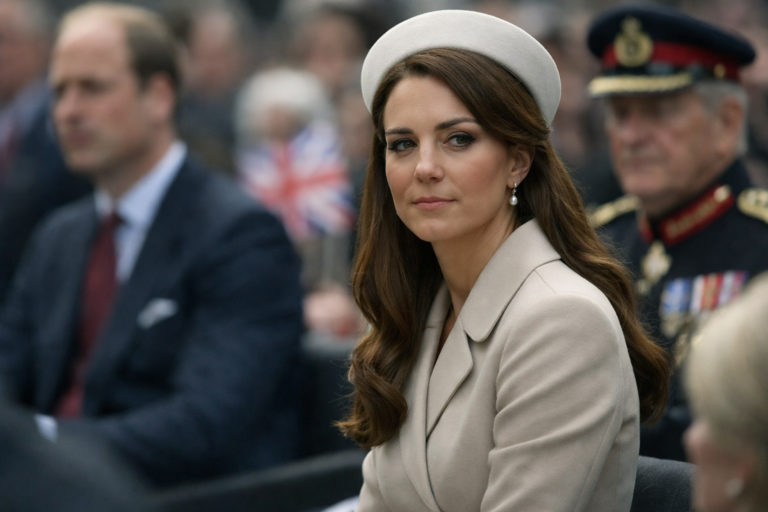
A single, understated moment at a recent public engagement involving Kate Middleton — the Princess of Wales — has sent ripples through social media and editorial pages. What looked like a minor sartorial or behavioral decision quickly became a Rorschach test for how people read the future of the monarchy: traditional continuity, quiet evolution, or something more ambiguous.
Below I unpack why small gestures matter so much for royal figures, outline the main lines of public reaction, and consider what the episode might mean for Kate’s evolving role within the institution.
The moment that caught attention
Photographs and short video clips circulated widely showing Kate making a choice that, on the surface, was simple: a change in posture, a muted accessory, or a deliberate way of interacting with other members of the royal family. Because royal appearances are choreographed and scrutinized, viewers rushed to attach meaning to the detail.
Crucially, the moment was subtle — not a headline-grabbing speech or a policy stance — and that subtlety is what made it so combustible. When public roles are largely symbolic, symbolism itself becomes the main language.
Why small gestures get big reactions
Small public gestures by senior royals function like signals. People decode them according to their existing beliefs about the monarchy. There are a few reasons these signals get magnified:
- Visibility: Royals have limited opportunities to shape their public image. Each engagement is replayed and archived.
- Symbolic weight: Without direct political power, symbolic acts take on outsized importance.
- Media incentives: Outlets know that interpretative stories generate clicks and debate, so subtle actions are amplified.
- Cultural moment: The monarchy exists in an era of heightened debate about tradition, transparency, and modern relevance.
Three common ways observers interpreted the choice
When a seemingly small decision becomes a public talking point, interpretations usually fall into a few broad camps:
A sign of modernization
- Supporters read the gesture as evidence Kate is steering the monarchy toward a more contemporary, relatable image. They emphasize approachability, emotional intelligence, and subtle departure from strict protocol.
A reaffirmation of tradition
- Others insist the choice actually aligns with long-standing royal behavior — a quiet, controlled approach that preserves dignity and stability. For them, any visible restraint is proof of continuity.
A calculated repositioning
- A third group sees strategic intent: that Kate might be carving out a distinct role within the institution, balancing visibility with discretion and positioning herself for greater responsibility in a changing royal landscape.
What the debate reveals about the monarchy today
The intensity of the discussion is telling about public expectations. The monarchy now exists at a crossroads between ceremonial continuity and the pressures to modernize.
- Questions of gender and representation surface: how should a prominent royal woman perform power and empathy in public?
- Expectations around transparency and authenticity intensify: audiences want to believe what they see is genuine, not staged.
- Institutional stability versus personal expression: the tension between representing an ancient institution and being an individual with personal style and opinions remains unresolved.
How Kate’s broader pattern matters more than a single moment
One image or gesture will not, on its own, redefine a person’s role. What matters is pattern and context. Analysts and the public will watch for recurring themes:
- Will Kate continue to make small, symbolic choices that lean modern?
- Will those choices be paired with substantive charitable or policy-driven work?
- How will the rest of the royal family respond or adapt to those signals?
If subtle choices become consistent, they can add up to a recognizable public brand that reshapes expectations over time.
Looking ahead: possibilities, not predictions
Debates sparked by a single moment are rarely definitive. They are, however, valuable: they force a conversation about what people want from their public institutions and their figures.
For the monarchy, the challenge is to manage symbolism without losing credibility. For Kate Middleton, the moment underscores how closely her every move is watched and how even the smallest choices can fuel larger conversations about continuity, change, and leadership within the royal family.
Whether this episode proves a turning point or a fleeting headline will depend on what comes next — not just in appearances, but in sustained action and narrative.