
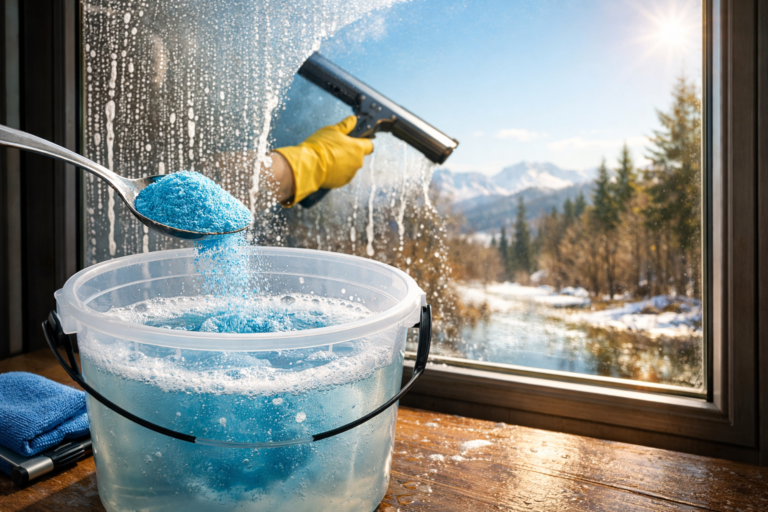
If you’re tired of streaks, water spots, and the endless job of cleaning windows, here’s a simple trick that can extend the time between cleanings: Add a single spoonful of a glass water-repellent product to your cleaning water and your windows will stay cleaner for much longer — often resisting rain and grime for weeks or months.
This isn’t magic. It’s about adding a tiny amount of a commercially formulated glass protector (the same kind used on car windshields) to your window-cleaning routine. These products create an invisible, hydrophobic layer that causes water to bead and run off, taking dirt with it.
Why this works
Most standard glass cleaners remove dirt and polish the surface but leave glass chemically unchanged. Water-repellent glass treatments deposit a thin film of silicone, fluoropolymer, or similar polymers. That film:
- Reduces surface tension so water beads instead of sheets.
- Makes it harder for dust and grime to stick.
- Helps rain and irrigation simply roll off instead of leaving streaks.
A small amount mixed into your cleaning solution can leave a subtle protective coating as you wipe, extending the effect of a full treatment without a separate application.
What product to use
Look for a product labeled for glass water-repellent or windshield treatment. Popular examples include Rain‑X, Aquapel, and other glass sealants. These are formulated to bond to glass and repel water.
Important notes:
- Use products designed for glass. Avoid automotive waxes or strong silicone oils not intended for windows.
- Start with a well-known brand and follow safety instructions on the label.
- Test first on a small, inconspicuous section to ensure it doesn’t affect surrounding trim or finishes.
Step-by-step: how to do it
- Gather supplies: bucket of warm water, a mild glass cleaner (or a splash of white vinegar), a soft microfiber cloth or squeegee, and a teaspoon of glass water-repellent product.
- Mix: In about 2–4 liters (half to one gallon) of cleaning water, add one teaspoon of the glass treatment and stir gently. You don’t need more — a little goes a long way.
- Clean the window: Use your regular cleaner or the prepared solution to remove dirt and grime first. Rinse or wipe dry.
- Apply the protective mix: Dip a clean microfiber cloth into the water-repellent solution and wipe the dry glass in a circular motion, or spray lightly then buff with a dry cloth.
- Buff and finish: Use a dry microfiber to buff the glass until clear. For best results, avoid applying on very hot glass or direct sunlight.
Tips for best results
- Clean thoroughly first. Any residue or heavy buildup will prevent the treatment from bonding well.
- Don’t overuse. A teaspoon per bucket is typically enough. Excess product can leave a haze.
- Protect frames and screens. Avoid prolonged contact with painted trims or delicate seals; wipe any overspray quickly.
- Reapply as needed. Depending on weather and exposure, a light reapplication every 6–12 weeks can maintain the effect.
- Consider a full treatment for heavily exposed windows. The spoonful trick is convenient, but for maximum longevity, follow the product’s dedicated application instructions.
Caveats and realistic expectations
While adding a bit of water-repellent can noticeably help reduce spotting and keep glass looking cleaner longer, results vary. Wind, pollen, bird droppings, and heavy road spray will still soil glass, and you may not literally get “until spring” in all climates. Think of this as a low-effort boost that extends the time between cleanings rather than a permanent shield.
Quick FAQ
- Will this damage my windows? Not when you use a product made for glass and follow directions. Always test first.
- Can I use vinegar instead? Vinegar cleans well but won’t provide long-term water repellency on its own.
- Is this safe for double-pane or coated glass? Check manufacturer recommendations for specialty glass; some coatings (like Low‑E) may have specific care instructions.
Adding a single spoonful of the right product to your cleaning water is an easy, budget-friendly hack that can make your windows clearer and less needy between cleanings. Try it on one window first — odds are you’ll notice how much less often you reach for the squeegee.