
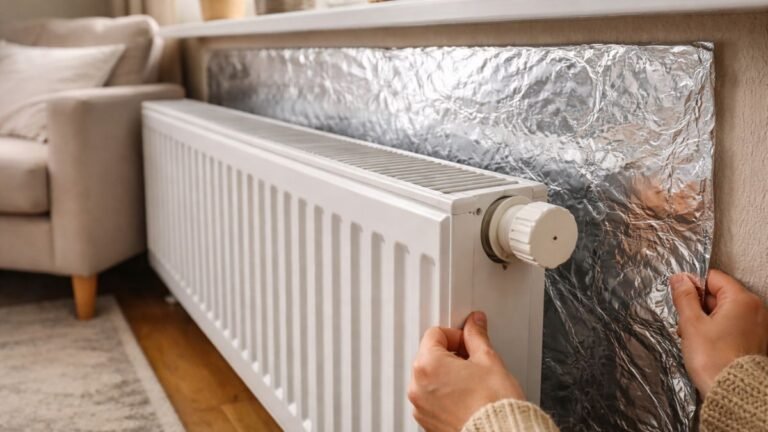
If you’ve ever felt heat disappearing into cold walls while your radiator works overtime, there’s a simple, inexpensive fix: place reflective material behind the radiator. Almost nobody knows this trick, but placing aluminum foil behind radiators can noticeably lower heating bills by reflecting radiant heat back into the room instead of letting it warm the wall.
How it works
Radiators heat a room in two ways: by warming the air (convection) and by emitting infrared radiation (radiant heat). When a radiator sits against an external wall, a surprising amount of that radiant heat travels directly into the wall and is lost to the outside.
Placing a reflective surface behind the radiator sends that infrared energy back into the room. The wall stays cooler, the room warms faster, and your heating system doesn’t need to run as long to keep the same temperature.
Radiant vs convective heating — quick breakdown
- Radiant heat: Energy that travels in straight lines as infrared radiation; easily reflected.
- Convective heat: Warm air that rises from the radiator and circulates; not affected by foil.
- Reflectors help primarily by addressing radiant losses rather than changing airflow.
Benefits and what to realistically expect
This is not a magic solution, but it is effective, cheap, and low-effort.
- Low cost: Aluminum foil or purpose-made reflective panels are inexpensive.
- Easy DIY: Installation takes minutes and requires no tools for basic setups.
- Noticeable improvement: In many cases you’ll feel rooms warm up quicker and reduce how long the boiler runs.
- Cumulative savings: Savings depend on home construction, wall insulation, and radiator placement. In leaky, poorly insulated homes the effect is larger; in well-insulated homes the benefit is smaller but still measurable.
Be realistic: this method won’t replace proper insulation, double glazing, or a more efficient boiler. Think of it as a low-cost supplement that reduces waste from existing heat.
How to do it — step-by-step
- Measure the radiator width and height to determine the size of backing needed.
- Choose your reflective material:
- Aluminum foil taped to cardboard (very cheap).
- Foil-backed bubble wrap or foil insulation panels (more durable).
- Purpose-made radiator reflector panels (available at DIY stores).
- Cut the material to size so it covers the wall area directly behind the radiator.
- Fix the reflector flush to the wall behind the radiator:
- Use heat-resistant double-sided tape or small adhesive hooks.
- Leave a small air gap (about 1–2 cm) between the radiator and the reflector for best performance.
- Ensure the reflector is secure and does not interfere with valve access or airflow.
Materials and alternatives
- Aluminium foil + cardboard: Cheapest, easy to replace if damp or damaged.
- Foil-backed insulation boards: Rigid and long-lasting; slightly costlier.
- Foil-faced bubble wrap: Flexible and insulating; good where condensation is a concern.
- Commercial radiator reflectors: Designed for the job and often include mounting kits.
Choose materials based on durability, moisture resistance, and aesthetics.
Limitations and safety
- Not a substitute for insulation: If your external walls are poorly insulated, insulating them properly yields larger savings.
- Moisture risk: On cold, damp walls foil may trap moisture; use breathable materials or check for condensation.
- Fire hazard: Standard household aluminium foil is not flammable, but avoid contact with hot surfaces or exposed wiring. Don’t block HVAC vents or cover the radiator itself.
- Aesthetic concerns: Foil may look unsightly; consider cutting to size and hiding behind the radiator or using decorative paneling.
Quick tips to maximize results
- Combine reflectors with draught-proofing and thermostat programming for better savings.
- Focus on radiators against external or poorly insulated walls.
- Replace cheap foil if it becomes moist or torn; choose rigid panels for a longer-lasting solution.
Placing aluminum foil behind radiators is a small, low-risk step that can reduce wasted heat and shave money off your bills. It’s not a cure-all, but for a few minutes of effort and a few dollars of materials, it’s one of the easiest energy-saving tricks to try this winter.
Conclusion
Sometimes, saving money doesn’t require expensive upgrades—just a smart, simple trick. Placing aluminum foil behind radiators helps reflect heat back into your room instead of letting it escape through the walls, making your heating system more efficient. It’s an easy, low-cost solution that can lead to noticeable reductions in energy use and bills over time. By making small changes like this, you can create a warmer home while keeping your expenses under control.